• 3 min de lectura
• 3 min de lectura
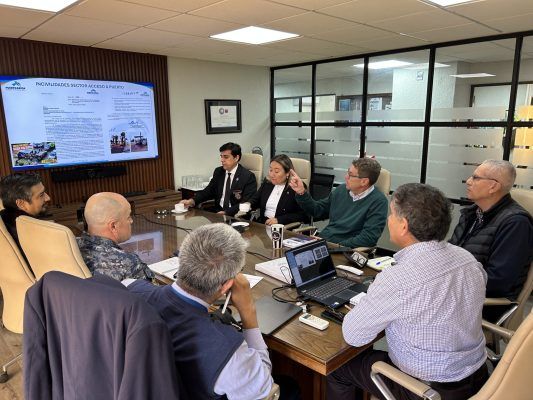
In its fifth session of the year, the Port Coordination Committee of Public Services of the Port of Arica addressed the main actions aimed at strengthening security in the port environment, reinforcing health coordinations, and monitoring the operational continuity of the regional logistics-port system.
The body, headed by Empresa Portuaria Arica (EPA) through its Concessions and Logistics Management, brought together representatives from the Navy, health authority, and various public organizations linked to port activity. They analyzed measures aimed at safeguarding the normal functioning of operations and improving conditions in the terminal's surroundings.
Regarding security and territorial control, the committee prioritized joint actions to confront informal trade and hotspots of incivility in areas adjacent to the terminal, including coordinations related to the so-called "Fruit Sale" Operation. Likewise, progress was reviewed on the process of removing and refloating the last confiscated fishing vessels anchored in the port's dock.
One of the main topics addressed was preventive work to control situations of incivility in the port environment. In this regard, the Port Captain of Arica, Felipe Rodríguez, indicated that surveillance and coordination with competent services will continue to be strengthened to contribute to a safer environment for workers, transporters, and users of the logistics-port system.
The session also allowed for a review of coordinations with the health authority aimed at strengthening measures for the prevention and control of diseases associated with the entry of vessels, considering as a precedent the reference case registered at Las Higueras Hospital in Talcahuano due to suspected hemorrhagic fever (Ebola alert) in a crew member from a Singaporean ship.
These actions include monitoring procedures, International Health Regulations (IHR) protocols, and communication mechanisms among the involved organizations, with the purpose of safeguarding public health and maintaining high standards of health security in maritime-port activity.
The day also allowed for addressing various matters related to operational coordination, cargo flow, vessel attention, and joint work between public services and port system stakeholders, with a view to ensuring an efficient response to the challenges inherent in the logistics and commercial activity of the Port of Arica.
The General Manager of Empresa Portuaria Arica, Jorge Cáceres, commented that "these coordinations allow us to anticipate situations that could affect both the security of the environment and the operational continuity of the port. Collaborative work among the Navy, the health authority, and the different public services is fundamental to continue strengthening a safe, efficient port system prepared to face complex scenarios."
During the session, the operational performance accumulated up to June was presented, highlighting a 6% growth in cargo transfer and an 18% increase in TEU movement. These results were recorded despite severe logistical disruptions caused by 52-day blockades in Bolivia, in addition to a record 892 hours of port closure due to high seas.
Finally, the participants highlighted the importance of maintaining these periodic coordination instances, which allow for strengthening articulation among public institutions and contributing to the safe, efficient, and sustainable development of the regional terminal.