• 3 min de lectura
• 3 min de lectura
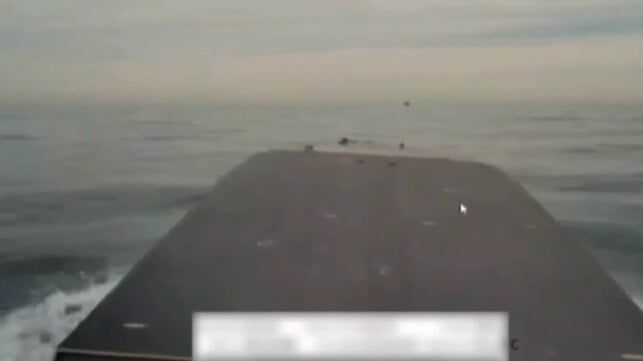
Ukraine's armed forces are known for use of unmanned boats to conduct attacks in the Black Sea, but Russia is catching up - in part by covertly adopting the same communications system, according to Ukrainian Defense Ministry Advisor Serhii Beskrestnov.
In a social media post, Beskrestnov reported that Ukrainian forces defeated an attempted Russian attack on Ukraine's southwestern coastline (the Odesa region). All of the boats were destroyed, he said, and they had an interesting feature: they were all fitted with illicitly-obtained Starlink terminals.
SpaceX's Starlink service is one of the main ingredients in Ukraine's military success, providing comms at the front line and remote control connectivity for combat drones at any range. Russia lacks an equivalent communications system for over-the-horizon, jamming-resistant command and control.
To even the playing field, Russian units have resorted to buying and using Starlink terminals from other countries. Since February, SpaceX has attempted to crack down on the practice by registering Ukrainian terminals to individual government ID numbers and denying access to any other terminals in the region. To counter this security protocol, some Russian units attempt to pay Ukrainian civilians to obtain online registration on their behalf - an illegal act, which Ukraine's security services are working to prevent.
The arrival of Russian USVs on the coastline was a long time coming. Ukraine was the only user of unmanned surface vessels in the Black Sea for years, and developed a formidable edge. But Russia instituted defenses against surface drone attack and is beginning to develop its own models, forcing Ukraine to adapt - a constant cycle of combat evolution. In a recent European conference panel covered by Navy Lookout, two naval officers from the Maritime Capability Coalition (MCC) for Ukraine said that the USV attack success rate has plummeted in the face of new Russian countermeasures, and that Russia is now contesting the space with its own USV capabilities. The pace of change is more rapid than NATO naval forces may be used to.
"The broader lesson is not that USVs are ineffective but, like any potential adversary, the Russians adapt and develop countermeasures. Every capability generates a counter, and the counter arrives faster than most Western procurement cycles are designed to handle," the panelists concluded.
The next step in drone evolution might be even more jam-resistant than Starlink. Both Ukraine and Russia are experimenting with fiber-optic control systems for long range surface drones, eliminating the need for radio comms near the target zone - if the engineering challenges can be solved.