• 4 min de lectura
• 4 min de lectura
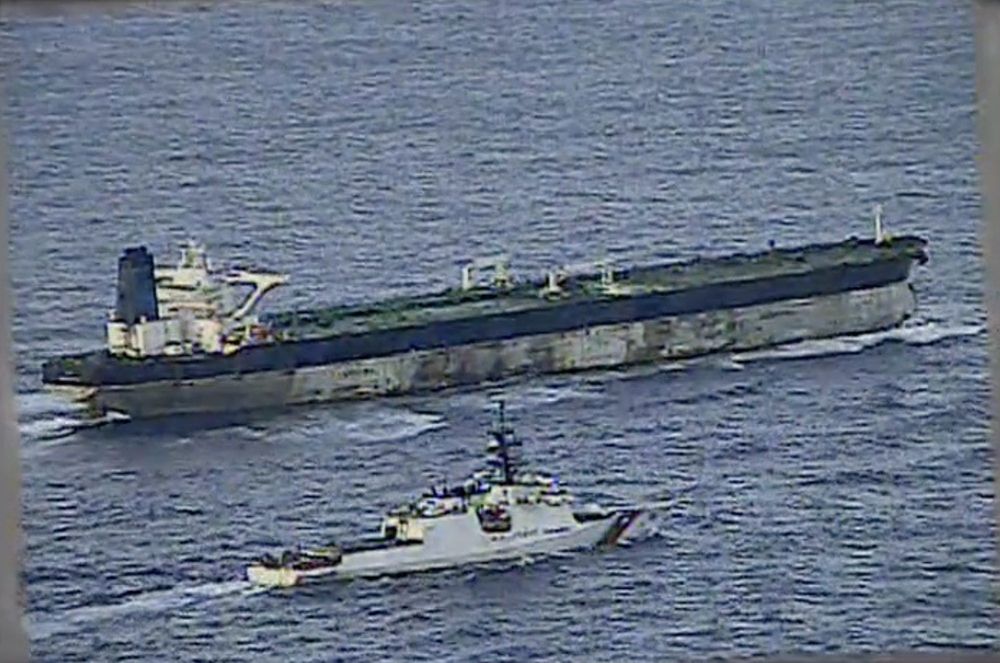
The former master of a shadow fleet tanker linked to Iranian and Venezuelan oil shipments has been sentenced to 10 months in federal prison after refusing orders to stop during a weeks-long pursuit by the U.S. Coast Guard across the Atlantic Ocean.
Avtandil Kalandadze, 47, a citizen of Georgia and former master of the tanker Bella 1, was sentenced in U.S. District Court for the District of Columbia after pleading guilty in June to one count of failing to heave to a Coast Guard cutter. He will be deported after completing his prison term.
"Kalandadze captained a vessel used to conceal illicit oil shipments for U.S. adversaries, and when the Coast Guard ordered him to stop, he fled," U.S. Attorney Jeanine Ferris Pirro said. "This case demonstrates that those who try to evade U.S. law enforcement even on the open sea will be held accountable."
The sentencing brings another chapter to a case that became one of the most closely watched maritime sanctions enforcement operations in recent years, involving a pursuit that stretched from the Caribbean into the North Atlantic before U.S. authorities ultimately seized the tanker.
According to the Department of Justice, Kalandadze served as master of the Bella 1 from September through late December 2025. During that period, the tanker transported approximately 1.8 million barrels of Iranian-origin oil to Asia while using techniques commonly associated with the so-called shadow fleet.
Prosecutors said the vessel sailed with its Automatic Identification System (AIS) switched off and concealed its name while conducting a ship-to-ship transfer of Iranian oil to another vessel.
The confrontation with U.S. authorities began in December 2025, when the Bella 1 was sailing toward Venezuela and was intercepted by the U.S. Coast Guard Cutter Munro. The tanker refused orders to heave to and instead continued into the Atlantic, prompting a pursuit that lasted more than two weeks.
Federal prosecutors said Kalandadze repeatedly ignored orders from U.S. law enforcement during the chase and, at the direction of a representative of the vessel's operator, destroyed records and other information aboard the tanker in an effort to frustrate the interdiction.
The pursuit attracted international attention as the tanker crossed the North Atlantic attempting to evade capture. During the chase, the vessel was re-registered in Russia and renamed Marinera. U.S. officials maintained that the change did not alter the vessel's legal status, arguing that it had been operating under a false flag when initially approached by the Coast Guard.
The chase ended January 7, when U.S. authorities seized the tanker in the Atlantic with assistance from Coast Guard and U.S. military personnel executing a judicial seizure warrant.
The Bella 1 had already drawn scrutiny from U.S. sanctions authorities before the pursuit. The vessel was previously sanctioned by the Treasury Department for its alleged involvement in transporting oil connected to networks associated with Iran's Islamic Revolutionary Guard Corps-Qods Force and Hezbollah.
Tanker tracking organizations have estimated that the vessel moved tens of millions of barrels of Iranian and Venezuelan crude since 2021.
The seizure came amid a broader expansion of U.S. maritime enforcement targeting tankers accused of moving sanctioned oil. What began with interdictions involving Venezuelan shipments in the Caribbean expanded into a wider campaign that saw vessels seized or boarded across several regions.
The prosecution also highlighted the increasing focus on the individuals operating vessels used in sanctions-evasion trades, rather than solely targeting ships, owners and trading networks through financial sanctions.
Kalandadze pleaded guilty on June 12 before U.S. District Judge Beryl A. Howell. The investigation was conducted by Homeland Security Investigations and the FBI, with assistance from the Department of Justice, U.S. Coast Guard and other federal agencies.