• 3 min de lectura
• 3 min de lectura
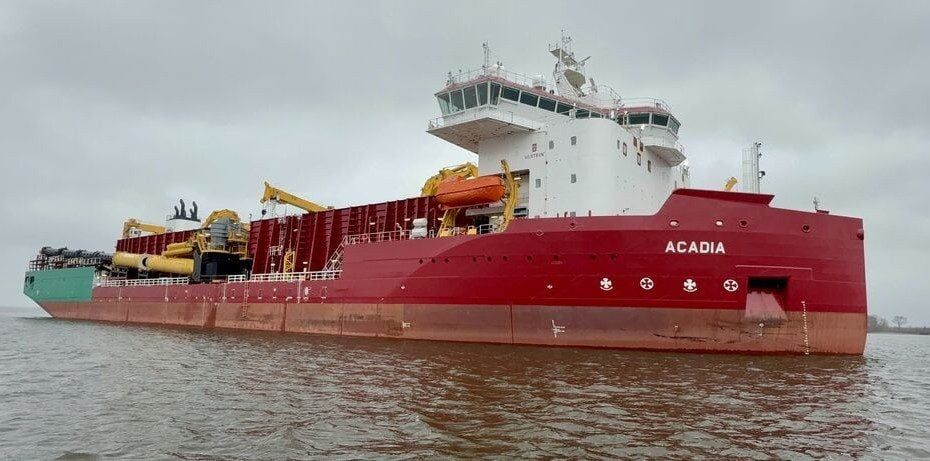
Great Lakes Dredge & Dock has taken delivery of Acadia, the first U.S.-flagged, Jones Act-compliant subsea rock installation vessel, marking a milestone for the domestic offshore construction fleet as the company expands its presence in the offshore energy sector.
The vessel, built by Hanwha Philly Shipyard in Philadelphia, will immediately begin work supporting Equinor's Empire Wind 1 project offshore New York before moving to Ørsted's Sunrise Wind project. Great Lakes also announced it has secured two new international offshore energy contracts with a major offshore wind developer that will keep Acadia working in Europe for most of 2027, providing visibility well beyond its initial U.S. assignments.
"Taking delivery of Acadia represents a transformative moment for Great Lakes and underscores our dedication to installing and protecting domestic and international offshore energy infrastructure," said Lasse Petterson, President and Chief Executive Officer of Great Lakes Dredge & Dock.
Designed to transport and precisely place rock on the seabed, Acadia provides scour protection for subsea cables, pipelines and offshore wind turbine foundations. The vessel is capable of carrying up to 20,000 metric tons of rock and is the first vessel of its kind built to comply with the Jones Act.
The delivery caps a multi-year investment by Great Lakes into the offshore energy market and comes about a year after the vessel was launched at Hanwha Philly Shipyard. Construction generated more than one million labor hours using U.S.-sourced steel and workers from several states, including Pennsylvania, New Jersey, Ohio, Texas and Louisiana.
While Acadia has secured work into 2027, it enters service during a period of significant change for the U.S. offshore wind industry.
Its first two assignments—Empire Wind 1 and Sunrise Wind—are among the few major U.S. offshore wind projects still under construction after the Trump administration moved to halt new offshore wind development. Over the past several months, the administration has reached negotiated settlements with multiple developers to voluntarily terminate offshore wind leases in exchange for redirecting billions of dollars toward nuclear, natural gas and electric grid investments.
Those agreements have significantly reduced the pipeline of future U.S. offshore wind projects, diminishing expected demand for specialized Jones Act vessels, port infrastructure and domestic supply chains that had been built around the sector.
Even so, Great Lakes' latest contract awards demonstrate that demand for specialized subsea rock installation vessels remains strong internationally, allowing Acadia to transition from its U.S. projects directly into European offshore wind work.
Acadia also represents a milestone for U.S. shipbuilding. Hanwha acquired the historic Philadelphia yard in late 2024, becoming the first South Korean shipbuilder to establish operations in the United States.
The delivery also adds to Hanwha Philly Shipyard's growing list of completed commercial projects as the shipbuilder works through one of the strongest orderbooks in the U.S. In addition to multiple National Security Multi-Mission Vessels under construction for the U.S. Maritime Administration, the yard is building three LNG-fueled containerships for Matson and has secured orders from Hanwha Shipping for two LNG carriers and 10 Jones Act product tankers, providing work well into the latter half of the decade.
With approximately 200 specialized vessels, Great Lakes is the nation's largest dredging contractor and has increasingly expanded into offshore energy, where Acadia is expected to play a central role in the company's long-term growth strategy.