• 4 min de lectura
• 4 min de lectura
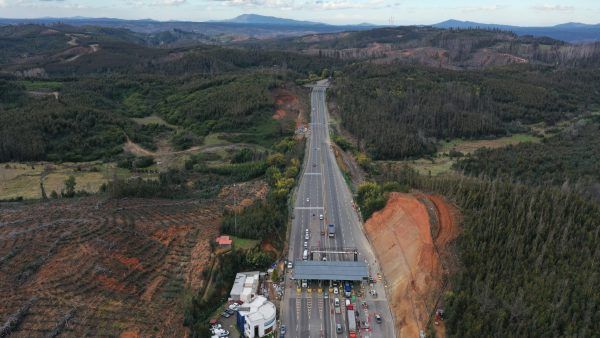
A new milestone in the modernization process of the Itata Route, which connects the Bio Bio and Ñuble regions, will be realized starting at 11 PM on Friday, August 14, with the beginning of the transition from the current toll system to a model that will progressively incorporate free-flow technology, allowing for faster transit.
In this first stage, both toll collection systems will coexist. At the Agua Amarilla main toll plaza, a stop & go system will operate, as will be the case at the lateral tolls, and manual payment booths will remain open, allowing for a gradual adaptation of users to the new modality.
The objective is that, during the last quarter of this year, the Itata Route will advance towards a more modern and efficient toll collection system, progressively reducing stops at toll points and favoring more expedited circulation through the free-flow system.
The regional ministerial secretary (seremi) of Public Works for Bio Bio, José Piña, highlighted that "we are taking a very important step in the modernization of the Itata Route. The progressive incorporation of the Free Flow system will allow users to have a more fluid and efficient travel experience, reducing stops and utilizing technology that is already present on the country's main highways. The important thing is that this transition will be gradual, initially maintaining manual payment alternatives to facilitate the adaptation of all users."
The regional authority added that "this is not just a modernization of the toll system. It is one of the first visible milestones of a reconcession that contemplates a comprehensive intervention of this strategic route for our region. We are talking about better safety standards, infrastructure, and connectivity, and a route prepared to respond to the mobility needs of the coming decades."
The second concession of the Itata Route, currently managed by Bosques del Itata, involves an investment of approximately USD 516 million and considers the intervention of about 96 kilometers of road infrastructure. The project includes improvement and conservation works, new interchanges, bridges, viaducts, footbridges, bus stops, service roads, bike paths, and other measures aimed at raising the safety and service standards of the highway.
The General Directorate of Concessions of the MOP has established that the renewal of the toll collection system will be progressive, first through the incorporation of gantries in Agua Amarilla and the stop & go system in the lateral plazas, while simultaneously maintaining manual collection; subsequently, with the commissioning of the works, the plan is to move towards an exclusively free-flow system on the main section of Route 152 and in the new connection.
"We are seeing how the Itata Route is beginning to change and incorporate infrastructure and technology standards in line with current needs. This is a process that will develop progressively, but it clearly marks the path towards a more modern, safe, and efficient highway," said Piña.
The manager of the Concessionaire Company Bosques del Itata, Juan Antonio Vasconcellos, stated that "we are in a key stage of transition towards the new electronic toll collection system of the Itata Route. Over the next few weeks, we will maintain a mixed operation, with manual and TAG lanes, as we advance in the gradual implementation of the free-flow system. Its launch is planned for November in the Agua Amarilla toll sector, where collection will be carried out using this technology for users who have their TAG device."
From the MOP Bio Bio, users were urged to inform themselves in a timely manner about the operation of the new system and to consider using the TAG, especially given the upcoming entry into operation of the electronic systems.