• 2 min de lectura
• 2 min de lectura
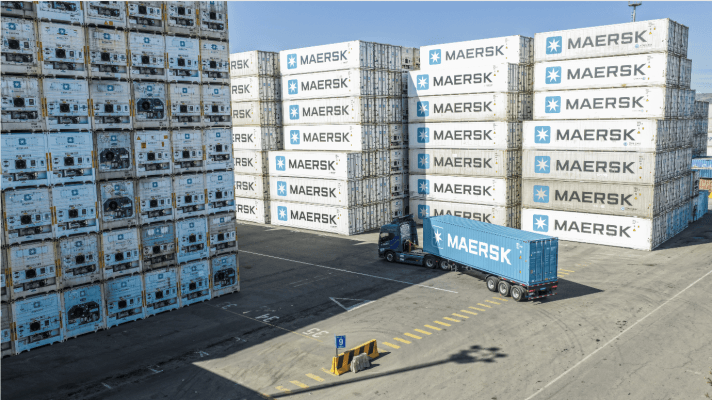
AP Moller – Maersk (Maersk) has launched an integrated cold chain logistics solution connecting origin operations in Chile with ocean transport, handling at US ports, fumigation, inland logistics, and cold storage, creating a scalable model for regulated products moving to the Mid-Atlantic and Southeastern United States region.
Developed in collaboration with fresh produce provider Oppy and the Port of Wilmington, this initiative addresses the limited fumigation capacity at major US ports of entry.
According to the company, fumigation of regulated products such as grapes is mandatory for entry into the United States, a process that can cause delays, longer waiting times, and an increased risk to cargo quality. In this context, by moving disinfestation to the destination and integrating it with cold chain operations, the new system reduces bottlenecks and improves supply chain predictability.
According to Maersk, this solution was designed end-to-end, from origin management in Chile to delivery in the US. By coordinating maritime, port, fumigation, storage, and inland logistics, the company can provide customers with greater visibility and control, allowing them to transport regulated products, specifically grapes, more efficiently and at scale.
Le Harlin, Head of Growth Enablement – Cold Chain, Maersk North America, commented that "the solution was developed through close collaboration between Maersk teams in Latin America and North America, along with port partners and regulatory bodies."
"Over a six-month period, fumigation capacity at the Port of Wilmington was expanded through additional permits and infrastructure improvements. This allows cargo to move seamlessly from vessel discharge to fumigation and subsequent distribution, supported by Maersk's integrated cold storage facility in Wilmington," Harlin stated.
The solution was piloted during the 2026 Chilean grape season with weekly sailings supported by coordinated destination fumigation and inland distribution via Wilmington. The pilot program demonstrated increased cargo availability and reduced transportation costs compared to alternative routes, while also establishing a replicable model for future growth.
In addition to grapes, the increased fumigation capacity allows for the handling of other regulated products, such as asparagus, blueberries, and citrus.