• 3 min de lectura
• 3 min de lectura
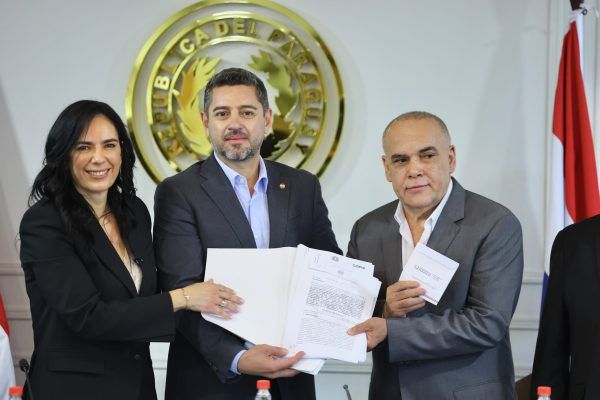
The Vice President of the Republic of Paraguay, Pedro Alliana, and the Minister of Public Works and Communications, Claudia Centurión, presented a draft bill to the Paraguayan Senate to approve the financing for the construction of the Southwest Integration Corridor.
The proposal was delivered to the President of the National Congress, Basilio Núñez, and includes 154 kilometers of roads, in addition to 25 kilometers of urban crossings to connect communities in Misiones and Ñeembucú.
"For us, for the department of Ñeembucú and for the department of Misiones, today is a historic date. Also, of course, for the Republic of Paraguay," said Alliana, who reported that the credit request amounts to USD 286 million.
The Vice President explained that the efforts made with the Government of Japan and the Japan International Cooperation Agency (Jica) allowed for an acceleration of a process initially planned for 2028.
Furthermore, the authority highlighted that the new infrastructure will provide all-weather roads to all districts of Ñeembucú.
"100% of the districts, the 16 districts of the Ñeembucú department, will have all-weather roads," affirmed Alliana and announced that adjustments to the route will be analyzed to strengthen the connection between Mayor Martínez and Itacorá.
For her part, Minister Centurión described the initiative as "a strategic project for our country" and explained that it will provide continuity to the Export Corridor that connects Alto Paraná with Itapúa.
"With this, we are completing what would be a new bi-oceanic corridor," affirmed the head of the portfolio. According to the Paraguayan government secretary, the new route will allow the articulation of the Integration and Friendship bridges with the south of the country, advance towards the connection with Argentina, and facilitate access to the Pacific ports.
Centurión stated that this network will strengthen regional integration and Paraguay's position as a logistics hub, in addition to reducing travel times and increasing the competitiveness of national production.
The Secretary of State also highlighted the social impact of the future highway for localities that were historically isolated during periods of rain and floods.
"This is to settle a historical debt with our compatriots in the south of the country," said the minister, noting that the project will favor access to services, boost tourism, and open new development opportunities.
The Ministry of Public Works and Communications (MOPC) plans to initiate, pending legislative approval, the call for the design and engineering of the corridor. The start of works is projected for 2027, with an estimated execution period of 30 months, plus the maintenance period.
The intervention will cover departmental routes 77 and 79, part of route PY20, and access to Cerrito. It will also include drainage systems, bypasses, road safety works, and four new bridges, including a 400-meter bridge over the Yabebyry River.
Once completed, the corridor could reduce transport costs, improve the circulation of agricultural and forestry products, and facilitate access for rural communities to health, education, and commercial services.