• 2 min de lectura
• 2 min de lectura
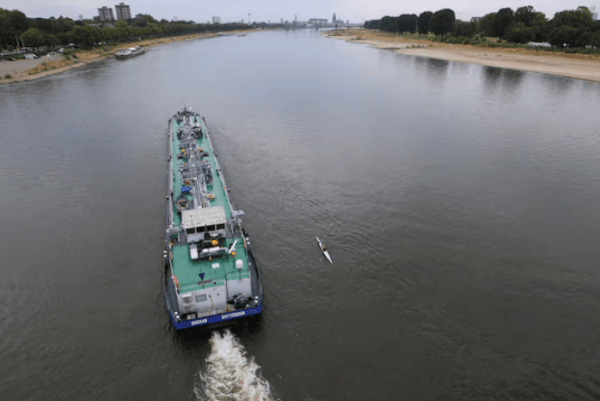
Water levels in the Rhine River fell again on Monday, July 27, after insufficient rainfall was recorded in southern Germany over the weekend, according to the Federal Waterways and Shipping Administration (WSV). The agency warned that the water flow will continue to drop in the coming days, prolonging complications for river transport on this key European commercial artery.
The drought and the recent summer heatwave have drastically reduced water levels, forcing cargo vessels to operate at only 15% or 20% of their capacity.
This situation has driven up logistics costs for cargo owners, who must hire multiple partially loaded vessels to transport the same cargo, representing a critical surcharge for German industry in the midst of its recovery process.
At the critical Kaub passage, near Karlsruhe, the WSV forecasts that the navigable depth will decrease from the 35 centimeters recorded this Monday to just 20 centimeters by next Friday.
Commodity sector operators warn that, while vessels can still navigate at extremely low levels, a point will be reached where loading capacity will be so reduced that voyages will no longer be profitable, or shipowners will suspend activities to avoid damage to vessel hulls.
The financial impact of this logistics crisis is already reflected in transport costs. The rate for tanker barges on the key route from Rotterdam to Karlsruhe climbed to between 120 and 125 euros per ton, a substantial jump from the approximately 45 euros charged at the end of June. Given the prolonged low water, companies do not rule out having to divert part of the cargo volume to road transport.
The Rhine is a vital artery for the supply of strategic industrial inputs, such as cereals, minerals, iron ore, coal, and petroleum derivatives like gasoline.
This situation revives fears among German companies of experiencing new bottlenecks and production disruptions, similar to the severe consequences left by the drought and hyperthermia of the 2022 summer season.