• 3 min de lectura
• 3 min de lectura
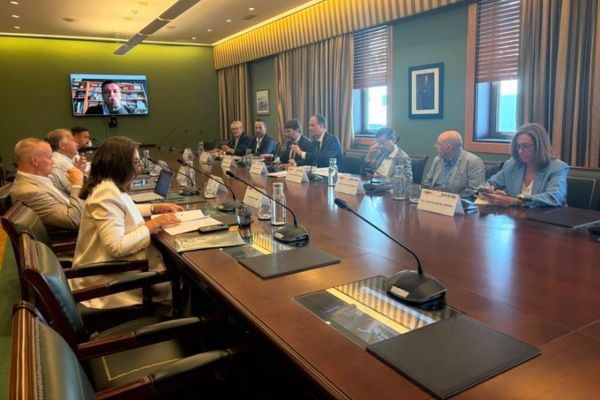
The president of the Port Authority of Vigo, Carlos Botana, presented to the Board of Directors the entity's accounts and the Business Plan that will set the strategic roadmap and port traffic until 2030.
The plan sets a goal of exceeding 6 million tons in the coming years, maintaining continuous short-term forecasts due to current space limitations, while various expansion and optimization works are carried out.
In this context, and to maintain competitiveness against neighboring peninsular and Portuguese ports, the Port of Vigo designed an ambitious Investment Plan that will exceed USD 330 million by 2030.
The largest investment load will be concentrated between 2027 and 2029, a period in which more than USD 175 million will be mobilized (highlighting more than USD 55 million in 2027 and USD 78 million in 2028).
Among the main actions are the car silo, an allocation of USD 41 million to meet logistical and industrial demand; USD 14 million allocated to the modernization and improvement of fishing port infrastructures and the development of a state-of-the-art ship repair base, in collaboration with the sector (Aclunaga, Asime) to position the Port of Vigo as an international benchmark.
Finally, there will be a presentation to Puertos del Estado of the project for the new emblematic Border Control Point (BCP) of more than USD 18 million. Designed with sustainable architecture criteria (vertical gardens, green roofs, and renewable energies), it will double the current container inspection capacity and consolidate Vigo as a major food port.
As Botana emphasized, "our natural conditions are unbeatable, but we must provide the port with the necessary surface, land, and berthing capacity so as not to lose competitiveness against other neighboring ports."
The ecological transition will have a specific budget of USD 37 million. The plan includes the installation of new solar panels on port roofs, continuing the installations of the General Shed, and the development of Onshore Power Supply (OPS) systems for electricity supply to cruise ships and container ships.
In this area, the Port Authority already has authorization for 6 MW destined for Guixar, although work is underway on a highly innovative project with the aim of applying for European funds. This model will include the use of battery storage, ammonia, and new clean fuels to compensate for possible deficiencies in the conventional electrical grid.
On the social front, the Port of Vigo reaffirms its commitment to inclusion, equality, and institutional transparency. In this regard, and concerning gender equality, Botana indicated that the presence of women in the workforce has increased from 15% to over 30%, progressively advancing towards the final goal of 50% through the implementation of a new Equality Plan.
Similarly, the institution's transparency index has experienced an increase of more than 30%, currently standing above 70%, with the goal of exceeding 90% in the next fiscal year.
Source: Portal Portuario