• 2 min de lectura
• 2 min de lectura
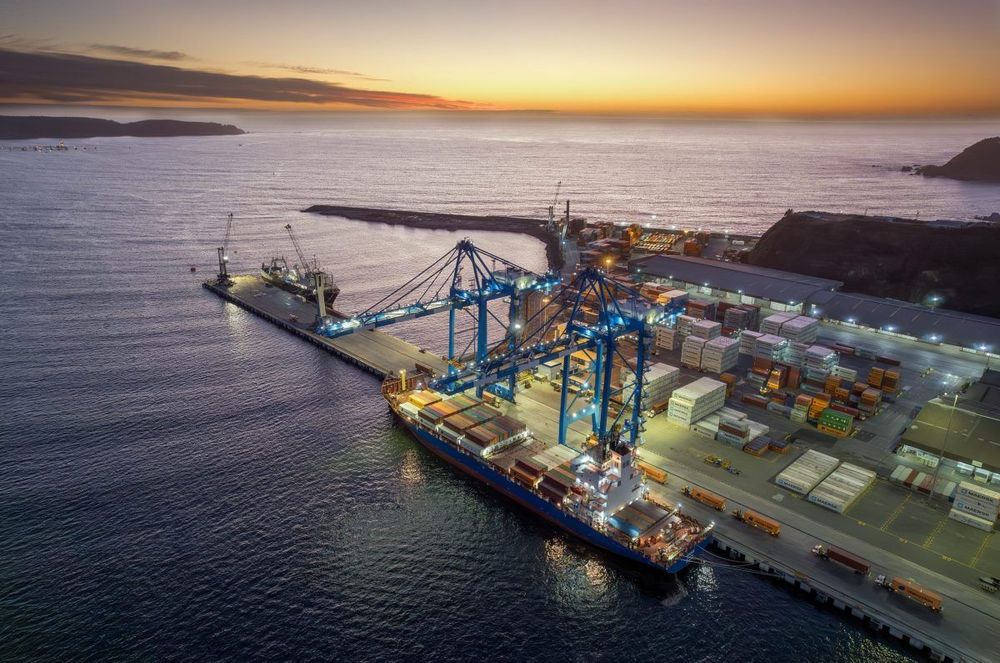
In June 2026, the total cargo mobilized in the ports of the Bio Bio Region was 2,346,060 tons, registering a growth of 9.6% in the annual comparison, according to data released by the National Institute of Statistics (INE).
According to the report, the most significant positive impact was driven by the foreign inbound cargo service, which showed an increase of 44.1% after mobilizing 867,417 tons. This rise was supported by a greater volume of solid bulk (720.4%), loose or general cargo (93.9%), and containers (20.1%).
Meanwhile, outbound foreign cargo reached 1,022,470 tons (representing 43.6% of the total), although it recorded a decrease of 3.6% mainly due to less movement of solid bulk (-100%). Restowage and transshipment operations mobilized 57,192 tons, registering a decline of 22% caused by less restowage activity (-29.2%).
Conversely, the cabotage service decreased by 1.4% in twelve months, totaling 357,201 tons, explained by less embarked cargo (-2.8%). The transit service also showed negative values, contracting 2.1% (41,780 tons) due to less unloaded cargo (-1.6%) and loaded cargo (-5.7%).
The INE report also highlights that containers handled in regional port facilities totaled 135,400 TEU, recording an increase of 23.1% in twelve months.
This advance was leveraged by 40-foot cargo containers, which dominated the spectrum with 93% of the total movement (65,257 units) and a growth of 23.5%. Likewise, 20-foot boxes reached 4,886 units (7% of the total), registering a year-on-year increase of 12.1%.
Land Transport and Tolls
Alongside port activity, the flow of cargo vehicles on regional roads registered a decrease. During June 2026, the toll booths in Bio Bio controlled 468,598 passages of cargo vehicles, which meant a decrease of 4.6% compared to June 2025 (22,437 fewer passages).
This decrease was concentrated in trucks with three or more axles (which represent 77.4% of heavy transport in the area), whose passages fell by 4.6% year-on-year with 362,623 controls. For their part, two-axle trucks (22.6% of the total) registered 105,975 passages, contracting by 4.5%.