• 3 min de lectura
• 3 min de lectura
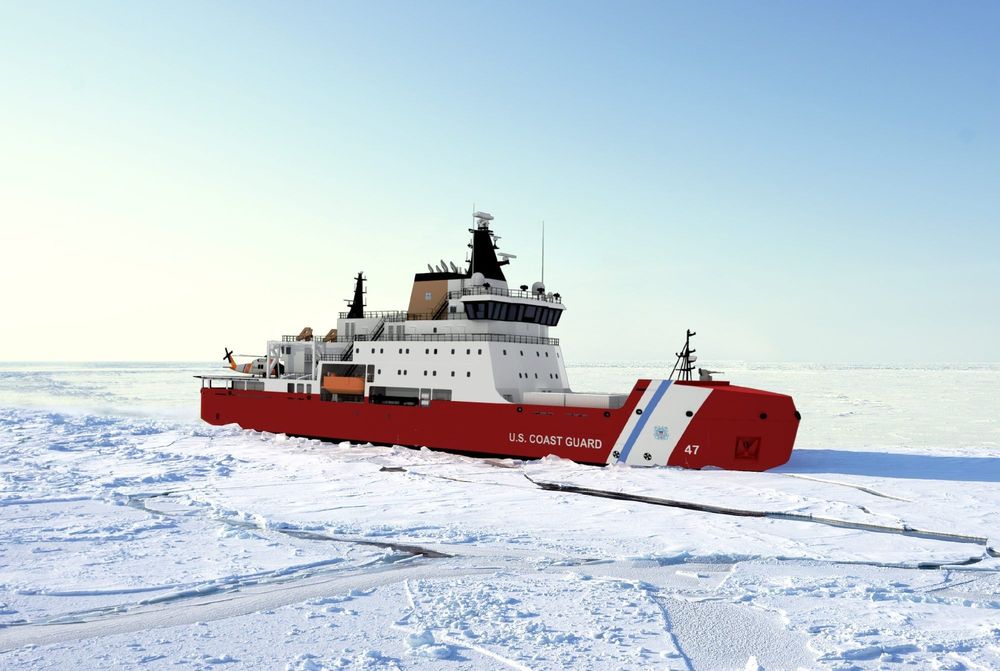
The United States has finalized contracts worth $3.3 billion for six new Arctic Security Cutters (ASCs), completing the procurement of the Coast Guard's first major new medium icebreaker fleet in decades as one of the shipbuilders revealed construction on the lead vessel quietly began in April.
The Department of Homeland Security said on Wednesday it finalized a $2.2 billion contract with Bollinger Shipyards for four Polar Class 4 Arctic Security Cutters and a separate $1.1 billion agreement with Finland's Rauma Marine Constructions for two sister ships. The six vessels are scheduled for delivery by the end of 2031, with the first Finnish-built cutter expected in 2028 and the first U.S.-built vessel following in 2029.
The awards complete the first phase of the Coast Guard's planned fleet of 11 Arctic Security Cutters, following a separate $3.5 billion contract awarded in May to Davie Defense and Helsinki Shipyard for five larger Polar Class 3 vessels due through 2035. Construction on the first Davie icebreaker began at Sata Shipbuilding's yard in Pori, Finland last week.
"America's future in the Arctic demands strength, capability, and resolve," said Homeland Security Secretary Markwayne Mullin said in the DHS announcement. "These cutters will deliver the enduring operational capability our Nation needs to defend our sovereignty, deter adversaries, and safeguard vital resources for the American people."
Adm. Kevin Lunday, commandant of the Coast Guard, said "finalizing these contracts represents decisive action to guarantee American security in the Arctic."
"The Arctic Security Cutters will deliver the essential capability to uphold U.S. sovereignty against adversaries' aggressive economic and military actions in the Arctic."
The latest awards imply an average procurement cost of roughly $550 million per vessel for the Bollinger and Rauma ships. By comparison, the recently awarded Davie contract averages approximately $700 million per vessel, although those cutters will be built to the higher Polar Class 3 standard, allowing operations in more demanding ice conditions.
The costs also compare with several recent international icebreaker programs. Sweden's new Polar Class 4 icebreaker, ordered from HD Hyundai Heavy Industries, is valued at about $349 million, while South Korea's next-generation polar research icebreaker is expected to cost roughly $220 million. Differences in mission requirements, military systems, survivability standards and domestic production requirements make direct comparisons imperfect, but they illustrate the premium attached to the Coast Guard's new Arctic fleet.
Separately, USNI News reported that Bollinger had already begun cutting steel for the first U.S.-built Arctic Security Cutter in April, months before the final contract announcement, allowing work to proceed while negotiations were still underway. Bollinger said the early start demonstrated its commitment to accelerating delivery of the program and rebuilding America's icebreaker capability.
"It's all hands on deck," Bollinger president Ben Bordelon told USNI News. "That direction that was given by the White House to make sure that schedule is king and let's not make changes and reinvent the wheel on stuff."
The Bollinger and Rauma vessels are based on the production-ready Multi-Purpose Icebreaker design developed by Canada's Seaspan Shipyards together with Finland's Railotech, while Davie's cutters use the company's fourth-generation Multi-Purpose Polar Support Ship design.
Finland will build four of the first six cutters before production expands to U.S. shipyards under the trilateral Icebreaker Collaboration Effort (ICE Pact) involving the United States, Finland and Canada.
Once completed, the 11 Arctic Security Cutters will represent the largest-ever modernization of the U.S. Coast Guard's icebreaker fleet as Washington seeks to narrow a long-standing capability gap with Russia while responding to growing Chinese activity and commercial interest across the Arctic. The first cutters are expected to be homeported in Alaska beginning in 2028.