• 3 min de lectura
• 3 min de lectura
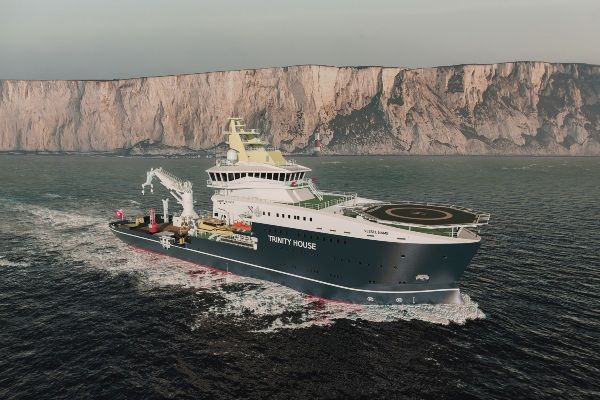
VARD, the Norwegian subsidiary of the Fincantieri Group, has signed a contract for the design and construction of two multi-purpose buoy and lighthouse maintenance vessels (BMV) for Trinity House, the General Lighthouse Authority for England, Wales, the Channel Islands, and Gibraltar. The contract is valued at over USD 240 million.
The contract, awarded after a public tender, is part of Trinity House's three-vessel fleet renewal program. The new units will replace the THV Patricia and THV Galatea, strengthening the organization's ability to ensure safe, efficient, and reliable aids to navigation, and supporting the maintenance of strategic maritime infrastructure in British waters.
The vessels will be built according to the VARD 9 601 design, developed by Vard Marine in Canada in collaboration with Vard Design in Norway. Conceived as highly versatile multifunctional platforms, they will combine buoy maintenance operations, hydrographic survey activities, and emergency response capabilities, supporting Trinity House in fulfilling its mission as one of the oldest and most respected maritime institutions in the world.
Pierroberto Folgiero, CEO and General Manager of Fincantieri, commented that "the award of this contract represents significant recognition of VARD's expertise and Fincantieri's industrial and technological leadership in the construction of complex vessels. Supporting an organization like Trinity House means contributing to the safety, reliability, and resilience of maritime services and infrastructure through solutions that combine sustainability, innovation, and a long-term vision."
"This program reflects our commitment to developing strategic capabilities that are redefining the future of the maritime sector, from energy transition and digitalization to the security and resilience of critical infrastructure and systems," Folgiero added.
The vessels will be equipped with hybrid propulsion systems and battery energy storage systems designed to reduce fuel consumption and environmental impact, enabling zero-emission operations in port and ensuring greater efficiency in navigation and dynamic positioning.
Designed for maximum future adaptability, the ships will also be prepared for a possible conversion to methanol as fuel, further reducing their environmental footprint throughout their lifecycle.
In addition to high environmental performance, the vessels will integrate advanced digital capabilities and cybersecurity systems designed to ensure the safe and reliable operation of onboard systems, in line with the growing importance of cyber resilience in the maritime sector.
The contract also includes a training alliance between VARD, Trinity House, and Vard Marine in Canada, promoting the international exchange of skills and contributing to the development of maritime professionalism through programs dedicated to apprentices and students.
The vessels will be built leveraging VARD's globally integrated industrial model. Deliveries are scheduled for the second and fourth quarters of 2029 from one of the company's shipyards in Norway.