• 3 min de lectura
• 3 min de lectura
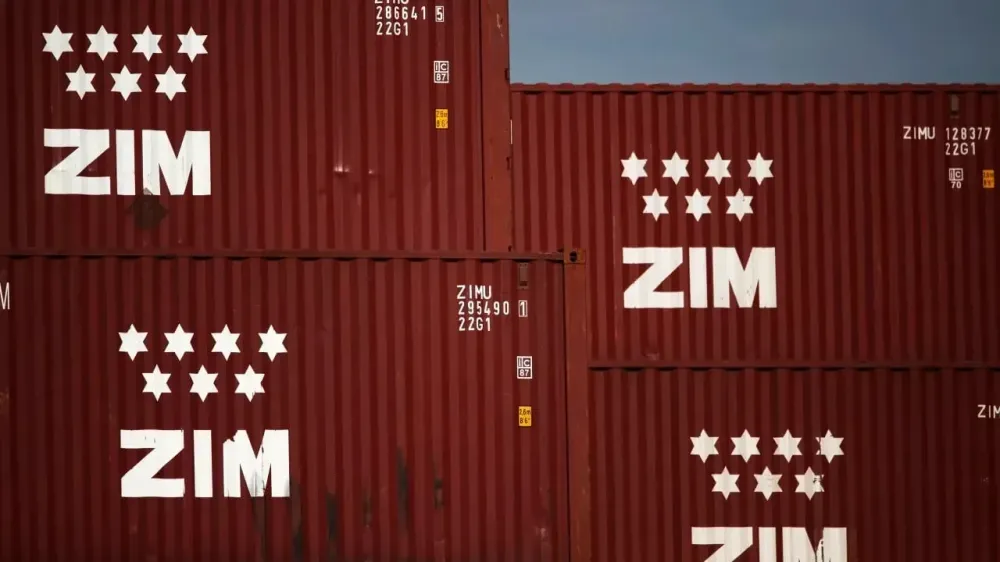
The Government of Israel confirmed its opposition to the merger agreement between shipping company ZIM and Hapag-Lloyd. The reason for this stance is justified by the safeguarding of national security.
It should be noted that in February 2026, the Israeli company, ZIM Integrated Shipping Services, reached an agreement to sell all its shares to Hapag-Lloyd in a transaction exceeding $4 billion.
After it became known that Israeli Prime Minister, Benjamin Netanyahu, and his Defense Minister, Israel Katz, were reportedly against the sale of ZIM, PortalPortuario exclusively contacted the Israeli Ministry of Defense, who stated in writing that this transaction would go against their strategic safeguards.
"The Minister of Defense (Katz) adopted the position of the National Security Council of the portfolio and professional bodies, according to which the sale of ZIM in the proposed format does not allow for the preservation of the security interests of the State of Israel," assured the Spokesperson's Unit and Public Relations Division of the aforementioned state department.
According to press reports in Tel Aviv, this potential security risk would be related to the foreign origin of Hapag-Lloyd's capital, some of which is state-owned. This aspect directly connects with the kingdoms of Qatar and Saudi Arabia, who, through public investment funds, own 12.3% and 10.2% of the German shipping company's shares.
Therefore, selling a "strategic" company to a company with owners from countries that have maintained disputes with Israel would jeopardize the country's maritime security. For this argument, ZIM's role during the Gaza war has been highlighted, with its operations being vital to alleviate maritime blockades, so a change in ownership could be "problematic" for Israel in a potential new military conflict.
Participation of Chilean Capital
Regarding the other owners, the Quiñenco Group - a Chilean private company - which, through Compañía Sud Americana de Vapores (CSAV), owns 30% of the company, would also have raised alarms among Israeli authorities, given the potential pressures that the board of this conglomerate could suffer from the Government of Chile, which, according to some Knesset leaders, has on more than one occasion taken a critical stance on Israel.
In this regard, this media outlet contacted the Embassy of Israel in Chile, who, through its Press Office, indicated that "the concern that exists among some Israeli authorities regarding the acquisition process of the ZIM shipping company has no relation to Chile, but rather to the fact that a strategic company like this ceases to have Israeli controllers."
In parallel, inquiries were also made to CSAV and the Chilean Ministry of Foreign Affairs, both entities declined to comment on the situation.
Israel's "Golden Share"
Despite the merger agreement between both companies already being signed, the State of Israel possesses the so-called "Golden Share," an element of its national jurisdiction that applies to privatized companies that were once state-owned (ZIM was sold to investors in 2004).
In this case, state authorities can apply this option to any sale of shares exceeding 24% of the entity or that signifies a change of control.
For now, there is no confirmation that the government will decide to use this mechanism, which could veto the aforementioned shipping company transaction.