• 5 min de lectura
• 5 min de lectura
The International Maritime Organization will begin a large-scale evacuation of more than 11,000 seafarers still stranded in the Persian Gulf following last week's U.S.-Iran peace agreement.
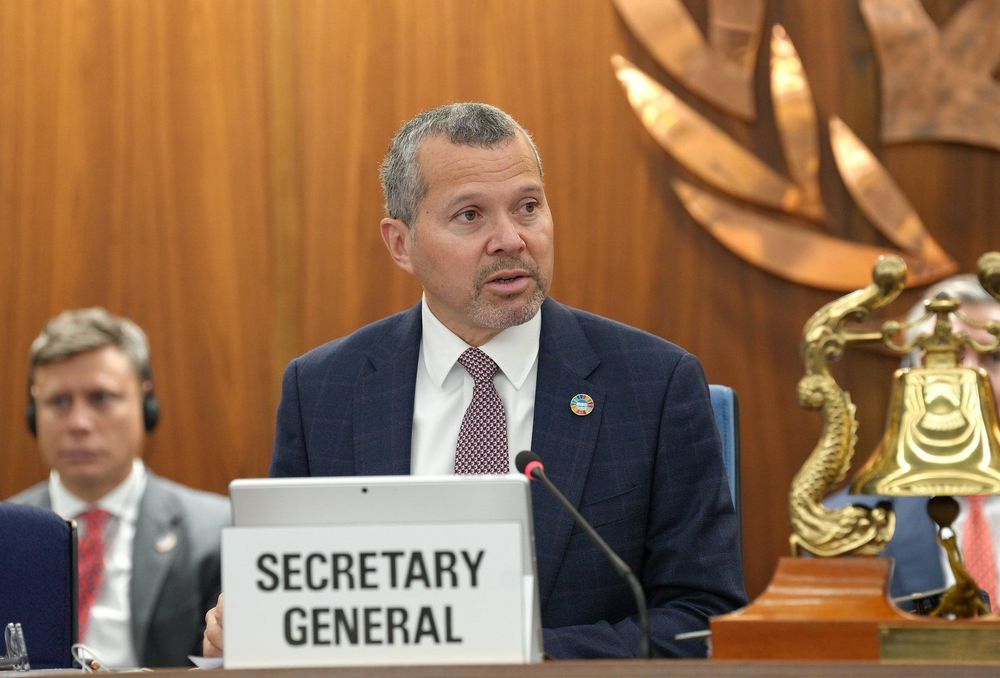
IMO Secretary-General Arsenio Dominguez announced the plan on Tuesday, saying the operation will be carried out in cooperation with Iran, Oman, other coastal states, the United States and the maritime industry.
"After months of hardship and distress for thousands of innocent seafarers, and negative impact for the whole world, I welcome with deep satisfaction the peace agreement concluded between the United States and Iran, marking a decisive step towards restoring maritime security and bringing to an end the unacceptable attacks against civilian shipping," Dominguez said.
The Secretary-General also paid tribute to the 14 seafarers killed during the conflict.
"We will begin the implementation of the evacuation plan for over 11,000 seafarers still stranded in the region," he said. "This large-scale operation will be carried out in close cooperation with Iran, Oman, all other coastal States in the region, the United States and the maritime industry."
The announcement moves into action a plan the IMO first began developing in March, when thousands of ships and tens of thousands of seafarers became trapped inside the Gulf amid attacks on commercial vessels, mine threats and the effective closure of the Strait of Hormuz.
At its peak, the IMO estimated roughly 20,000 seafarers aboard approximately 3,200 vessels were unable to safely leave the region.
The evacuation framework now emerging offers one of the clearest pictures yet of how shipping will operate during the transition period.
A navigation warning issued by Oman's National Hydrographic Office states that the IMO has established a "phased approach" for vessel departures using designated groups of ships coordinated with Omani authorities. The warning says the process is intended to provide a "gradual and controlled evacuation of vessel traffic" due to elevated safety risks in the Strait.
Perhaps most significantly, the document states that "current reports indicate that the TSS is not safe for use at this time."
Instead, vessels departing the Gulf may use one of two temporary routes through the Strait of Hormuz—one south of the existing Traffic Separation Scheme and another to the north.
The southern corridor runs through waters coordinated by Oman and the IMO, while a separate northern route has emerged alongside Iran's increasingly active role in managing traffic through the Strait.
Ships will be contacted individually regarding departure schedules and directed to a designated waiting area in international waters before receiving final transit instructions from the relevant coastal state. The warning also requires vessels to maintain AIS transmissions and comply with instructions issued by coastal authorities via VHF.
The procedures reflect the continuing security concerns in the Strait even after last week's Islamabad Memorandum of Understanding between the United States and Iran.
Dominguez said the IMO has "secured the necessary safety guarantees" and "thoroughly verified the conditions for safe navigation" to support the evacuation effort.
Still, the organization's own guidance makes clear that risks remain. Mine threats continue to shape traffic management decisions. Under the U.S.-Iran memorandum, Iran bears primary responsibility for de-mining operations, though shipping groups have said no formal mine clearance campaign has yet begun.
The Omani navigation warning also notes that vessel traffic may be temporarily suspended for safety or security reasons, including deconfliction with naval forces operating in the area.
Separately, the U.K. Maritime Trade Operations (UKMTO) confirmed it is supporting the IMO-coordinated evacuation process.
In an advisory issued June 23, UKMTO said the IMO is working with industry organizations, coastal states and regional partners to develop a "prioritized approach to the safe and orderly movement of vessels," including the identification of ships for phased departures from the Gulf. Vessels may be contacted directly regarding their inclusion in an IMO planning batch, though UKMTO emphasized that participation remains voluntary and that decisions regarding vessel movement, routing and timing remain the responsibility of the master and shipowner.
The evacuation plan is unfolding as the broader governance of the Strait remains under discussion.
On Tuesday, Iran and Oman announced plans to establish a joint working group to negotiate the future administration of navigation in the Strait of Hormuz, including maritime services and associated costs.
At the same time, U.S. Central Command has emphasized that freedom of navigation remains intact and that U.S. forces continue operating in the area to support safe passage.
The result marks the beginning of a remarkable transition period where commercial traffic is returning, but under temporary routes, phased evacuations and a still-evolving framework for how one of the world's most strategically important waterways will be managed in the future.
For now, the IMO's priority is getting thousands of seafarers home safely after nearly four months trapped inside a conflict zone.
"We remain fully committed to ensuring the safety of seafarers and the continuity of global trade," Dominguez said.
Fuente: GCAPTAIN_NEWS