• 2 min de lectura
• 2 min de lectura
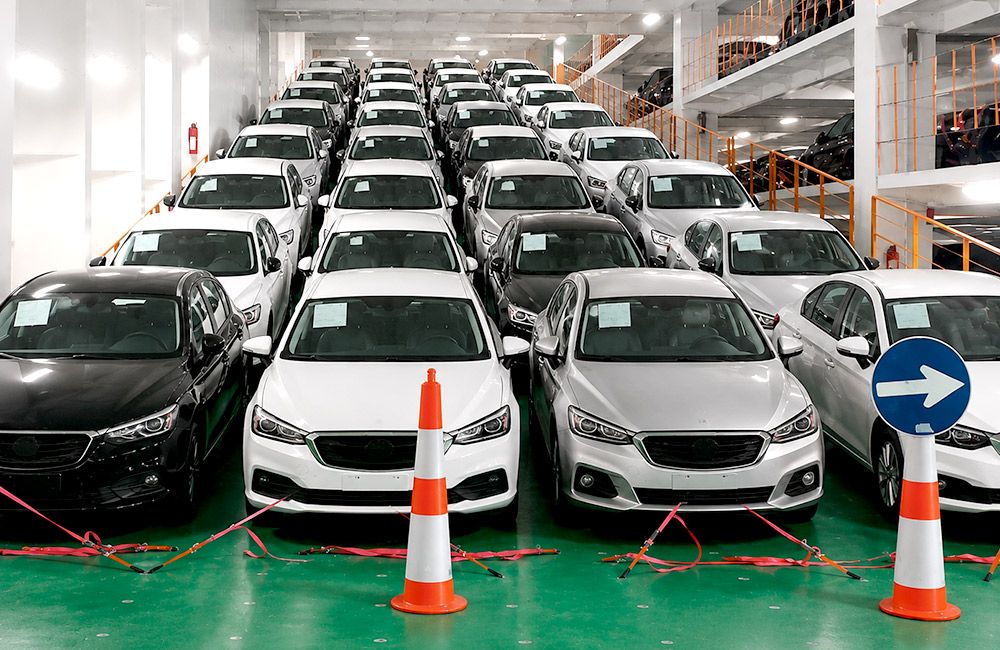
Mitsui OSK Lines, Ltd. (MOL) announced that, in collaboration with Yamato Chain and MOL Techno-Trade, it has developed the Skater, a device designed to move vehicles that are temporarily unable to move under their own power aboard car carriers, and has begun implementing it across the entire MOL-operated fleet.
Previously, moving vehicles that could not move on their own required hiring a crane, and in ports where this type of service was difficult to obtain, it could delay cargo handling for several hours. However, with the introduction of the Skater, these vehicles can now be moved in approximately five minutes. This significantly reduces bottlenecks in cargo handling and departure delays, contributing to strengthening the car transport system.
On Ro-Ro vessels, thousands of vehicles are loaded into an extremely limited space, with approximately 30 centimeters from front to back, 10 centimeters from side to side, and a minimum vertical clearance of 10 centimeters. Because vehicles are loaded and unloaded in a predetermined sequence, even a single vehicle that is temporarily unable to move on its own—due to low fuel, a dead battery, or similar issues—can disrupt the loading and unloading operations of surrounding vehicles.
This has represented a constant challenge, as bottlenecks in the overall cargo handling process can lead to departure delays. Deploying a crane often results in long waits, and in some ports, it may be impossible.
The Skater is a specialized device that is mounted directly onto the vehicle to facilitate its movement. It allows for the rapid resumption of loading and unloading operations without relying on external support, ensuring safe and reliable cargo handling in any port worldwide.