• 3 min de lectura
• 3 min de lectura
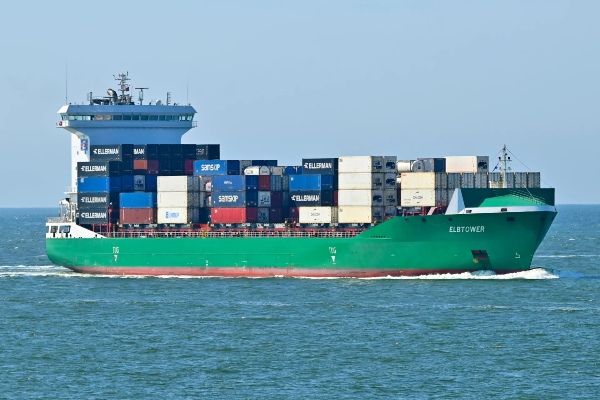
The German company USC Barnkrug, the naval services division of Elbdeich Reederei, has adopted CMT's Ferrous Wear Debris Monitor (FWDM) to improve cylinder condition monitoring in its new fleet of container ships with two-stroke engines.
The decision follows a successful onboard trial that demonstrated that monitoring ferrous metal debris could offer repeatable results, better agreement with laboratory analyses, and a simpler testing process than the total iron methods previously used by the owner.
USC Barnkrug manages and crews a fleet of around 32 vessels, including a series of new 1,400 TEU container ships powered by two-stroke diesel engines operating on low-sulfur fuel.
As this significant step takes the company beyond its comfort zone in four-stroke engines, it sought a partner that could provide a better understanding of the oil recovery process and support a cost-effective cylinder lubrication strategy.
"Cylinder lubrication requires precise control, with flow rates high enough to protect components while avoiding unnecessary oil consumption," said David Fuhlbrügge, Managing Director of CMT.
USC Barnkrug initially evaluated total iron measurement solutions from various suppliers but identified several drawbacks during onboard use. Furthermore, it found that onboard readings did not always match subsequent laboratory results, reducing confidence when deciding whether feed rates could be adjusted.
Repeatability was also limited, as repeated tests of the same sample did not always yield the same result. In addition, the process required auxiliary chemicals and equipment and could take between five and six hours for a seven-cylinder engine, representing a considerable workload for onboard engineers.
Having previously used CMT's cloud-based Premet X engine analysis platform, the vessel manager contacted the company for a more practical solution to optimize cylinder oil flow and monitor liner and ring wear directly through analysis of extracted oil.
"We recommended the FWDM, which measures ferromagnetic wear particles in cylinder drain oil to provide a direct indication of wear trends and lubrication performance. The meter offers repeatable and accurate measurements down to single ppm levels," CMT explained in an online case study. Particle dielectrics, additives, and water content do not affect readings.
USC Barnkrug trialed the FWDM on a newly delivered 1,400 TEU vessel over a two-month period. Onboard engineers analyzed the same samples multiple times to evaluate its performance. In some cases, each sample was analyzed up to six times. The trial showed that FWDM measurements were consistent within acceptable tolerance ranges and more closely approximated laboratory results than the previously used total iron method.
"The FWDM method simplifies the testing process. No chemicals are required. Consumables are limited to simple plastic tubes, and testing time is reduced. For a seven-cylinder engine, this significantly decreases the workload and time for onboard engineers compared to the previous method," stated Fuhlbrügge.
Following the trial, USC Barnkrug stopped performing total iron measurements and is now implementing FWDM across its entire fleet of two-stroke vessels. "The FWDM method provided data that onboard engineers could use more effectively to assess cylinder condition and lubrication performance. This facilitated supporting our cylinder oil strategy with reliable and practical onboard data," the case study indicates.
CMT reported that this collaboration underscores the value of measurement reliability in engine monitoring, especially for operators managing modern two-stroke engine fleets. By identifying wear trends early and providing engineers with reliable data, FWDM contributes to better lubrication decisions and more efficient maintenance planning.