

• 3 min de lectura
• 3 min de lectura

August 12, 2026
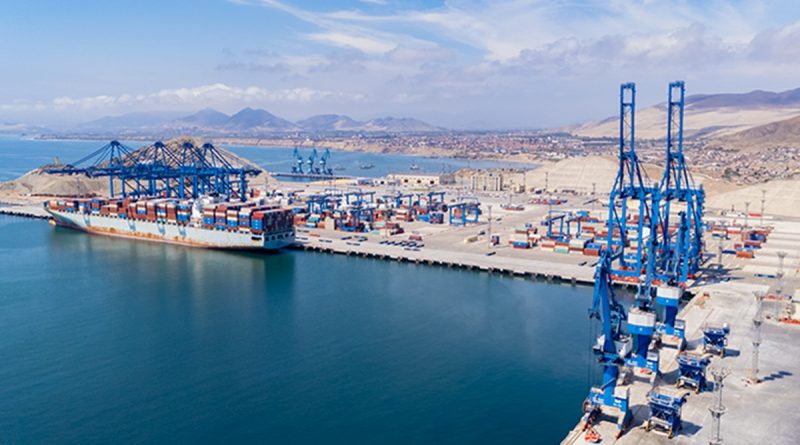
COSCO Shipping Lines launched the CHX3 maritime service, connecting Paita, Chancay, and Caldera (Costa Rica), strengthening the megaport as a logistics hub between Latin America and Asia for exports such as fresh fruit.
Almost two years after its inauguration, the port of Chancay is expanding its role as a logistics center for trade between Latin America and Asia. The Chinese shipping company COSCO Shipping Lines has launched the CHX3 maritime service, offering a weekly connection between the ports of Paita (Peru), Chancay, and Caldera (Costa Rica).
The new service links Paita — a logistics center for containers and cold chain that serves agricultural, fishing, mining, and textile exporters from the north of the country — with Chancay and trans-Pacific routes to Asia.
According to the Peruvian fruit exporter Ecosac, the service could shorten fresh fruit transport times, reduce the risks of cargo loss, and decrease logistics costs.
Since its inauguration in November 2024, Chancay has reduced maritime transport time between Peru and China to 23 days and cut logistics costs by 20%. The port has generated US$3.65 billion in import and export trade, mobilized 500,000 TEUs, and contributed over S/1.64 billion in tax revenue.
It currently operates three trans-Pacific trunk routes and five regional feeder services. This year, it added direct connections with Taicang, Nanjing, and Guangzhou (China); the direct Taicang-Chancay route reduced transit time to 26 days.
In 2025, the terminal handled 336,200 TEUs in containers, while bulk and roll-on/roll-off cargo operations reached 1.595 million tons. According to Global Times, the port is projected to generate US$4.5 billion in annual economic benefits for Peru — equivalent to 1.8% of GDP — and more than 8,000 jobs.
Furthermore, the network expansion is expected to offer additional shipping options for Latin American exporters of products such as fresh fruit. New maritime transport connections, digitalization, and the integration of artificial intelligence are also being considered as part of the port's development.
The port of Chancay has consolidated itself as the second port terminal in Peru with the highest container movement, according to APN data compiled by ComexPerú. Between January and May, it mobilized 164,221 TEUs, surpassing Paita's 134,072 TEUs and concentrating nearly 9.6% of national traffic, although still far from Callao, the leader with over 1.37 million TEUs.
However, a large part of this movement corresponds to transshipment, which represented 55.7% of the terminal's operations as of May; including restowage, connection and cargo reorganization operations reached 63.1%. According to ComexPerú, Chancay is primarily establishing itself as a regional connection point that diverts cargo to longer-range services destined for Asia.
To sustain its growth, specialists from the CCL and ComexPerú warn that port infrastructure must be accompanied by a logistics network that reduces congestion on the Panamericana Norte and improves land connection. In parallel, the judicial discussion on tariff regulation remains open, after the Judiciary rejected Cosco Shipping Ports' lawsuit against Indecopi in June.
@Gestion

