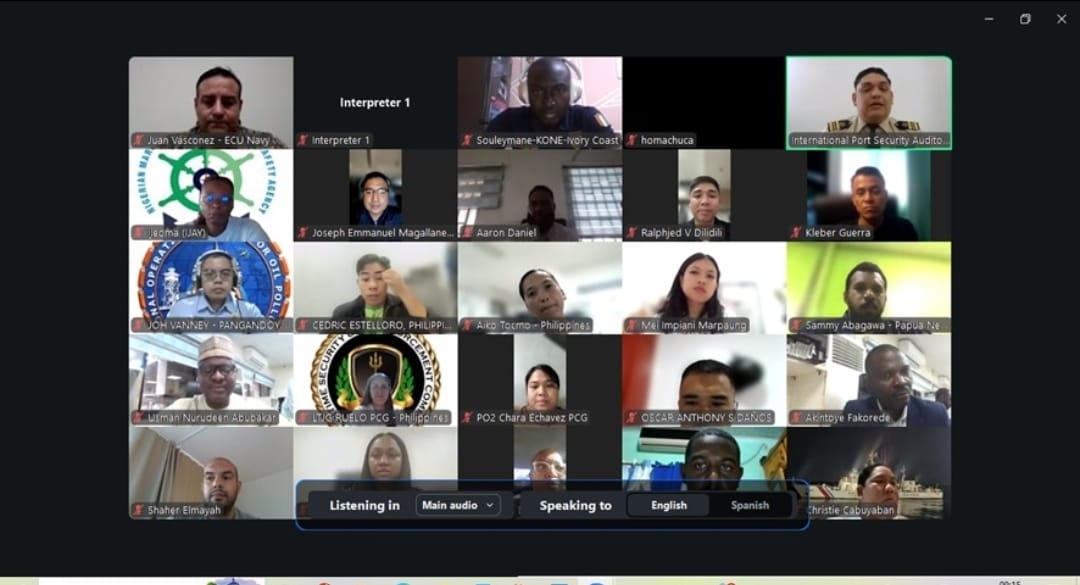
This training, coordinated by the Institution's Secretariat for International Affairs, is part of an offering of six international courses that the Force presented to the International Maritime Organization (IMO), with the aim of strengthening technical cooperation and sharing the knowledge, capabilities, and experiences developed by the Institution with officials and professionals from Maritime Administrations of different Member States.
Participating countries include Uganda, Togo, the Philippines, Ivory Coast, Bahamas, Scotland, Nigeria, Guyana, Barbados, Indonesia, Senegal, Thailand, and Comoros, among others, reflecting the international scope of the initiative and the diversity of experiences and perspectives that converge in the development of the activity.
Throughout the two weeks of training, content related to the implementation and application of the ISPS Code will be addressed, as well as the main aspects linked to maritime security auditing processes. Likewise, procedures, responsibilities, and tools aimed at evaluating the degree of compliance with protection measures adopted by ships and port facilities will be analyzed, promoting the exchange of experiences and good practices among participants.
It is important to highlight that maritime security is a fundamental component of international maritime transport safety. In this context, the proper implementation and application of the provisions established in the International Ship and Port Facility Security Code (ISPS Code) is essential to effectively prevent and respond to possible threats that may affect the security of ships, port facilities, and operations related to international maritime trade.
The development of the activity also constitutes a valuable opportunity to generate spaces for professional exchange among representatives of different Maritime Administrations, allowing them to share national experiences, analyze common challenges, and strengthen the knowledge necessary for effective application of international standards in the field.
In this way, the Institution continues to project its knowledge, capabilities, and experiences beyond national borders and language barriers, generating new spaces for exchange and cooperation with professionals and Maritime Authorities from different regions of the world.