

11/19/2026 - 11:23
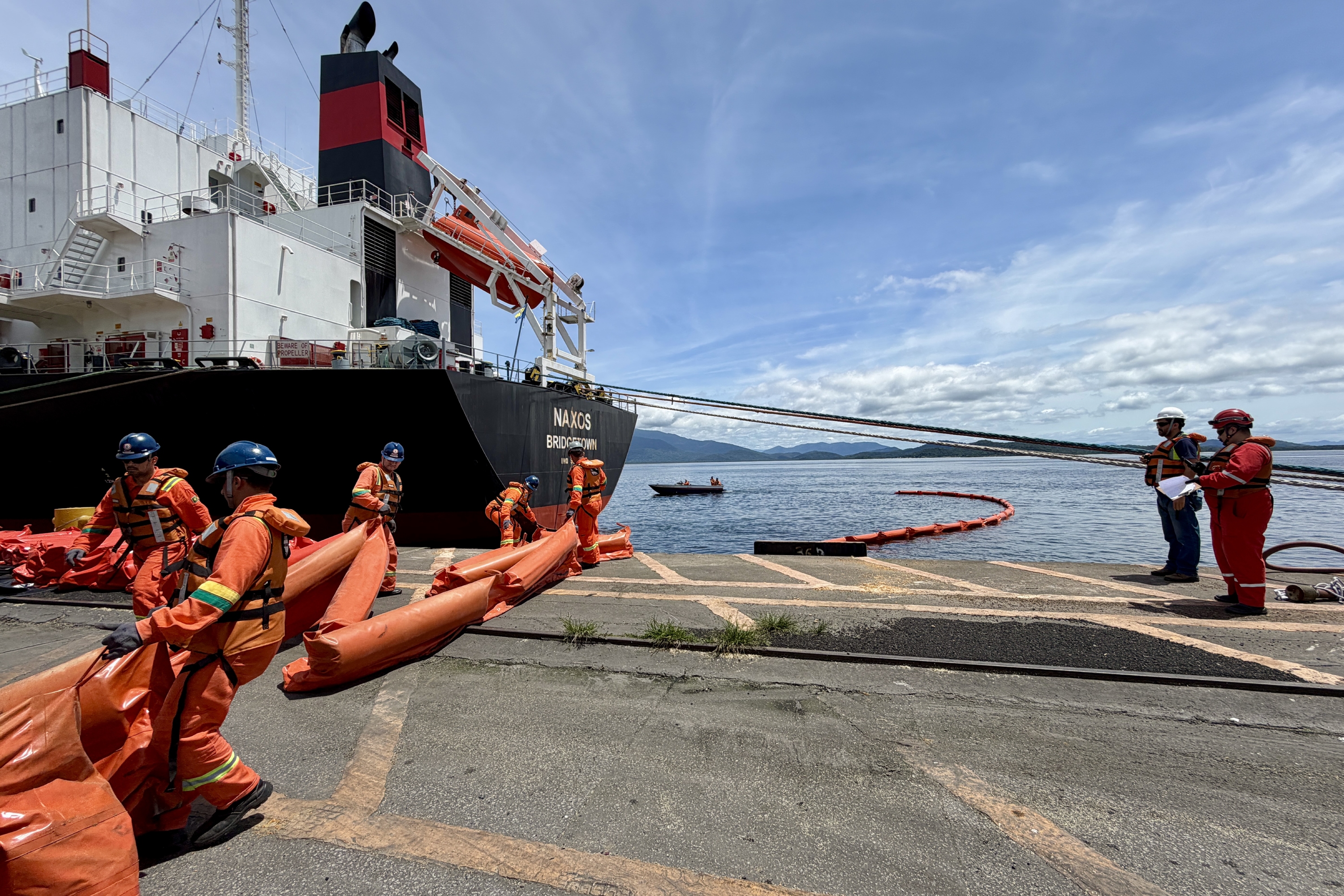
Photo: Fernando Rogala - GCom Portos do Paraná
Portos do Paraná exercise mobilized over 40 people. The action involved four vessels, containment booms, and fuel collection equipment
An environmental emergency drill was carried out by Portos do Paraná on Wednesday morning (18) at the Port of Paranaguá pier. The exercise simulated a collision between a tugboat and a ship, with fuel spilling into the water. More than 40 people participated in the activity, which aimed to test the response capacity provided for in the Port Authority's Individual Emergency Plan (PEI).
In addition to preparing teams for real emergency situations, drills are requirements of environmental licensing processes. "We need to carry out these exercises within our five emergency plans. The PEI is one of them, focused on environmental occurrences, especially the leakage of dangerous products," explains Felipe Zacharias, advisor to the Environmental Directorate of Portos do Paraná, who acted as substitute incident commander.
According to Zacharias, the periodic execution of the exercises is essential to improve procedures and prepare professionals for unforeseen situations. "The drill is fundamental for us to have a more efficient and effective response, with agile initial actions, reducing environmental impacts. We test flows, forms, decision-making, and communication with environmental agencies, the community, and the press. Everything is part of organizing responses," he adds.
Operation mobilized vessels and equipment
The activity began around 9:15 am, with a communication informing that a tugboat had collided with another vessel. The initial alert did not detail the size of the vessels or the consequences of the accident. Based on this information, the activation flow provided for in the plan was tested.
Given the possibility of a fuel spill, the Emergency Preparedness and Response Center (CPRE) was activated, responsible for mobilizing the emergency coordinator. Subsequently, the teams were organized and gathered in the Crisis Room, installed in the CPRE itself, where information about the occurrence is monitored and actions are defined.
"The drill involves different areas, such as logistics, planning, command, and operation. We are responsible for the operation, which includes oil containment, area protection, and isolating the ship at the source of the leak," explains André Wolinski, CPRE Operations Manager.
The simulated scenario predicted a spill of 50 cubic meters of fuel in the berth 205 area. For the operation, four vessels were mobilized, in addition to floating containment booms, tanks for collecting the product, and equipment for oil collection and transfer. "We used U and J-shaped containment booms to concentrate and collect the spilled product," adds Wolinski.
The exercise also considered possible impacts on wildlife. The simulation considered the presence of birds affected by the fuel and tested the activation of specialized animal care services.
"Birds can mistake the oil slick for a school of fish and dive into it. Therefore, we simulated the presence of affected animals to test the activation of the wildlife care team and rescue procedures, simulating their displacement," details Zacharias.
The wildlife rescue team was mobilized on another vessel to remove the simulated animals. The exercise also included the stages of care in a specific area, including cleaning, stabilization, and de-oiling, with veterinary supervision.
Evaluation allows for procedure improvement
After the activities are concluded, the team evaluates all stages of the exercise, identifies positive aspects and opportunities for improvement, and defines measures to refine the response to real situations.
"After each drill or emergency response, we conduct a debriefing, a meeting to evaluate the positive and negative points. If we identify any failure, we have the opportunity to correct it and establish an improvement plan. Thus, when we face a real situation, we will be more prepared for everything to happen perfectly well," concludes Wolinski.


