• 4 min de lectura
• 4 min de lectura
The first day of Seatrade Cruise Med 2026 suggested Mediterranean ports are successfully extending cruise seasons beyond traditional summer peaks.
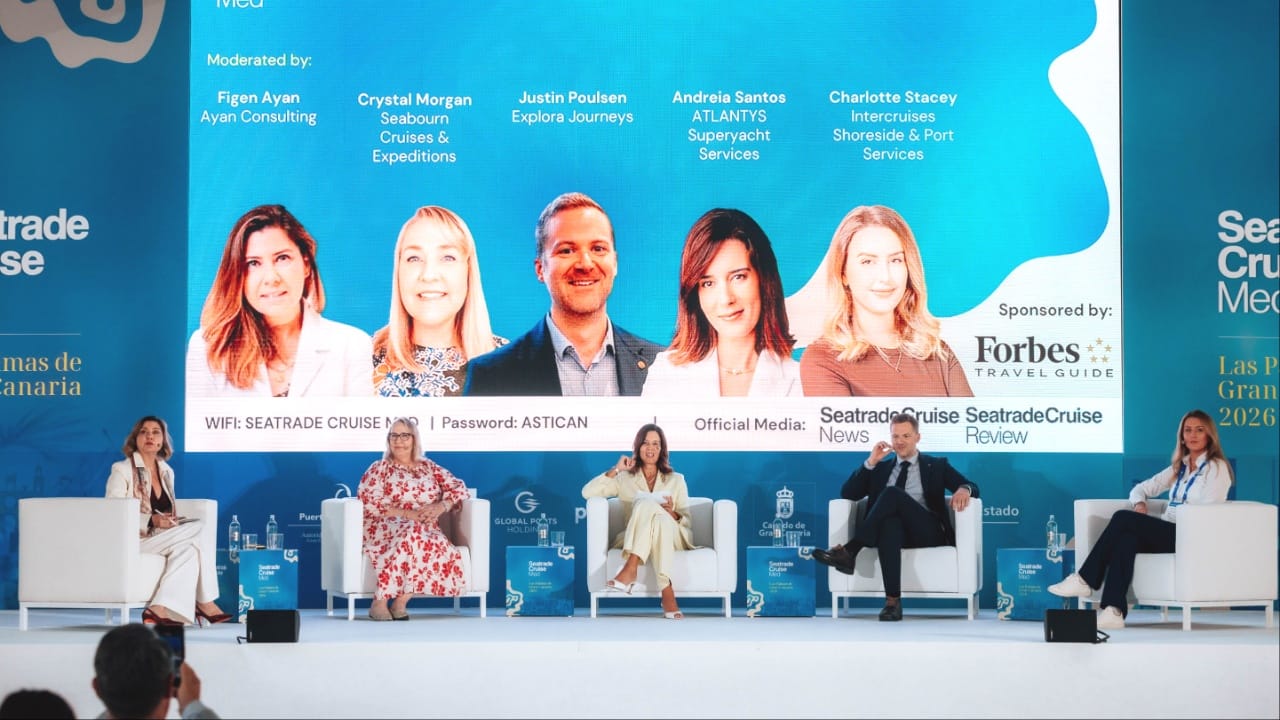
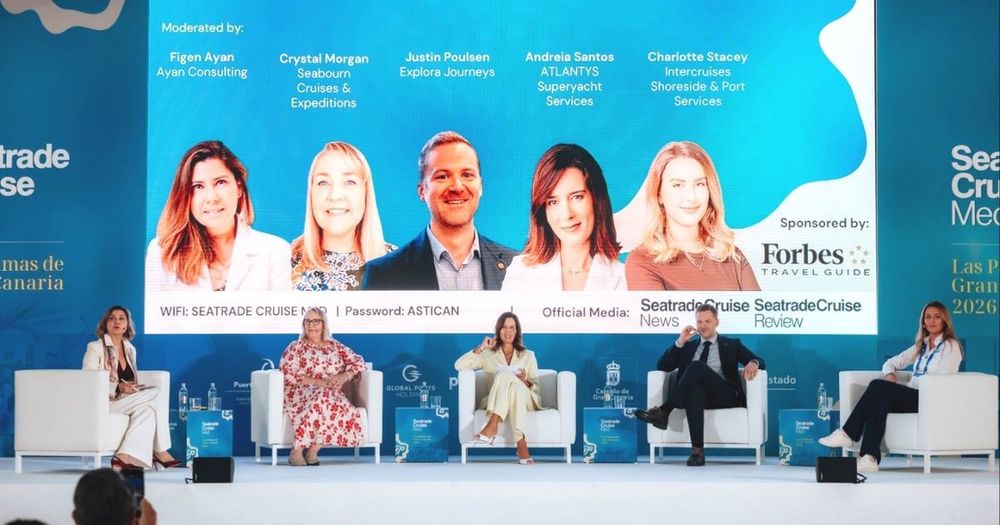
L-R: Figen Ayan, Crystal Morgan, Justin Poulsen, Andreia Santos and Charlotte Stacey PHOTO: SEATRADE CRUISE
September 16 saw panelists at Seatrade Cruise Med 2026 (September 16-17, 2026) at Santa Catalina Terminal, Las Palmas Cruise Port, reveal how Mediterranean ports are successfully extending cruise seasons beyond traditional summer peaks to combat seasonality challenges.
Crystal Morgan, senior director deployment & itinerary planning at Seabourn, told delegates that infrastructure alone no longer guarantees cruise calls. "10-12 years ago it was 'build and they will come' so more and more infrastructure was being built for ships to come alongside. This now matters very little," Morgan said during the panel session moderated by Figen Ayan, founder at Ayan Consulting - Consultancy Beyond Boundaries.
Morgan explained that operators now prioritise guest experience over port facilities, stating: "It all comes down to the guest experience. It has to be a seamless and cohesive experience for that guest to really enjoy that destination."
Andreia Santos, director at Atlantys Superyacht Services, highlighted operational differences between sectors. "The cruise industry nowadays can sometimes accept friction as part of the operation... superyacht clients are much less willing to accept that answer, and no is not an answer," Santos said.
Justin Poulsen, head of itinerary planning, destination experiences & ground handling at Explora Journeys, outlined the geographical challenges that can emerge with fleet expansion: "The biggest issue when a fleet is growing is that so are the geographies in which you're based." He noted that whilst the Caribbean and Mediterranean represent straightforward propositions, expansion into new regions creates exponential growth in supplier relationships and the need to ensure partners can operate successfully.
Charlotte Stacey, travel content creator & global product development manager at Intercruises Shoreside & Port Services, provided insights on social media trends.
Ged Brown, founder of Low Season Traveller and the Tourism Seasonality Summit, presented data showing Copenhagen's transformation from four months with no cruise calls in 2019 to zero months without calls scheduled for 2026. Brown emphasised the industry's capital commitments, noting "86 ships on order, 227,504 berths arriving through to 2039, 87 billion USD committed."
Luis de Carvalho, commercial cruise director & Cruise Europe council member at Copenhagen Malmö Port, detailed the transformation: "We've been able to fill in all those quiet months: January, February, March, and then November and December." The port's July peak dropped from 74 calls in 2019 to 63 in 2026, whilst March became the quietest month with three calls instead of zero.
The removal of St. Petersburg from Baltic itineraries forced operational changes. De Carvalho said this development "forces us to be resourceful." Copenhagen lost approximately 17% of calls, whilst some Eastern Baltic ports lost close to 50% or more.
The response involved shifting from itineraries built on five or six marquee ports to supporting smaller destinations and developing winter products. "In the winter, you can do things you cannot do in the summer," de Carvalho said, citing off-the-beaten-track visits.
Chris Martin, senior director, marine and port operations at Holland America Line and Seabourn, explained how European customer growth enabled year-round operations. Five years ago, the winter market "was not a big draw for us," Martin said. Marketing to Dutch customers changed this approach: "They don't necessarily want to fly overseas during the winter time; they just want to be able to drive up, hop on a ship, and do something even regionally."
Brown warned that extreme weather affects return visits, noting Spain recorded its hottest summer and that visitors experiencing extreme heat are less likely to return. He advocated diversification: "We should all be diversifying around the year instead of trying to attract the most business in a two month window."
The panel also included Pierfabrizio Di Marco, aviation manager at Trieste Airport and Jochen Schnadt, CEO at Fly4 Airlines.