• 3 min de lectura
• 3 min de lectura
Cargo traffic at the Port of Seville experienced a rebound in the eighth month of the year. Until August 2026, the Seville docks have exceeded 2.7 million tons, 1.5% more than the previous year, representing an increase of an additional 41,437 tons.
These positive figures are largely due to the growth of general cargo, which reached 1.1 million tons (+6%), and liquid bulk, which totaled 412,764 tons (+26%).
By type of goods, oils and fats stand out, especially imports, reaching 298,581 tons, 40% more than in 2025. Also noteworthy are cereals and their flours with 320,828 tons, representing an increase of nearly 30%. This rise is due to the good performance of imported cereals: wheat, triticale, and barley.
The Port of Seville thus consolidates its position as a reference hub for agri-food logistics. Its strategic location in the Guadalquivir Valley, close to important production and consumption areas, together with the specialization of logistics operators and the large capacity of its facilities, reinforce its role as a logistics node for these traffics in the south of the Iberian Peninsula.
Container Traffic with the Canary Islands Grows 11%
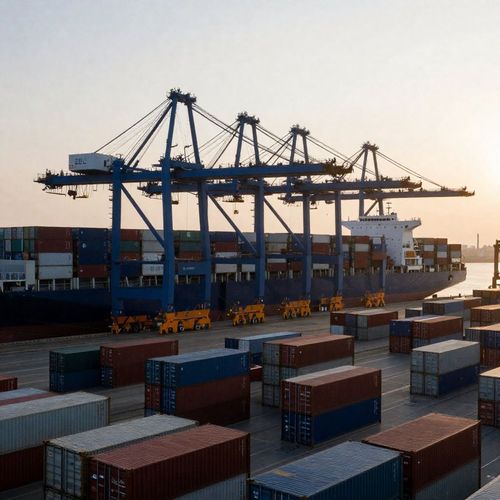
Regarding container traffic, it is on the rise with an 11% increase in TEU volume, reaching 110,846 TEU moved. In tons, containerized cargo totals 765,842 tons, with a growth of 6.2%. According to forecasts for the end of the year, if the number of TEUs remains in balance with last year's movement, 2026 would close with the best records of the last decade.
Container traffic at the Port of Seville is reinforced by five weekly shipping lines, three from CMA-CGM and two from Boluda Lines, connecting the peninsula with the Canary Islands. In fact, in September of last year, the Guadalquivir Maritime Terminal strengthened its connection with the Canary Islands with the start of operations of the vessel CT Pachuca from CMA-CGM, which has led to an increase in capacity, frequency, and flexibility of traffic with the Canary archipelago.
On the other hand, traffics such as natural and artificial fertilizers have decreased, totaling 200,628 tons until August (-37.5%), or iron scrap which amounts to 263,801 tons (-13.2%). In the case of fertilizers, the situation has been affected by the entry into force of new tariffs (Carbon Border Adjustment Mechanism) and the rise in gas and oil prices.
Cruise traffic also shows a favorable evolution in 2026. Until August, the Port of Seville has recorded 57 calls, 11.7% more than in the same period of the previous year, accompanied by an increase in the number of cruise passengers.
Port of Seville, the sea in the heart of Andalusia
The Port of Seville is the only inland maritime port in Spain. It is located in one of the country's main metropolitan areas, with more than 1.5 million inhabitants in the surrounding area, and in the cargo generation center of the southern Iberian Peninsula. It is a completely synchromodal port with maritime and land connections, and across its 850 hectares, it has ample space for logistical and industrial development. It is a strategic enclave for the European Union and has five concessioned port terminals and three public docks, more than 4,000 meters of berthing line, and one million square meters of warehouses.