

• 9 min de lectura
• 9 min de lectura

Hormuz traffic fell last week as attacks on merchant shipping continued, with laden movements holding up better than ballast and routing remaining highly opaque. Bab el-Mandeb traffic eased only modestly, with established TSS routing remaining dominant and no new Houthi merchant-shipping attack added to IMO's Red Sea record.
Key developments
Traffic overview Strait of Hormuz Vessels crossed Strait of Hormuz by risk level as of October 4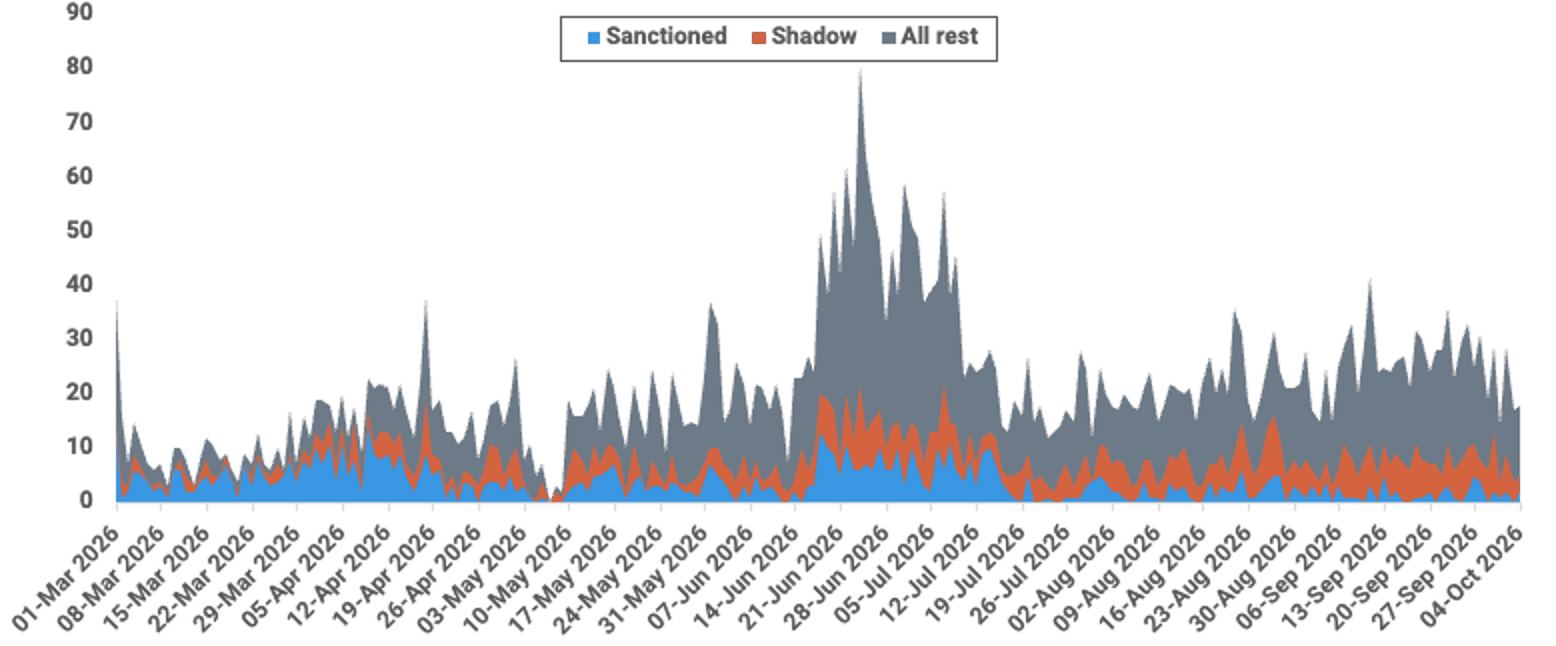 Source: Kpler Risk and Compliance; full traffic data is available including non-commercial vessel tracking from MarineTraffic
Vessels crossed Strait of Hormuz by direction of crossing as of October 4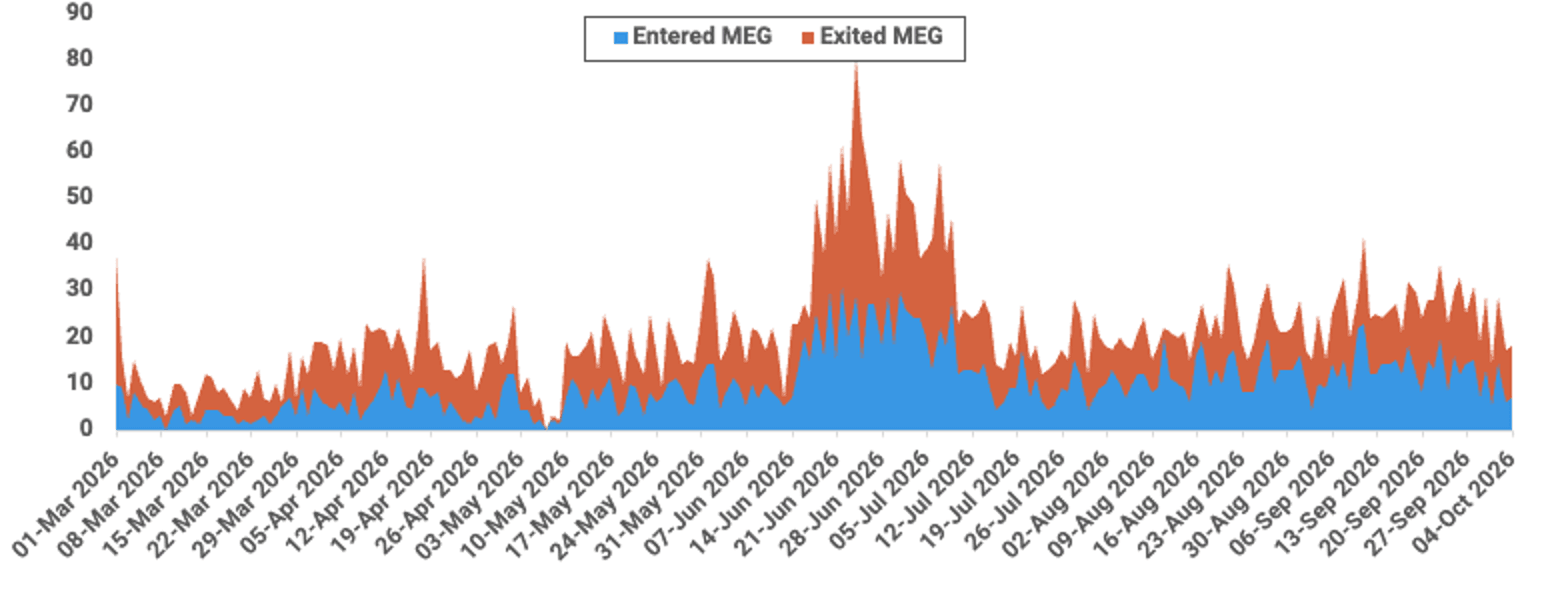 Source: Kpler Risk and Compliance
Vessels crossed Strait of Hormuz by route of crossing as of October 4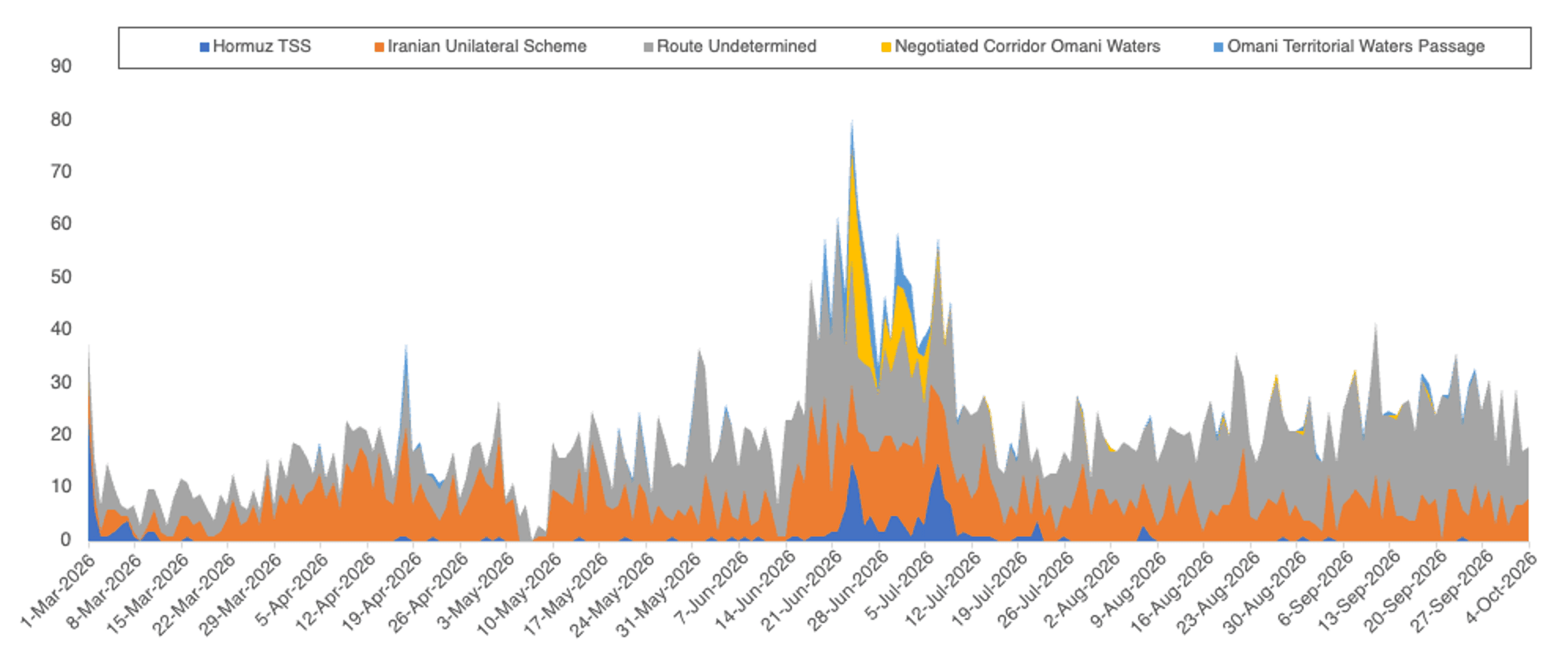 Source: Kpler Risk and Compliance
Strait of Hormuz crossings totaled 157 from 28 September to 4 October, down 22.7% from 203 during the previous week, amid continued attacks on tankers in and around the Strait, with the fall concentrated in inbound and ballast movements. Daily activity was 31 crossings on 28 September, 19 on 29 September, 29 on 30 September, 14 on 1 October, 29 on 2 October, 17 on 3 October and 18 on 4 October. Activity was therefore uneven throughout the week, opening at a weekly high of 31 crossings on 28 September and reaching a low of 14 on 1 October.
The weekly risk profile included 108 All Rest crossings, 38 shadow fleet crossings and 11 sanctioned crossings. Combined sanctioned and shadow fleet traffic fell from 58 to 49 crossings, although its share of total traffic rose from 28.6% to 31.2% as overall volumes declined, with shadow fleet activity easing from 45 to 38 and sanctioned crossings from 13 to 11. Directionally, flows were more heavily weighted toward outbound traffic, with 90 Exited MEG movements versus 67 entries, compared with 105 exits and 98 entries the previous week. Laden voyages fell from 96 to 84, while ballast movements dropped more sharply from 78 to 46, lifting the laden share of classified movements from 55.2% to 64.6%.
Routing remained highly opaque, with no sign of a move toward established corridors. Route Undetermined fell from 151 to 110 crossings but still accounted for 70.1% of traffic, while the Iranian Unilateral Scheme was unchanged at 47 crossings, lifting its share from 23.2% to 29.9%. Iranian-scheme use was highest at the start of the week, at 10 of 31 crossings on 28 September, and again at the weekend, at 7 of 17 crossings on 3 October and 8 of 18 on 4 October. No crossings used the Omani Territorial Waters Passage and none were recorded through the Hormuz TSS, compared with four and one respectively the previous week.
Bab el-Mandeb
Vessels crossed Bab el-Mandeb by risk level as of October 4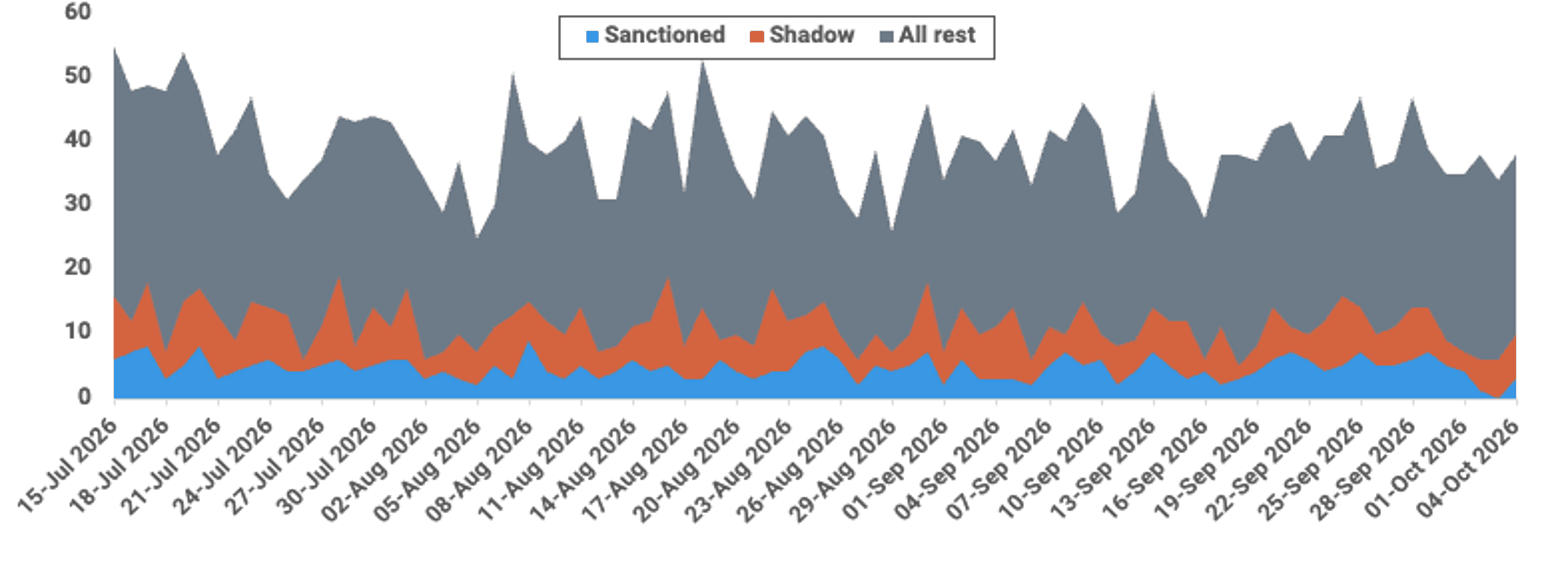 Source: Kpler Risk and Compliance; full traffic data is available including non-commercial vessel tracking from MarineTraffic
Vessels crossed Bab el-Mandeb by direction of crossing as of October 4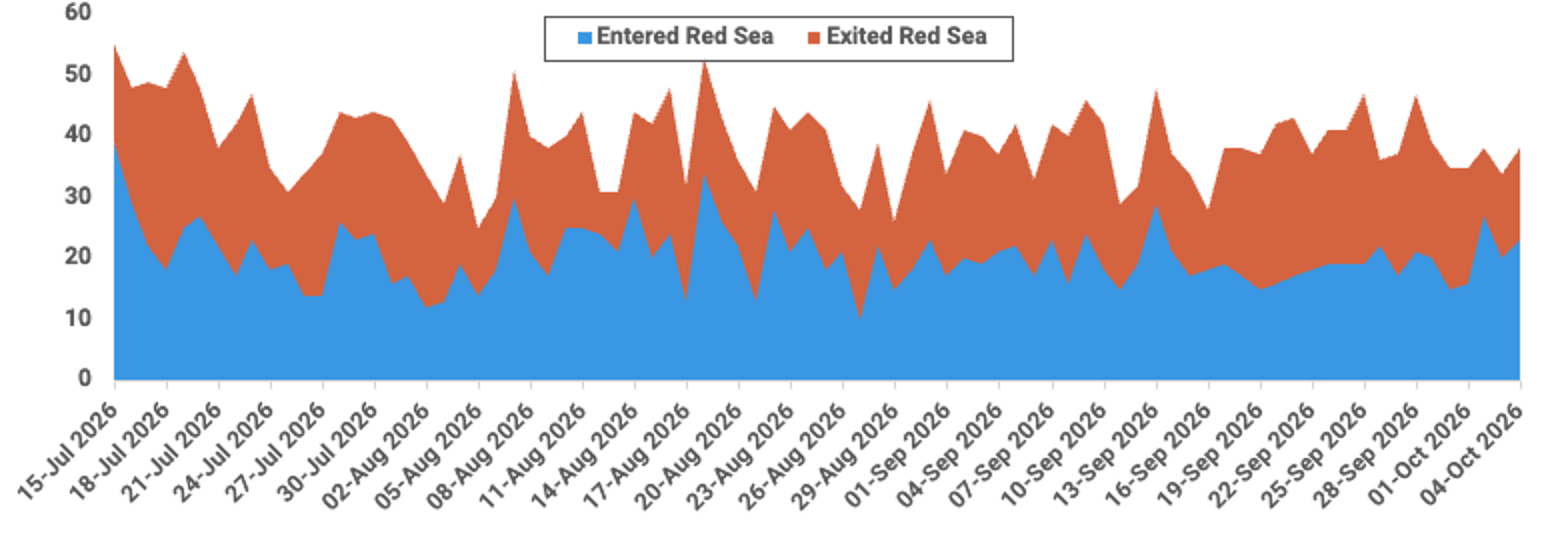 Source: Kpler Risk and Compliance
Bab el-Mandeb crossings totaled 266 from 28 September to 4 October, down 5.7% from 282 during the previous week. Daily activity was 47 crossings on 28 September, 39 on 29 September, 35 on both 30 September and 1 October, 38 on 2 October, 34 on 3 October and 38 on 4 October.
The weekly risk profile included 200 All Rest crossings, 40 shadow fleet crossings and 26 sanctioned crossings. Combined sanctioned and shadow fleet activity decreased from 84 to 66 crossings, reducing its share of total traffic from 29.8% to 24.8%.
Flows shifted toward vessels entering the Red Sea, with 142 entries compared with 124 exits. Laden movements edged up from 135 to 137, while ballast movements fell from 81 to 62. Crude/Co remained the largest identified cargo segment at 23 crossings, followed by Dry Bulk at 22, CPP at 21, Fertilizer at 15 and Steel at 13.
Routing remained notably stable despite the regional security deterioration. Of the 266 crossings, 249 used the Bab el-Mandeb TSS, equivalent to 93.6% of total traffic, while dark transits fell from 26 to 17. The decline therefore does not point to a broad operational withdrawal. Traffic has eased only modestly from the previous week's level, laden activity has held, and operators continue overwhelmingly to use the established TSS.
Regional security and diplomatic context
Traffic remained functional through both chokepoints, but the security environment deteriorated at Hormuz, where attacks on merchant ships continued, while the Houthi threat around Bab el-Mandeb remained elevated.
IMO confirmed four incidents between 28 September and 1 October, all in the Strait of Hormuz. The Kuwait-flagged AL FUNTAS was damaged on 28 September, followed by the Liberia-flagged SINBAD and MERSIN PROSPERITY on 29 September and KAZIMAH III on 1 October. All four were crude oil tankers, with no pollution reported. IMO's confirmed incident total has increased to 91. Further attacks on tankers in and around the Strait were reported through 4 October and are pending confirmation by IMO.
The contrast with traffic is notable. Despite the attacks, Hormuz crossings continued every day of the week, although volumes were lower than the previous week, and inbound movements fell most, while laden crossings held up better than ballast. The immediate response has therefore been a reduction in activity rather than a broad retreat from the Strait.
At Bab el-Mandeb, no new Houthi merchant-shipping attack during the period has been added to IMO's Red Sea record. UKMTO Warning 151-26 reported suspicious activity on 4 October, with a tanker sighting multiple explosions nearby about 60 nautical miles south of Al Mukha, Yemen. The crew were safe.
No withdrawal is visible in the Bab el-Mandeb crossing data. Traffic eased only modestly, laden movements held, more than nine in ten crossings continued through the TSS and dark transits fell. This suggests that operators are still absorbing the threat primarily through risk-management measures rather than route avoidance.
Graph of physical attacks on vessels as of October 5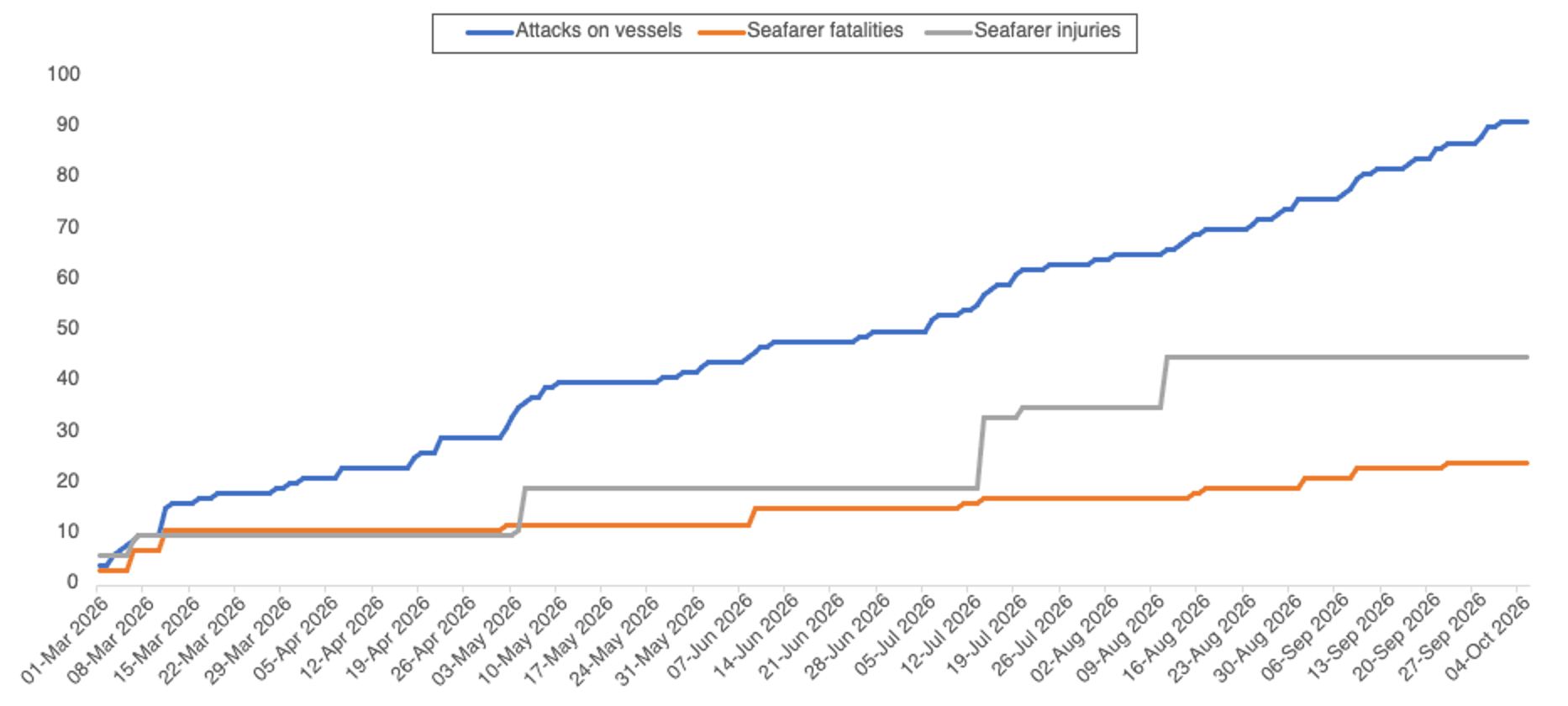 Source: Kpler Risk and Compliance, IMO
Analyst outlook
Over the next 24-72 hours, the key Hormuz question is whether the fall in volumes becomes a sustained withdrawal. Crossings fell 22.7% and entries fell by almost a third, while laden movements held up better than ballast. IMO has confirmed four tanker incidents in the Strait since 28 September, with further reports pending confirmation, so the next stress signals would be a further drop in laden crossings, a continued fall in inbound entries, and Route Undetermined rising above its current 70.1% share.
Routing visibility remains a key issue at Hormuz. 70.1% of crossings were recorded as Route Undetermined, with the Iranian Unilateral Scheme accounting for the remaining 29.9% and no crossings through the Hormuz TSS or Omani routes. The Route Undetermined share has held in a 68-75% range over the past five weeks, after rising from around 45% in early July, suggesting the deterioration is stabilizing as more vessels get into the practice of switching off their transponders.
At Bab el-Mandeb, the data still show orderly use of the corridor: TSS adherence rose to 93.6%, dark transits fell and laden movements were marginally higher. The key test will be whether this resilience persists if the security threat moves closer to commercial traffic. A sustained fall in TSS movements, a material increase in dark transits or a renewed decline in laden crossings would provide a clearer indication that operators are shifting from risk-managed transit toward avoidance.
The key geopolitical swing factor remains the US-Iran security track. Further US or Israeli strikes, or Iranian retaliation against commercial shipping, could turn the current traffic contraction into a much sharper withdrawal even without a formal closure of Hormuz. Conversely, credible progress on an Oman-backed navigation corridor or de-escalation framework would be the clearest upside signal for crossings. Rising Houthi pressure around Bab el-Mandeb amplifies this, reducing the attractiveness of Red Sea alternatives and increasing the systemic impact of simultaneous disruption at both chokepoints.
For now, both chokepoints remain operational. The distinction is that Hormuz is showing both lower traffic and continued attacks on tankers, while Bab el-Mandeb traffic remains resilient despite an elevated threat.
Download the underlying data
Access the latest validated Strait of Hormuz (from 1st of March, 2026) and Bab el-Mandeb (from 15th of July, 2026) crossing data through a daily CSV covering the previous day's transits, both commercial and non-commercial. Daily updates are reviewed and validated by Risk & Compliance analysts before publication and can be accessed within the Risk & Compliance Workspace.

