• 4 min de lectura
• 4 min de lectura
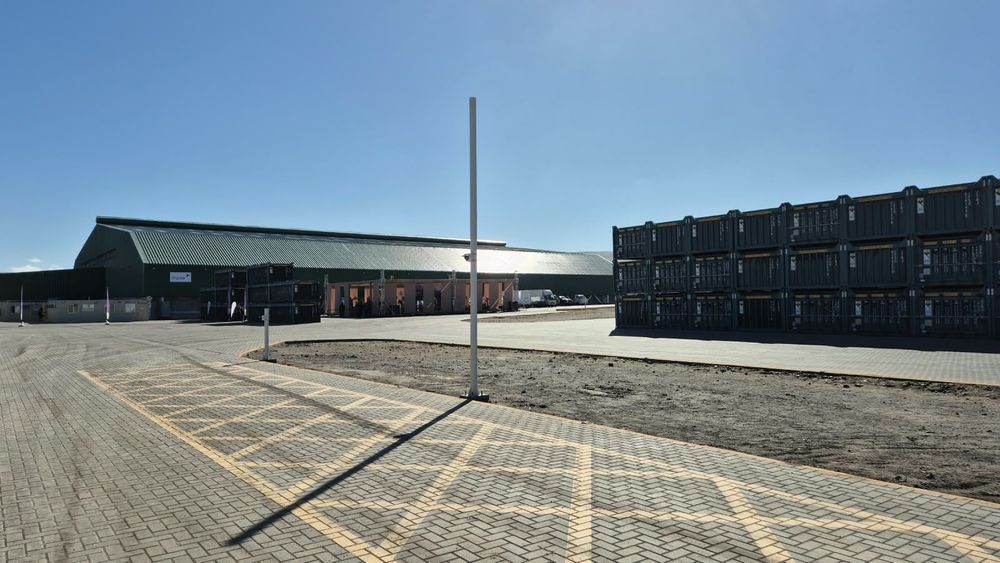
In the presence of local authorities and representatives of Arica's logistics-port system, Impala Terminals inaugurated its new facility located in the Port Extension Zone (Zeap). The project required a USD 20 million investment for the construction of an 8,000-square-meter warehouse for the storage and transfer of bulk minerals originating from Bolivia.
The initiative will contribute to increasing mineral cargo flows in a sustainable manner. In this regard, the bulk material will arrive by truck at the Impala terminal to be transferred to rotainers (tipping containers), which will then be taken to the port facility for shipment.
The mineral warehouse will also free up space in the Port of Arica, which can be allocated for containers. Similarly, the new extra-port infrastructure will eliminate the transit of trucks loaded with mineral concentrates through the city streets, raising the environmental standards of this logistics-port operation.
Nicolas Konialidis, CEO of Impala Terminals Group, stated that "this is the group's newest dry bulk facility. Its purpose is to increase efficiency in the handling of mineral concentrates transported by trucks. We built it with excellence, seeking maximum efficiency and the highest environmental standards."
"The 8,000-square-meter warehouse is completely enclosed, and the sheds are fully sealed to ensure safer transport. Its location here, in the industrial zone at the Port of Arica, prevents Bolivian mineral trucks from entering the city, improving safety and minimizing environmental impacts," he added.
"This project took just over two years from concept to completion. Today we are open and fully operational, creating over 40 new direct jobs and other opportunities for the local market. This was achieved thanks to the collaboration and commitment of all of you present here, and on behalf of the entire Impala Terminals team, I thank you wholeheartedly," Konialidis emphasized.
For her part, María Loreto Letelier, Vice President of the Board of Empresa Portuaria Arica (EPA), commented that "this project is part of the commitment that, as a port company, we have assumed for sustainable port development that cares for our environment, respects the community, and understands that the growth of foreign trade must go hand in hand with the environmental care of our city. This work is not just the construction of a warehouse; it is the concrete expression of a new way of operating based on three fundamental principles: sustainability, efficiency, and competitiveness."
"Faced with the sustained increase in Bolivian mining cargo, we took on the challenge of modernizing our infrastructure with world-class standards. The answer was the public-private alliance with Impala Terminals, which today materializes with the commissioning of the concentrate warehouse, representing an investment of close to USD 20 million and equipped with cutting-edge technology," she added.
Furthermore, Letelier stressed that "by incorporating a significant part of mineral storage in the Zeap, we are advancing in the progressive separation of port storage and transfer functions. The first step allows us to free up strategic spaces in the port and increase the operational flexibility of the berths, improving planning of operations and efficiency in vessel service."
"This advancement not only has an economic impact but also represents an important step in terms of sustainability and community relations. This project incorporates a hermetic and safe transport scheme between the Zeap and the port, using 420 tippable rotainer containers, which reduces the dispersion of particulate matter during urban transfers, improves environmental conditions in the port area, and contributes to a safer operation for workers and residents of Arica," she elaborated.
In line with what was highlighted by EPA, the new storage center reinforces the strategic role of the Port of Arica in fulfilling the 1904 Treaty of Peace and Friendship with Bolivia, consolidating the facility as the main logistics platform for Bolivian foreign trade.