• 3 min de lectura
• 3 min de lectura
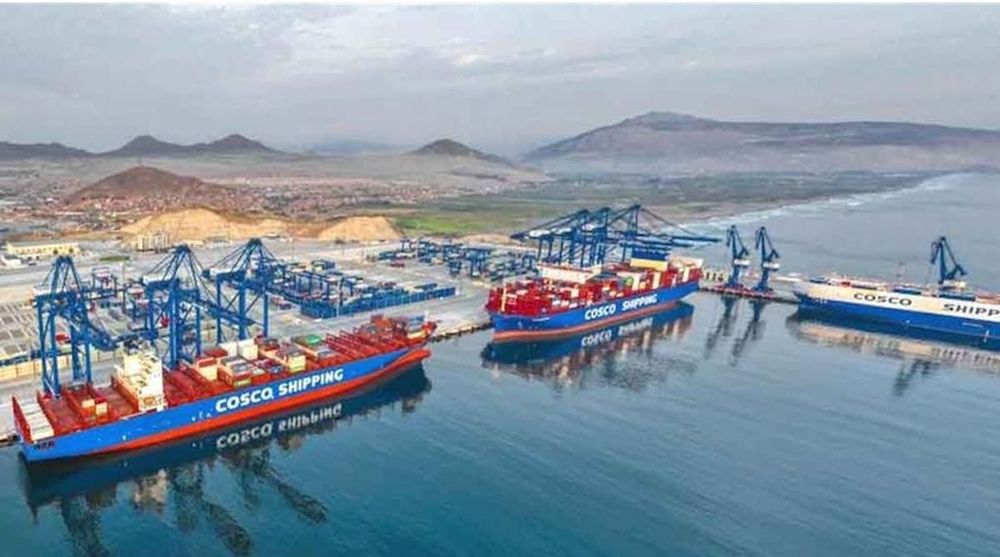
The controversy between Cosco Shipping Ports and the Supervisory Agency for Investment in Public Transport Infrastructure (Ositrán) over the supervision of Chancay port continues. The terminal operator affirmed that it will continue to challenge the regulator's intervention, as, in its opinion, it should only be responsible for supervising state assets granted under concession.
During his intervention at ExpoMina 2026, José Ignacio de Romaña, director of Cosco Shipping Ports Chancay Perú, recalled that the Chancay megaport is an infrastructure built with private capital, so Ositrán could only supervise it if there were no competition.
"Yes, there is competition, but the authority says no [...] That makes no sense. So, in principle, we will continue to fight for the law to be complied with," he commented.
To support his position, the Cosco Shipping representative explained that before the construction of Chancay, some companies imported their inputs through the Callao terminal and then transported them, for example, to Huaral. Now, with Chancay on that route, some companies choose to use the services of the new terminal. "That is to say, there is competition between both ports," he affirmed.
Therefore, he stressed, the application of regulation by Ositrán could affect these importers with a higher cost that would ultimately be passed on to consumers.
"If the norm or the law says that Ositrán must be paid, there is prejudice because [the regulator] charges up to 1% of sales [...] In Chancay, charging 1% more for all imported and exported goods is detrimental to all Peruvians," he stated.
José Ignacio de Romaña, director of Cosco Shipping Ports Chancay Perú, reiterated that the Chancay megaport is an infrastructure built with private capital, so Ositrán could only supervise it if there were no competition.
While the dispute with Ositrán continues, Cosco Shipping is preparing the expansion of the terminal based on cargo growth.
According to them, last year the megaport moved 342,000 containers and 1.2 million tons of loose cargo. By the end of 2026, it is estimated that movement could reach 500,000 containers.
"When the port reaches one million containers, at that moment, according to our agreement, it will be the time when we trigger the second stage," explained De Romaña.
This second phase contemplates 11 additional berths, which would increase the terminal from four to 15 berths in total.
Furthermore, he indicated that the growth of Chancay Port does not necessarily mean a reduction in Callao's movement, as this terminal is also increasing its activity. This, he considered, is an indicator that the Peruvian economy continues to grow.
However, the Cosco representative also recalled that the growth of the terminal must be accompanied by new communication routes that allow connecting the port with other productive areas of the country.
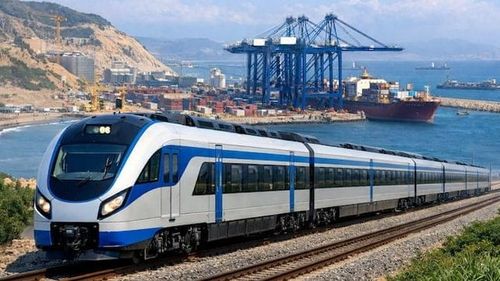
In this regard, de Romaña highlighted the idea of building a train from Tumbes to Tacna and a train to Brazil that would allow leveraging the potential of the Peruvian highlands and jungle.