• 3 min de lectura
• 3 min de lectura
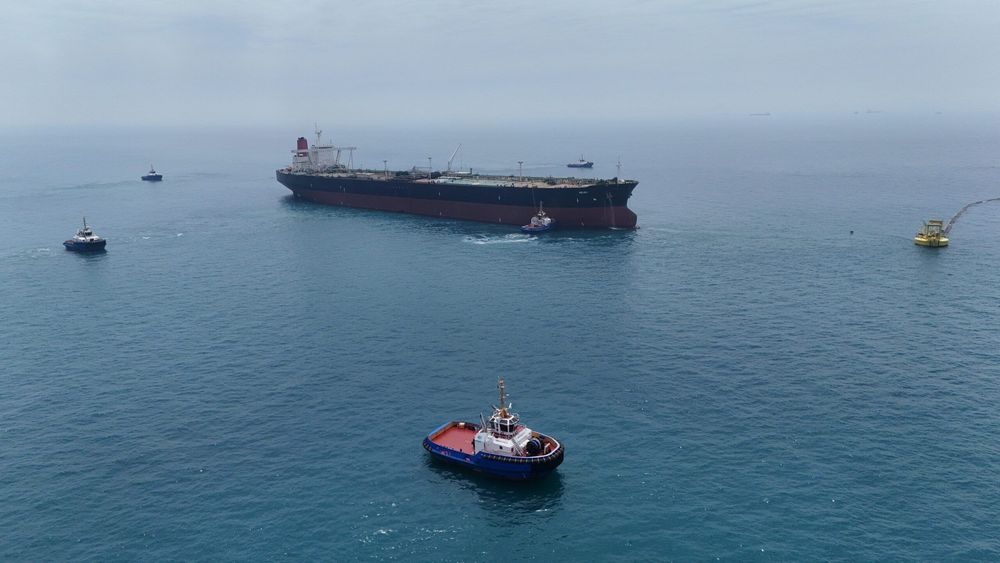
The already volatile security picture in the Strait of Hormuz has taken a sharp turn for the worse as Iran moves to assert de facto control over commercial traffic through a new compulsory insurance scheme — and backs it with the threat of force.
INTERTANKO, the organization representing independent tanker owner-operators, told gCaptain that Iranian authorities have issued a multi-page directive requiring ships to purchase Iranian-approved insurance to transit the Strait.
There have also been reports of Iranian aggression.
"We have received a report that warning shots were fired at vessels," said Tim Wilkins, managing director of INTERTANKO. "This is not freedom of navigation. It is chaos."
Wilkins said that at 12:29 p.m. UK time on Friday, the Islamic Revolutionary Guard Corps broadcast the following message on Marine Channel 16:
"Since Israel's withdrawal from Lebanon, the complete lifting of the naval blockade, and the departure of American terrorist forces from the Persian Gulf and the region are among the main conditions of the agreement between Iran and the United States. The Strait of Hormuz will remain closed until these two conditions are met. All vessels have been instructed not to approach the Strait of Hormuz for their own safety and security. Any vessel that violates this order will be targeted."
"IRGC boats reportedly opened fire, firing warning shots in the Strait of Hormuz," Wilkins added.
"This is toll aggression," said Wilkins.
gCaptain has seen a copy of the document, issued by Iran's Persian Gulf Strait Authority (PGSA), which details a new gatekeeping mechanism for ships. The directive requires vessels to purchase insurance through a PGSA-linked policy in order to pass through the Strait.
Further details, shared in a tweet from @supbrow on June 19, 2026, summarizing the "Terms & Conditions for Vessel Passage through Strait of Hormuz" published by the PGSA, stated that "No vessel is permitted to pass through the Strait of Hormuz without a valid passage permit issued by the PGSA." The tweet also highlighted that this contravenes UNCLOS Article 44.
According to Article 5 of the Memorandum of Understanding signed by U.S. President Donald Trump and the Islamic Republic of Iran, Iran would arrange for the safe passage of commercial vessels, and no tolls would be charged during the first 60 days.
Both Trump and Iranian officials said commercial vessel traffic would immediately resume.
The agreement also states that Iran would conduct dialogue with the Sultanate of Oman to define the future administration and maritime services in the Strait of Hormuz, with other Persian Gulf states participating. Any resulting arrangements were to be consistent with international law and the sovereign rights of the Strait's coastal states.
"Paying insurance is a toll," Wilkins stressed.
All vessels must carry war risk and P&I (Protection and Indemnity) insurance in order to operate in the region.
"We don't know what this new 'insurance' actually is — or who, in practice, we're paying," Wilkins said.
The document states, under the heading "Official Authority and Contact," that the PGSA is the "sole authority" and the only official body responsible for processing applications, issuing permits, and handling all related inquiries.
Fuente: GCAPTAIN_NEWS