• 4 min de lectura
• 4 min de lectura
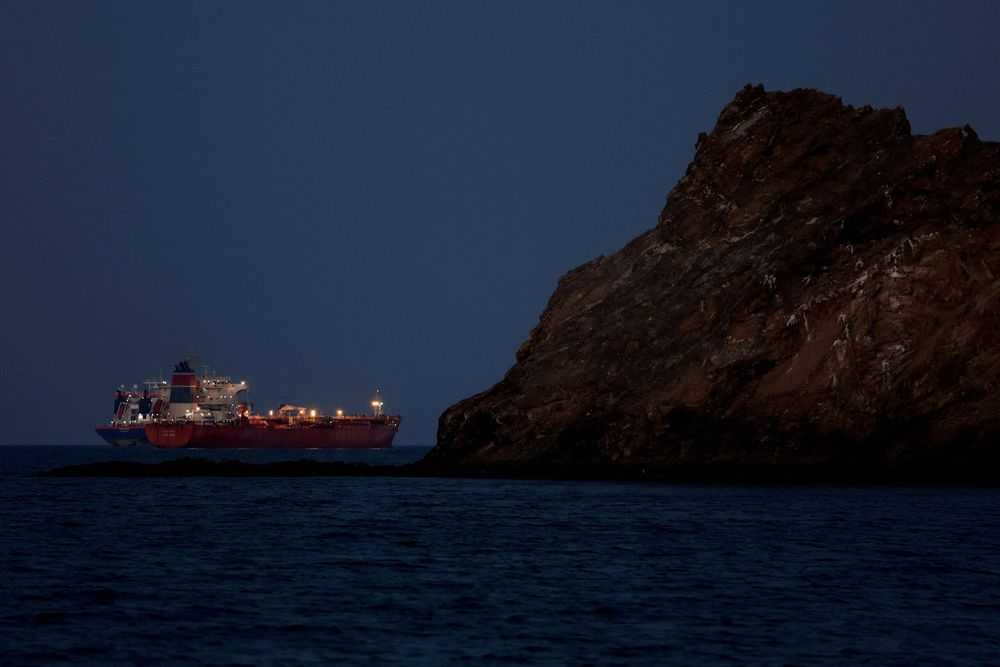
A commercial tanker was struck by an unidentified projectile near the Strait of Hormuz overnight while transiting an area associated with a covert U.S.-coordinated shipping corridor that has been used to move vessels through the region during the ongoing crisis.
According to a warning issued Saturday by UK Maritime Trade Operations (UKMTO), the incident occurred approximately six nautical miles east of Oman near the southeastern approaches to the Strait of Hormuz, one of the world's most strategically important maritime chokepoints.
"It is reported a tanker was struck by an unknown projectile in the port bow," UKMTO said in Advisory 068-26. The crew was reported safe, no environmental impact was observed, and the vessel continued toward its next port of call.
The report came just hours after U.S. Central Command (CENTCOM) announced that American forces had intercepted multiple Iranian one-way attack drones targeting commercial shipping in the area.
"Iran launched multiple one-way attack drones in an attempt to strike commercial ships transiting the Strait of Hormuz," CENTCOM said in a statement. "U.S. forces have downed all of them in recent hours as traffic flow through the strait continues unimpeded."
CENTCOM added that the international trade corridor remains open to commercial navigation.
While CENTCOM said all drones had been intercepted, UKMTO separately reported that a tanker had been struck by an unidentified projectile near the mouth of the strait. Neither organization has indicated whether the two incidents were connected.
UKMTO identified "military authorities" as the source of the report, although no further details were provided.
The reports raise questions about what struck the tanker and whether the incident was connected to the drone attacks described by CENTCOM.
Neither UKMTO nor military authorities identified the vessel involved, and no information has been released regarding the nature of the projectile.
The location of the incident is particularly noteworthy because it lies along the so-called "Omani route," a recently disclosed U.S. military-coordinated transit corridor that has allowed a limited number of vessels to continue moving through the Strait of Hormuz despite the security crisis.
Earlier this month, INTERTANKO, the world's largest tanker trade association, revealed details of a tightly controlled nighttime transit system involving electronic silence, designated reporting procedures, and coordination with U.S. military authorities. The arrangement has provided a limited pathway for commercial shipping while many operators continue to avoid the region altogether.
Details outlined by tanker association have been increasingly validated by public statements from the Trump administration. President Donald Trump this week acknowledged a covert U.S. effort to assist commercial vessels transiting the Strait of Hormuz, while senior administration officials have since confirmed that a coordinated operation has been underway.
The incident appears to be the first publicly reported case of a vessel being struck while operating along the U.S.-coordinated transit corridor.
The attack comes as U.S. officials have repeatedly emphasized that commercial traffic continues to move through Hormuz despite Iranian threats and the ongoing military standoff. President Donald Trump recently claimed that hundreds of vessels had successfully transited the waterway under the covert operation designed to maintain maritime commerce.
Shipping industry groups, however, have continued to warn that the waterway remains highly dangerous. Earlier this week, IMO Secretary-General Arsenio Dominguez said there were currently no credible security guarantees sufficient to justify exposing seafarers to the risks associated with transiting the strait.
"There is no safe passage," Dominguez warned, urging shipowners and masters to conduct rigorous risk assessments before entering the region.
The incident is likely to reinforce concerns among shipowners, charterers and insurers that significant risks remain even for vessels participating in the military-coordinated transit system that has allowed limited commercial traffic to continue moving through Hormuz during the conflict.
Fuente: GCAPTAIN_NEWS