• 4 min de lectura
• 4 min de lectura
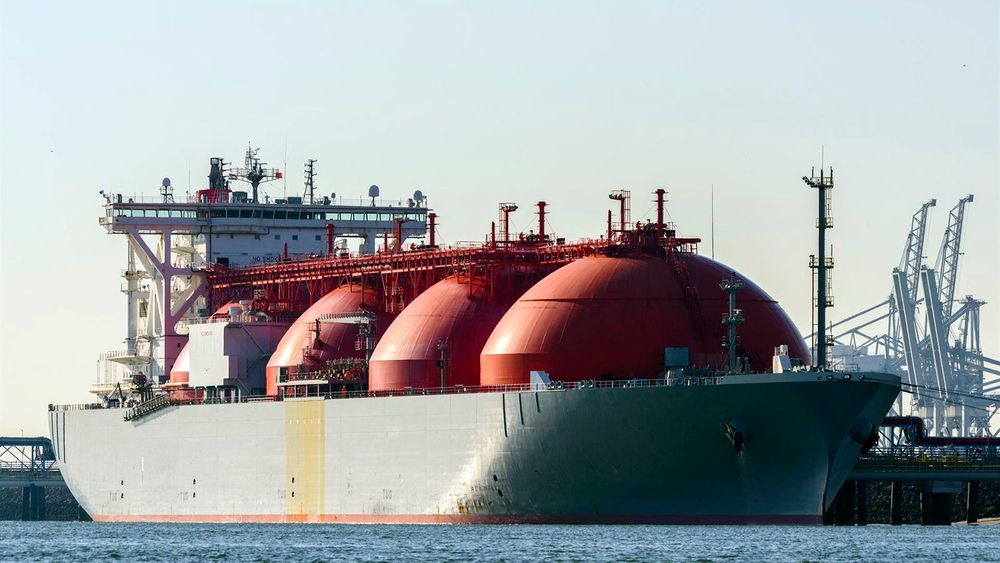
Shipping disruptions in the Strait of Hormuz, caused by the war in Iran, could stagnate global liquefied natural gas (LNG) trade during 2026. This would occur even if flows normalize in the next three months, according to Shell.
Nevertheless, the company anticipates that growth will resume in 2027 and that demand will rebound strongly towards 2050.
Since the beginning of the conflict, the severe impact on tanker traffic in this key passage has paralyzed nearly a fifth of the global monthly LNG supply. Initially, Shell projected that the current year would surpass the metric tons recorded in 2025.
However, Shell forecasts that global LNG demand will increase by approximately 65% by 2050, largely driven by Asia, as countries seek lower-emission alternatives to coal and data centers drive up energy demand, according to the company's annual LNG Outlook report.
Global demand is likely to reach almost 700 million tons per year by that date, noted the world's largest marketer of this super-chilled fuel.
"The conflict created a systemic impact whose disruptions cascaded across all segments of the economy; however, the LNG industry has proven resilient and capable of adapting to changing market conditions," said Cederic Cremers, Shell's Integrated Gas President, in the report.
The company pointed out that recent growth in LNG supply and regasification infrastructure has improved market resilience, helping to limit the impact of shipping disruption through Hormuz.
Furthermore, the commissioning of new liquefaction facilities in North America, the improved performance of existing plants, and slower Asian LNG imports have helped offset the reduction in supply from the Middle East.
The war between the United States and Israel against Iran has altered global LNG prospects by raising prices, damaging Qatar's export facilities, and delaying new supplies, raising doubts about demand from price-sensitive Asian buyers.
Analysts expect higher prices to curb demand from South Asia, leading buyers to seek alternative LNG sources or switch to coal and domestic gas.
Asian LNG imports during the first half of 2026 fell by almost 4%, standing at 127.70 million tons compared to the same period last year, according to data from analytics firm Kpler.
Although Asian spot LNG prices exceeded $20 per million British thermal units at the most critical point of the Middle East crisis, they remained well below the levels recorded in 2022 after the Russian invasion of Ukraine, reflecting greater resilience in the LNG market, Shell noted.
Asian spot LNG prices recently stood at $15.35 per mmBtu, a nearly four-month low, as the market holds out hope for a peace agreement to end the conflict.
Around 180 million tons per year of new LNG supply is expected to enter the market by 2030, which will improve gas availability and affordability, as well as open up demand in new markets.
Projections show that South and Southeast Asia will account for about 40% of global LNG imports by 2050, as countries seek lower-emission alternatives to coal to meet rapidly growing energy demand.
This growth comes at a time when domestic gas production in emerging Asian countries is expected to decline despite increasing demand, meaning the region will need around 300 million tons of LNG per year to cover its total gas demand by 2050, according to Shell.
In more mature Asian markets, such as Japan, data centers are emerging as a new source of energy demand, the report indicates.
However, in China, the world's largest LNG importer, Shell expects LNG imports to moderate even as gas demand continues to rise, forecasting a drop in annual LNG imports this year due to the Iran conflict.
LNG will also continue to play a fundamental role in European energy security and help balance intermittent renewable energy generation as domestic gas production declines, Shell noted.
To meet growing demand, significant additional investments in new LNG export projects will be required during the 2030s and 2040s, needing around 200 million tons per year of new supply, in addition to projects already under construction.