• 2 min de lectura
• 2 min de lectura
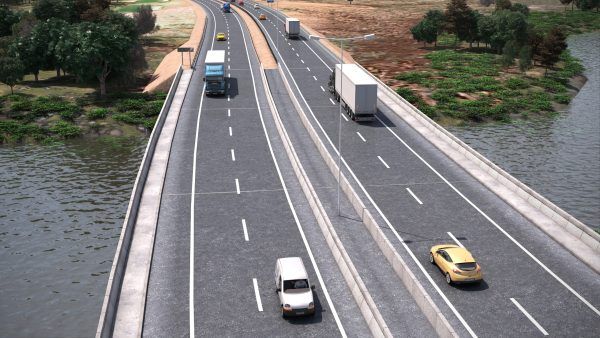
The Supreme Decree awarding the Pie de Monte Road Concession project, in the Biobío Region, to the company Sacyr Concesiones Chile SPA. was published in the Official Gazette. The work involves an estimated investment of USD 355 million (UF 9,145,000) and will improve connectivity and road safety in the area through a new 20-kilometer dual carriageway highway.
The initiative is projected to begin construction in 2030 and become operational in 2034. During the execution of the works, approximately 2,700 average monthly jobs will be generated, based on the project's investment.
In this regard, the Biminister of Public Works and Transport and Telecommunications, Louis de Grange, highlighted that "the publication of the decree awarding the Pie de Monte Route represents a very relevant step to continue promoting strategic infrastructure in the Biobío Region."
The authority added that "thanks to the public-private partnership model promoted by the concession system, we will be able to materialize an investment of more than 355 million dollars that will improve connectivity, increase road safety, and contribute to the development of one of the most dynamic areas in southern Chile."
The alignment of this new road solution, which seeks to generate alternatives for vehicular decongestion in the Greater Concepción conurbation, is located to the east of the current Route 160, bordering the Nahuelbuta Mountain Range, connecting with the Industrial Bridge to the north and with Route 160, Three Pines Section – North Access to Coronel to the south. This alternative will alleviate the flows on Route 160, giving it a more urban character and avoiding the passage of trucks and long-distance traffic through residential areas.
The Pie de Monte Route includes a road system with signage, lighting, overpasses at its main intersections, and evacuation routes for potential tsunamis, significantly improving connectivity in the sector. In addition, there will be six grade-separated interchanges, a bridge over Laguna La Posada, seven crossings for transverse roads, two viaducts, safety systems, sanitation, drainage, landscaping, and irrigation.
Furthermore, the project includes an electronic toll collection system with "Multi Lane Free Flow," in line with the implementation of this technology on concessioned routes throughout the country.