• 2 min de lectura
• 2 min de lectura
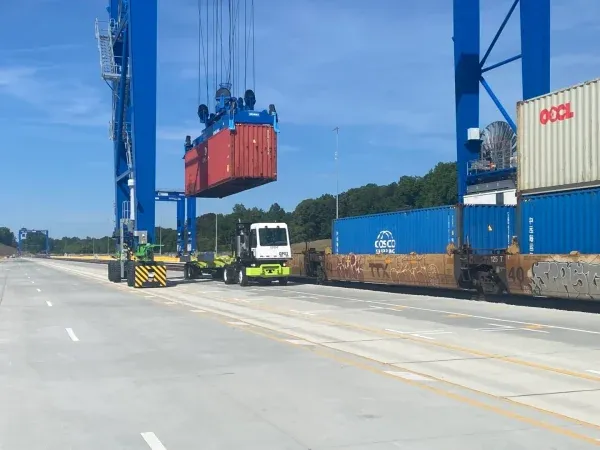
Teams at the Gainesville Inland Port, part of the Georgia Ports Authority, have operated multiple trains and trucks at the facility since its inauguration, initiating daily direct rail service between the inland manufacturing hub and the Port of Savannah.
"With the start of operations in Gainesville, we are extending the reach of the Port of Savannah into Northeast Georgia. Manufacturers throughout the region now have a direct rail connection to more than 40 weekly vessel calls that connect them to global markets," stated Griff Lynch, President and CEO of Georgia Ports.
The Gainesville Inland Port offers shippers an alternative to the 965-kilometer round-trip road route, which will reduce truck traffic on Georgia's highways and in the Atlanta region. GPA expects to shift 26,000 containers to rail transport during the first year of operation, which will improve traffic flow on highways and reduce emissions.
Approximately 80% of Savannah's cargo is transported inland by truck and 20% by rail. Rail becomes more cost-effective beyond 400 kilometers, especially with rising diesel prices. The port's speed and flexibility are highlighted: 40 weekly vessel calls, 42 double-stack trains connecting inland markets, and an industry-leading train dwell time of 20 hours or less. Truck gates process between 14,000 and 16,000 daily movements, with dual operations in less than 50 minutes and single operations in 30.
GPA is collaborating with Norfolk Southern on the new service. Once construction is complete, the $134 million Gainesville Inland Port will have an annual capacity of 200,000 containers.
To reduce the impact of traffic generated by the new rail station on local communities in Gainesville, the Georgia Ports Authority (GPA) funded road projects in Hall County worth $4.8 million, eliminating a level rail crossing, rerouting White Sulphur Road, and paving Cagle Road.