• 2 min de lectura
• 2 min de lectura
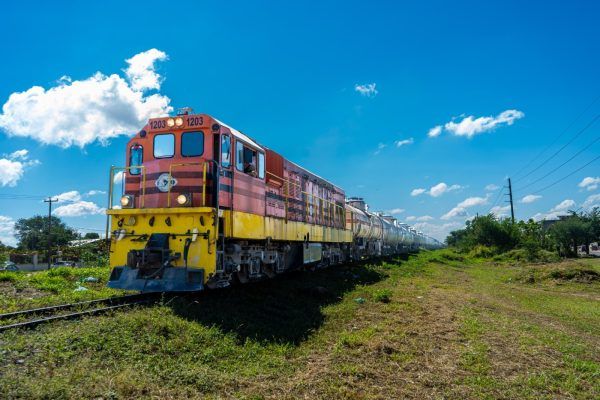
After three years of exclusively focusing transport on tanker trucks, the Bolivian state oil company, YPFB, has once again incorporated rail transport as a complementary alternative that allows for the movement of significant volumes of gasoline with greater operational efficiency, shorter transit times, and optimized logistics costs.
Mauricio Sainz, Head of the Santa Cruz Plant at YPFB Logística, explained that each railway convoy transports between 900 and 1,100 cubic meters of gasoline.
"The main advantage of the wagons is that they arrive in less time. The convoy loaded from its origin takes only 36 hours," he stated.
Furthermore, the official highlighted that this method provides greater predictability to the supply chain by moving a consolidated volume under a defined schedule.
"The convoy, having a defined volume of 1,000 cubic meters, guarantees the direct arrival of fuel without climatic, social, or logistical impediments," Sainz added.
Before authorizing the unloading of the product at the storage plant, YPFB Logística executes a strict documentary and quality control procedure. Once the convoy enters the premises, the origin documentation and security seals are verified, and samples are taken from the wagons in coordination with the corresponding inspectors.
Subsequently, the samples are analyzed in YPFB Refinación laboratories to ensure that the fuel complies with all technical specifications before its dispatch.