• 2 min de lectura
• 2 min de lectura
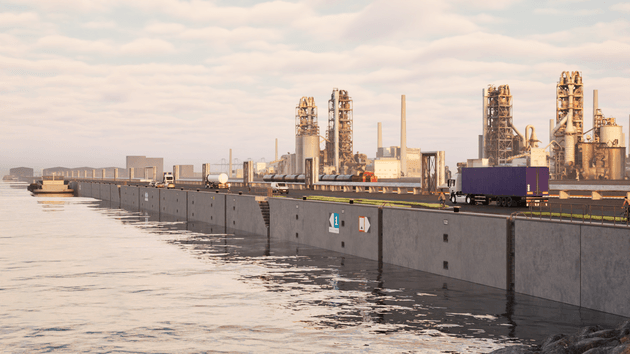
The first phase of the Yangtze Canal expansion has concluded in the Port of Rotterdam, after the contracting consortium formed by Hakkers, De Klerk, and Van Oord completed a new tugboat quay with 12 berths and shore power facilities.
The consortium is currently working on the construction of a 1,450-meter quay wall with 20 new berths for inland navigation, including shore power facilities.
The largest container ships sail through the Yangtze to and from the APMT 2 and RWG terminals in Prinses Amaliahaven. The navigable channel (the bed) will be widened along its entire length over the next few years, and once the project is completed, the Yangtze and, therefore, access to Maasvlakte will be prepared to safely and efficiently receive the next generation of container ships, yet to be developed.
Second Phase Begins
Following the handover of the first phase, the second phase immediately commenced, comprising the construction of a 1,450-meter quay wall west of the existing Antarcticakade quay, with 20 additional river berths, adding to the 10 already in place. A heavy-duty loading area will also be built for the occasional transshipment of specific goods or materials.
The river berths in front of the quay wall will maintain a depth of NAP -6.80 m. To widen the navigable channel and enable the river berths, 1.4 million cubic meters of sand will be dredged and reused for land reclamation in Maasvlakte 2. These works will allow for two-way traffic of container ships up to 24,000 TEU.
Sustainable Quay Wall
The upper part of the new quay wall will be constructed with approximately 10,000 m³ of geopolymer concrete. This material contains no cement and reduces carbon emissions by 50% compared to traditional concrete. Therefore, the project aligns with the Port of Rotterdam Authority's ambitions to achieve even more sustainable construction and maintenance of port infrastructure.
The Port Authority manages about 80 kilometers of quay walls and 200 kilometers of embankments. In the coming years, new investments will be made in the construction and renovation of this type of infrastructure.