• 2 min de lectura
• 2 min de lectura
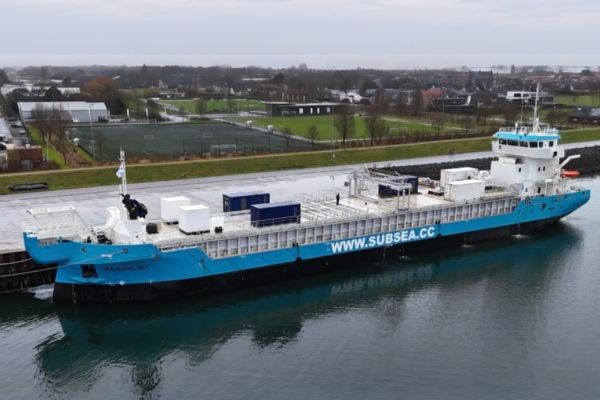
Conoship International Projects (CIP) reported that an analysis of the first months of operations of the world's first diesel-electric cable recovery vessel, the MV Maasvliet, exceeds all expectations, achieving 53.6% fuel savings.
The company indicates that when the CIP3800 platform was designed as part of their standardized CIP series, the goal was to offer a robust, future-proof general cargo vessel capable of achieving market-leading fuel consumption reduction of 20% to 30%, although the true test of a standardized platform lies in its adaptability.
Recognizing the latent potential of this ultra-efficient hull and its diesel-electric foundation, Subsea Environmental Services and Hudig & Veder, in collaboration with Holland Shipyards Groups, posed the question to the market: could this general cargo platform be successfully adapted to become a specialized subsea cable recovery vessel?
It was an unconventional combination, but this is precisely where Conoship's integration expertise stands out. Now, after 12 months of real operations, empirical data demonstrates that the platform excels in adaptability and efficiency. In a recent article published in edition 148 of SubTel Forum magazine, titled Global Capacity, 12 months of detailed operational data for the MV Maasvliet were unveiled, with results that surpassed initial, conservative estimates.
In a direct comparison of voyages covering transit, low-speed cable recovery, and discharge, the unit achieved an overall reduction of 53.6% in fuel consumption compared to traditionally propelled vessels. In concrete financial terms, this translates to an approximate saving of 600 metric tons of MGO and USD 1 million in operating costs in just one year.
The success of the MV Maasvliet led Conoship to establish that a specialized operational profile does not require a 100% customized and expensive newbuild design, but rather that the key to this advancement lies in the inherent flexibility of Conoship International Projects (CIP Series).
"We designed the CIP3800 platform from the ground up, prioritizing qualities that go far beyond simple cargo transport: optimized hull lines for low resistance, excellent seakeeping capabilities, and a modular diesel-electric architecture. Since the underlying platform had already solved the complex challenges of fuel efficiency and structural integrity, it served as a robust, ready-to-use canvas. We were able to integrate Subsea's specialized cable handling equipment, enhance the bow thrusters for 24/7 position keeping, and reconfigure internal spaces for crew comfort on long voyages. All of this without losing the main advantages that make the CIP platform so efficient," Conoship detailed.