• 3 min de lectura
• 3 min de lectura
Saronic and South Korea's Samsung Heavy Industries (SHI) have announced a strategic partnership aimed at accelerating the development of autonomous maritime systems while supporting efforts to rebuild the U.S. shipbuilding industrial base.
The agreement, unveiled Thursday at the launch of the Korea–U.S. Shipbuilding Partnership Center (KUSPC) in Washington, D.C., brings together Saronic's expertise in autonomous surface vessels with SHI's decades of experience in commercial shipbuilding and advanced manufacturing.
The companies said they will collaborate on developing autonomy-capable vessels for both government and commercial customers while exploring AI-powered digital technologies, robotics-based production automation, and next-generation shipyard manufacturing processes.
"Rebuilding America's maritime strength requires both world-class technology and the industrial muscle to produce it at scale here at home," said Dino Mavrookas, Saronic's co-founder and CEO. "Together, we will focus on accelerating the reindustrialization of American shipbuilding, training the workforce of the future, and delivering differentiated, autonomy-capable vessels for both government and commercial applications."
Samsung Heavy Industries Vice Chairman and CEO Sung An Choi said the partnership combines the companies' complementary strengths in shipbuilding and maritime autonomy to "create a more competitive future."
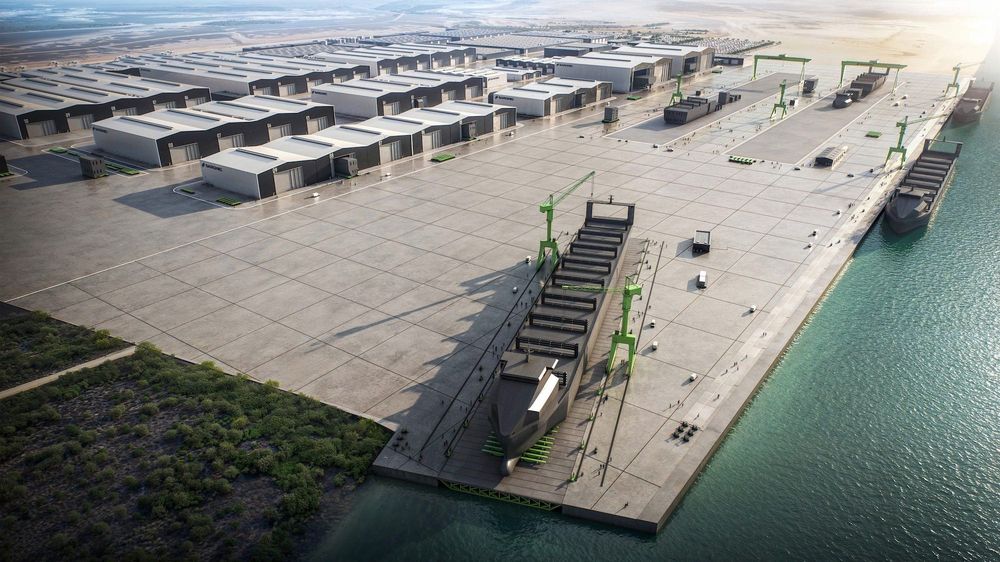
The announcement comes just one week after Saronic selected Brownsville, Texas, as the site of its planned $3 billion Port Alpha autonomous shipyard, a project the company says will dramatically expand U.S. capacity to build large autonomous vessels.
Port Alpha is expected to begin construction later this year and open in 2028 on an initial 835-acre site at the Port of Brownsville. The company has said the facility could eventually support vessels exceeding 1,200 feet in length and create up to 10,000 direct jobs over the next decade.
The Samsung partnership also extends to production infrastructure, with the companies planning to explore robotics-based process automation across Saronic's shipyards, including the new Texas facility and its shipyard in Franklin, Louisiana. Saronic is investing an additional $300 million to expand production capacity at the Louisiana yard after acquiring Gulf Craft last year.
The collaboration reflects growing U.S. efforts to strengthen domestic shipbuilding by combining American autonomous systems technology with the manufacturing expertise of allied shipbuilders. The partnership was announced during the launch of the Korea–U.S. Shipbuilding Partnership Center, an initiative sponsored by the U.S. Department of Commerce and South Korea's Ministry of Trade, Industry and Energy to deepen cooperation between the two countries' maritime industries.
The agreement also aligns with broader Trump administration initiatives to revitalize U.S. shipbuilding and expand the maritime industrial base through investments in advanced manufacturing, workforce development and next-generation vessel technologies.
For Saronic, the partnership marks another step in its rapid expansion from an autonomous vessel developer into a major U.S. shipbuilder. The company has gained prominence in recent months as its Corsair autonomous surface vessel entered operational military service, including what U.S. Central Command described as the first combat use of American sea drones during operations against Iranian naval infrastructure earlier this month.