• 4 min de lectura
• 4 min de lectura
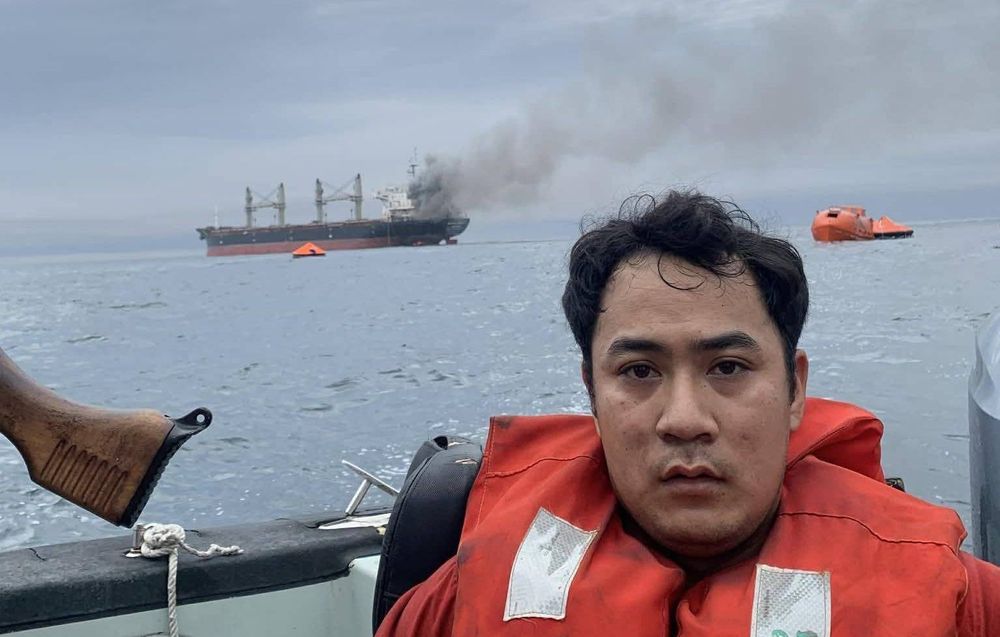
The world's 1.8 million seafarers spend much of their careers out of sight, quietly moving the cargoes that keep the global economy running. This year, many have found themselves on the front lines of geopolitical conflict.
As the maritime industry marks the International Maritime Organization's Day of the Seafarer on June 25, thousands of merchant mariners remain caught in some of the world's most dangerous waters. From the Strait of Hormuz to the Red Sea and the Black Sea, commercial shipping has become increasingly entangled in regional conflicts, forcing crews to navigate not only rough seas but missiles, drones, naval mines, and military checkpoints.
This year's campaign, themed "Carrying world trade. Carrying the risks," comes as the IMO leads an unprecedented effort to evacuate more than 11,000 seafarers and hundreds of ships stranded in the Persian Gulf following months of conflict that brought commercial traffic through the Strait of Hormuz to a near standstill.
The evacuation effort has underscored a reality many seafarers have lived with for months: while ships can often be rerouted or delayed, crews frequently have little choice but to remain aboard, waiting for governments and industry to determine when it is safe to move.
"To all seafarers: thank you," IMO Secretary-General Arsenio Dominguez said in a message marking the occasion. "Your work is essential to the functioning of the global economy and the daily lives of people around the world. While it may not always seem visible, your safety, security and welfare remain our highest priority."
The humanitarian dimension of maritime conflict has become impossible to ignore this year. The IMO has verified dozens of attacks on merchant shipping since hostilities erupted around the Persian Gulf, resulting in the deaths of 14 seafarers. Tens of thousands more have spent months unable to leave the region as security conditions deteriorated.
United Nations Secretary-General António Guterres said recent events illustrate the growing risks facing civilian mariners.
"When nations clash, seafarers are often caught in the crossfire," Guterres said. "Recent events in the Strait of Hormuz have seen tens of thousands of seafarers stranded as they work far from home to keep the world fuelled and fed. Mariners must never be the victims or pawns of geopolitical conflict."
Those words have taken on renewed urgency as the situation in the Strait of Hormuz remains fragile despite a U.S.-Iran memorandum of understanding intended to restore commercial navigation. Even as the IMO began coordinating the movement of stranded vessels this week, merchant ships again faced conflicting instructions from Iranian authorities, and UK Maritime Trade Operations reported that a cargo ship was struck by an unknown projectile off the coast of Oman on Thursday. The vessel suffered damage to its bridge, though no injuries were reported.
The incident serves as a stark reminder that, even when political agreements are reached, it is seafarers who continue to bear the operational risks.
Beyond the Persian Gulf, commercial vessels continue to operate under elevated security conditions in the Red Sea, where attacks have forced many operators to reroute around the Cape of Good Hope, adding weeks to voyages. In the Black Sea and Sea of Azov, mariners continue to navigate waters shaped by the ongoing consequences of war, military restrictions, and shifting security risks.
Collectively, these crises have transformed the risk profile of modern shipping. Masters and crews now routinely incorporate intelligence on military activity, electronic interference, drone threats, and evolving security advisories into voyage planning alongside weather forecasts and navigational hazards.
The growing danger facing merchant mariners also reflects a broader shift in the industry. In its Safety and Shipping Review 2026, Allianz Commercial warned that shipping has entered "a new equilibrium" in which geopolitical tensions, contested maritime chokepoints, and fragile supply chains have replaced the relatively predictable operating environment that prevailed for decades.
The insurer argued that conflicts in the Strait of Hormuz, Red Sea and elsewhere have fundamentally changed the industry's risk profile, leaving crews to operate in an era of persistent uncertainty where freedom of navigation can no longer be taken for granted.
This year's Day of the Seafarer campaign seeks to put those experiences at the center of the conversation. Through a series of first-hand testimonials, seafarers are sharing what it means to transit conflict zones, describing the uncertainty, stress, and resilience required to continue delivering the world's cargo under extraordinary circumstances.
For the maritime industry, the message is clear: seafarers remain indispensable to global trade, but their willingness to continue operating in dangerous environments should never be taken for granted.
As governments work to secure sea lanes and restore freedom of navigation, the industry's challenge extends beyond protecting ships and cargo. It is about ensuring the people aboard those ships are never treated as collateral damage in conflicts they did not create.
Fuente: GCAPTAIN_NEWS