• 2 min de lectura
• 2 min de lectura
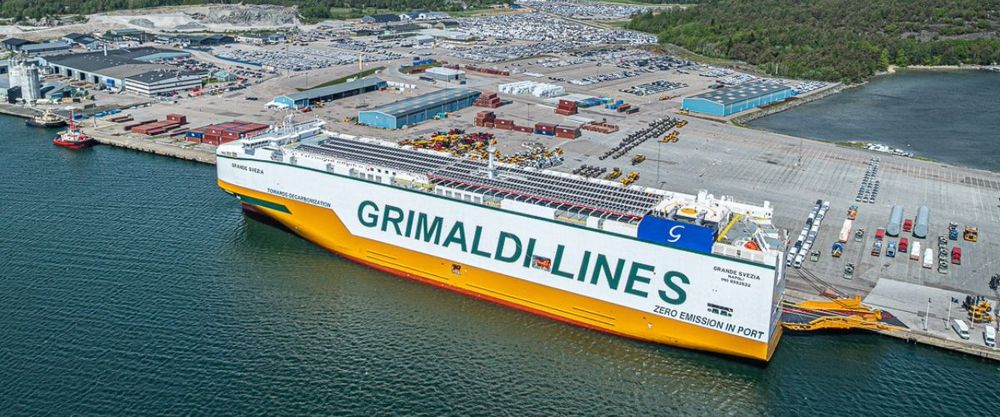
The christening ceremony of the vessel Grande Svezia took place in the Port of Wallhamn, Sweden. Delivered in December 2025, the vessel joined the Grimaldi Group's PCTC (Pure Car & Truck Carrier) fleet, which is prepared for the use of ammonia.
The Port of Wallhamn, chosen for the christening ceremony, is Sweden's only private port and is managed by the Italian shipping group. It is also part of the EuroMed service, in which the Grande Svezia operates, regularly connecting the main ports of the Mediterranean and Northern Europe, with calls in Italy, Spain, Greece, Turkey, Egypt, Cyprus, Morocco, Portugal, United Kingdom, Denmark, Sweden, Belgium, Netherlands, and Germany.
Built by the China Merchants Heavy Industries shipyard in Jiangsu, the Grande Svezia is 220 meters long and 38 meters wide, with a gross tonnage of 91,611 and a service speed of 18 knots. Across its 14 decks, it can transport electric and conventional vehicles, with a maximum capacity of 9,000 CEU (Car Equivalent Units).
In addition to its large transport capacity, the Grande Svezia incorporates numerous sustainable technologies. It is one of the ammonia-ready PCTC vessels in the Grimaldi Group's fleet, which currently comprises 11 vessels and will be expanded with the delivery of six additional units by 2027.
To achieve zero emissions while in port, the PCTC is equipped with lithium megabatteries with a total capacity of 5 MWh, as well as shore power connection capability, allowing it to draw electricity directly from the shore where facilities are available.
Additional sustainability features include 2500 square meters of solar panels, silicon-based hull coatings to reduce resistance, smart systems to optimize ventilation and air conditioning, and advanced exhaust gas cleaning systems that significantly reduce SOx, NOx, and particulate emissions.
An air lubrication system, an optimized hull design, and an innovative gate rudder further enhance propulsion efficiency and maneuverability. Compared to previous generations of car carrier vessels, this vessel allows for fuel consumption reductions of up to 50%.