• 3 min de lectura
• 3 min de lectura
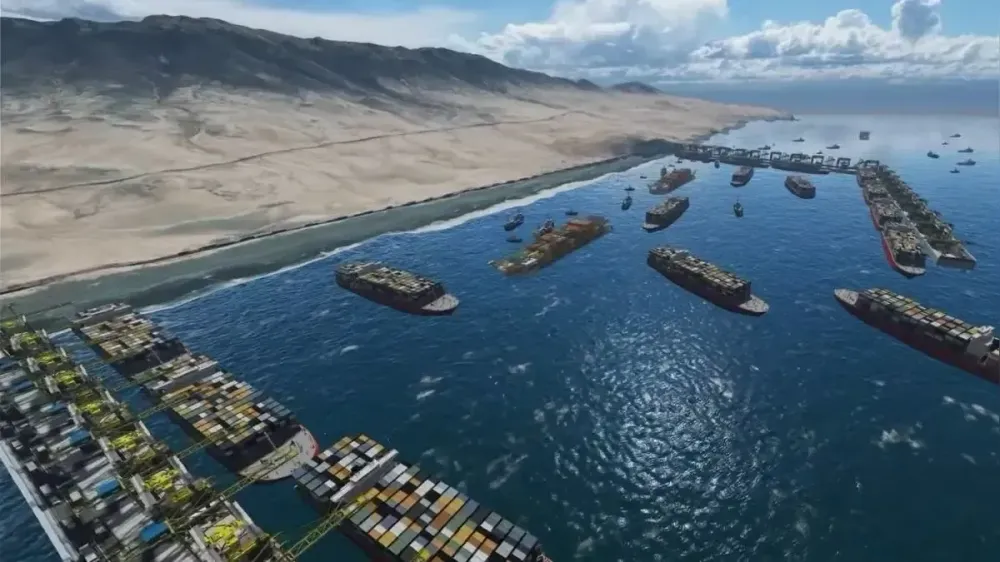
Congress seeks to organize thousands of hectares to make the Corío megaport viable.
The approved ruling proposes to regularize and transfer properties to prevent invasions, property conflicts, and other obstacles that could affect the US$7 billion investment in the Corío port.
The Congressional Housing Commission approved a ruling aimed at resolving the control and regularization of the land where the Corío megaport (Arequipa) would be developed, an initiative that would require an investment of around US$7 billion. Although the project was already declared of national interest in 2022, the parliamentary proposal recognizes that mechanisms are still needed to organize property ownership.
Thus, the aim is to organize, regularize, and secure the land where the future port, logistics platform, industrial zone, and the so-called port city are planned to be built.
In other words, before attracting investors or building docks, the State needs to have legal and physical control over the territory where the project will be developed.
Therefore, the ruling declares the comprehensive execution of the Corío Americas Multimodal Logistics Hub Megaport and the physical-legal regularization of the land designated for its implementation to be of national interest.
The ruling warns that the area where Corío would be developed "presents concrete risks" that could affect its future viability. Among them, it mentions informal occupations, overlapping rights, and problems related to the registration status of some land parcels.
These difficulties could become obstacles for this large-scale project if measures are not taken now. Therefore, the plan is to organize and secure the land before new conflicts arise.
According to a technical report from the Regional Government of Arequipa, it is recommended to protect the areas designated for the project to prevent invasions and new informal occupations that could affect its development.
The focus is on the physical-legal regularization of the properties, a process that seeks to identify who owns each parcel of land, resolve potential conflicts, and ensure that the areas necessary for the project are available.
The National Superintendence of State Assets (SBN) would assume this role, with the task of initiating actions to identify, regularize, and transfer state properties to the Regional Government of Arequipa.
This measure seeks to prevent multiple entities from having control over different parts of the territory designated for the project.
According to the initiative's justification, when there are multiple ownerships and dispersed competencies, delays, duplication of functions, and difficulties in decision-making often arise.
The goal is to have a single entity responsible for managing the territory where Corío will be developed.
In other words, the strategy is to first resolve problems related to land ownership to prevent them from becoming an obstacle when the project enters more advanced stages.
Source: apam_nacionales