

Workshop held in Brasília gathered around 80 participants to share experiences and discuss challenges for the adoption of Nature-based Solutions
Published on 05/11/2026 11h13

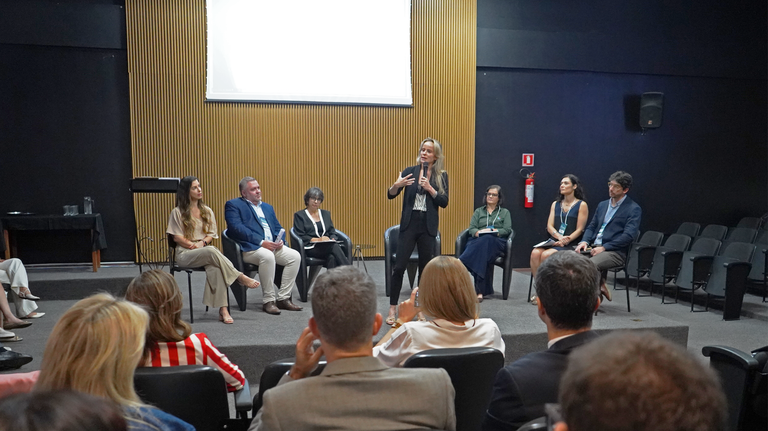

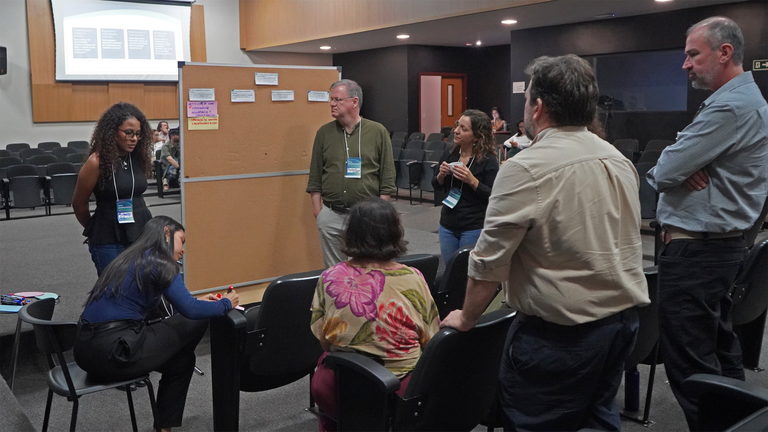
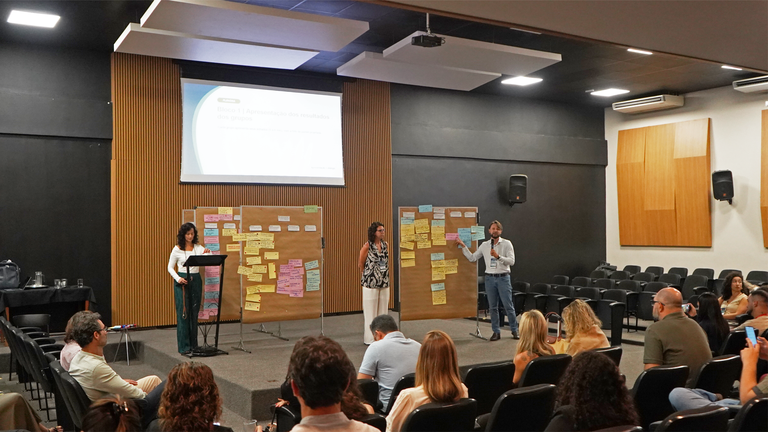
Brasília, 05/11/2026 – The National Waterway Transportation Agency (ANTAQ), the Ministry of Ports and Airports (MPOR), and the Ministry of Environment and Climate Change (MMA) held the workshop “Nature-based Solutions for Climate Adaptation in the Port Sector” on October 21 and 22, in Brasília.
The initiative had the collaboration of German Cooperation (GIZ), through the ProAdapta Project, Fundação Grupo Boticário, and the United Nations Educational, Scientific and Cultural Organization (UNESCO).
The meeting gathered around 80 participants, including representatives from the port sector, public bodies, research institutions, and international organizations, to discuss how the conservation and recovery of natural ecosystems, such as mangroves, restingas, and dunes, can contribute to the adaptation of ports to the impacts of climate change.
At the opening, ANTAQ's Superintendent of ESG and Innovation, Cristina Castro, highlighted the need to create conditions to expand the adoption of Nature-based Solutions in the port sector.
“To treat natural capital as a strategic asset, public regulation is needed to provide legal certainty, and private investment is needed to scale nature-based solutions,” she emphasized.
Experiences and Challenges
Among the experiences presented were the Living Seawalls project, which uses structures to promote marine biodiversity; the conservation and recovery actions of restingas in the Caruara Reserve, linked to Porto do Açu (RJ); and studies by the Federal University of Paraná (UFPR) on sediments and alternatives to reduce flooding.
Participants also discussed challenges to expanding the adoption of these solutions, such as financing, implementation costs, the need for technical knowledge, and issues related to licensing and regulation.
On the second day, working groups shared experiences, identified difficulties, and discussed recommendations to facilitate the application of Nature-based Solutions in Brazilian ports.
Next Steps
The contributions gathered during the workshop are being consolidated and are expected to support the preparation of a technical report and a guide to good practices to support the adoption of these solutions in the Brazilian port sector. The guide is expected to be presented in April 2027, during the Ocean Decade Week, in Rio de Janeiro.
The creation of a dedicated space on the Sustainable Urban Development Network (REDUS) portal is also planned, to provide references, experiences, and support materials.
The workshop is part of project PJ02 – “Application of Nature-based Solutions (NbS) in the waterway sector,” of ANTAQ's 2025–2026 Environmental and Waterway Safety Agenda. The contributions are also expected to support the implementation of Action A1.M19 of the Transport Sector Climate Adaptation Plan, aimed at reducing climate risks and adapting port infrastructure.


