• 3 min de lectura
• 3 min de lectura
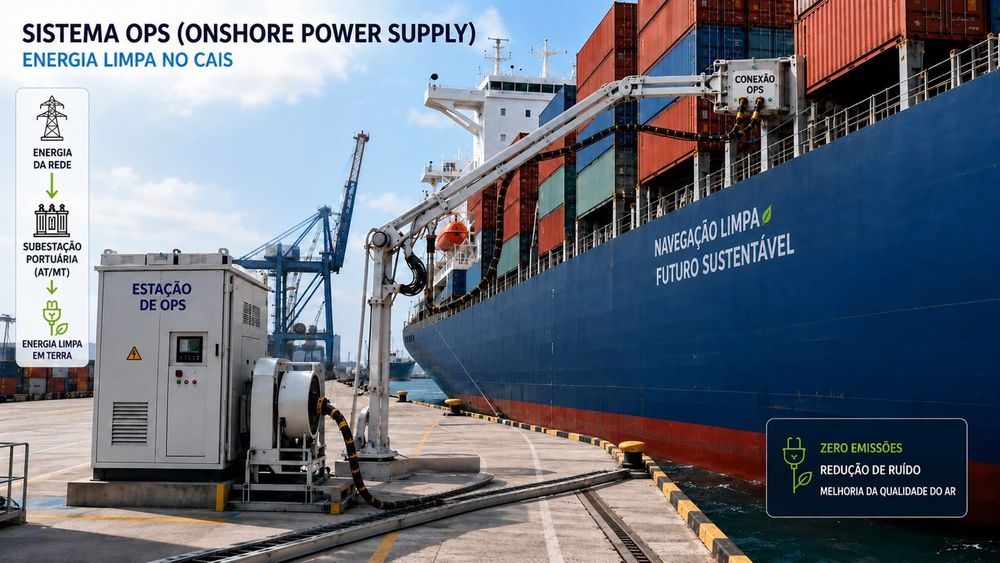
The Suape Port Industrial Complex has initiated a new phase of studies to evaluate the implementation of a renewable energy supply system for berthed vessels. Known as Shore Power Supply (OPS), this technology allows compatible ships to connect to land-based electrical infrastructure and turn off their auxiliary engines while in port.
Even when berthed, vessels need to generate power to maintain lighting, refrigeration, ventilation, communications, and other essential systems. Currently, this demand is typically met by onboard generators powered by fossil fuels. With OPS, electricity supplied from shore could replace this generation, contributing to the reduction of greenhouse gas emissions and other pollutants, as well as decreasing noise and vibrations in operational areas.
"We are preparing Suape to adapt to the changes already occurring in global maritime transport. The study will allow us to assess the project's feasibility and plan the necessary infrastructure to offer this service in the future, reconciling operational efficiency with emission reduction," stated Suape CEO, Armando Monteiro Bisneto.
The studies will evaluate the energy demand of vessels operating in Suape, the average stay time for loading and unloading operations, ship compatibility, and the necessary adaptations to docks and the electrical grid. Investments, economic models, collaboration possibilities, and a potential phased implementation, depending on shipping companies' demand, will also be analyzed.
Among the structures that might be necessary are substations, transformation and control systems, connection points, and high-capacity cables.
"The OPS system allows for the replacement of onboard power generation with electricity supplied by the port during berthing. We are deepening our studies to identify the most suitable solution for Suape's characteristics and determine its implementation scale, considering technical, environmental, and economic aspects," explained Sóstenes Alcoforado, Director of Sustainability and Innovation.
Antaq Study
The Diagnosis on Decarbonization in the Port Sector, which analyzes the suitability of Brazilian ports to receive ships with green fuel, wind energy production, and the electrification of equipment and OPS systems, points out challenges for the expansion of this technology in the country. These include the need for an electrical infrastructure capable of meeting different power levels and frequencies, implementation costs, physical adaptation of docks, and the still low demand from large vessels.
Prepared by the National Waterway Transportation Agency (Antaq) in 2025, the document indicates that prior infrastructure preparation can be a strategic opportunity for Brazilian ports, especially given the national potential for renewable energy generation.
In Europe, this technology is already part of the infrastructure of major ports. Hamburg, Germany, supplies power from renewable sources to berthed vessels and maintains systems for cruise ships and container ships; the first installation became operational in 2016. In Rotterdam, Netherlands, the OPS (On-Ship Power Supply) system is also expanding, with a project to equip three long-distance container terminals, covering eight kilometers of docks and 35 connection points.
In Brazil, the technology is still in its early stages for large vessels. In Suape, the completion of the studies will allow for defining the most appropriate configuration, priority docks, necessary investments, collaboration possibilities, and the implementation schedule. This initiative is part of the complex's energy transition and decarbonization efforts and seeks to prepare the port infrastructure for the new environmental and operational requirements of international maritime transport.