• 4 min de lectura
• 4 min de lectura
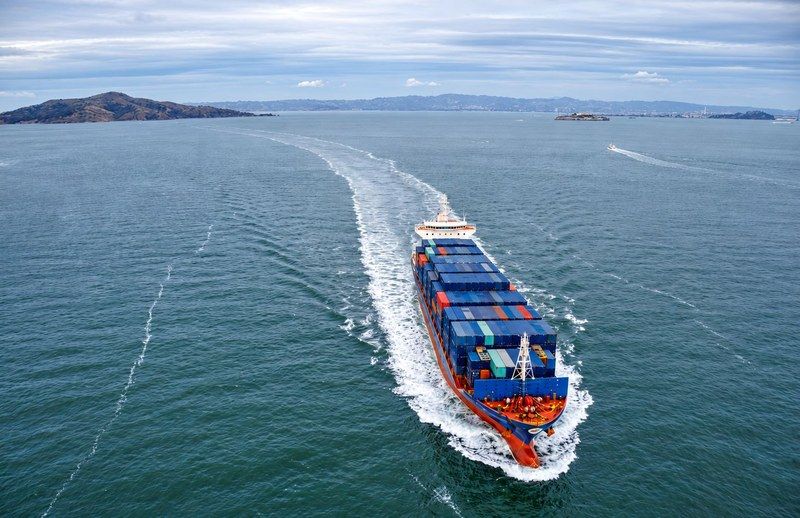
Among the four waterway axes considered priorities by the National Logistics Plan 2050 (PNL 2050), the South-Manaus Cabotage shows how cargo can cross the country by combining different modes of transport. From collection at the origin to delivery in the Amazonian capital, the operation can involve trucks, waterways, railways, ports, terminals, and ships in complementary stages.
Cabotage is navigation carried out between ports or points within Brazilian territory via maritime or waterway routes. In the connection between the South and Manaus, ships travel along the coast and enter the Amazonian waterway system, while other modes of transport make the terrestrial connections before and after the water journey.
The route varies according to the origin, destination, type of merchandise, ports served, and contracted service. Not all cargo, therefore, passes through the same structures or uses all the means of transport foreseen in the axis.
Before reaching the ship, the merchandise needs to leave the factory, warehouse, or distribution center, and in many cases, products are packed in containers, standardized structures that facilitate the movement and transfer of cargo.
The truck can take the container directly to the port of embarkation. Depending on the cargo's location and available connections, part of this journey can also be made by rail or waterway, mainly for moving large volumes between production areas, logistics centers, and port facilities.
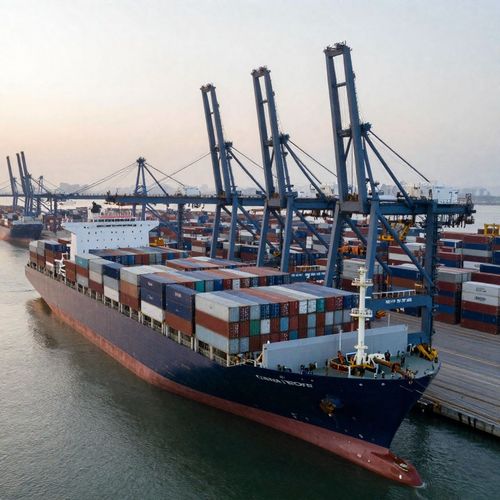
The port concentrates terrestrial accesses, berthing areas, yards, warehouses, and the services necessary for ship operations. Within this structure, ports or terminals receive, organize, and move cargo until embarkation.
After being placed on the ship, the container begins the navigable stage of the journey. The vessel follows the Brazilian coast and can make stops to load or unload cargo at other ports. The number of stops depends on the organization of each navigation service.
To reach Manaus, the ship enters the inland waters of the North Region and travels along the Amazon River, the Rio Negro, and other rivers in the region. In this section, factors such as depth, signaling, channel width, and variations in water level influence the safety and regularity of navigation.
PNL 2050 links the South-Manaus Cabotage axis to the improvement of the Amazon River Waterway and the Breves Strait section between Almeirim and Belém, in Pará. The planning also considers the capacity of the port complexes that can participate in cargo flows along the corridor.
The arrival of the ship in Manaus does not end the journey. After disembarkation, the cargo is removed from the terminal and transported by truck to industries, warehouses, distribution centers, or commercial establishments.
The flow also occurs in the opposite direction. Products manufactured in Manaus can leave the region by ship and, after disembarkation at other ports, continue by truck, waterway, or railway to different consumer markets.
Cabotage thus contributes both to the arrival of goods and inputs to the North Region and to the outflow of local production, especially electronics, white goods (home appliances), and two-wheeled vehicles (motorcycles) produced in the Manaus Free Trade Zone. In Manaus, navigable waterways are fundamental for logistical connection with other Brazilian regions.
According to PNL 2050, the South-Manaus Cabotage axis brings together 93 structural interventions related to waterway, port, railway, and road infrastructures. This set represents possibilities identified by the plan for the development of the corridor, and not just works already contracted or used on a single route.
The inclusion of these structures in the document indicates their strategic importance for the national transport system. The selection of projects, execution methods, and funding sources will be evaluated in the subsequent stages of Integrated Transport Planning.
By bringing together different stages of the same journey, the axis shows that the functioning of cabotage depends not only on navigation but also on door-to-door delivery services, terrestrial accesses, port capacity, and the work carried out in the terminals. It is this articulation that allows cargo to be transported from the point of origin, in the South, to the final destination in Manaus and vice versa.