• 3 min de lectura
• 3 min de lectura
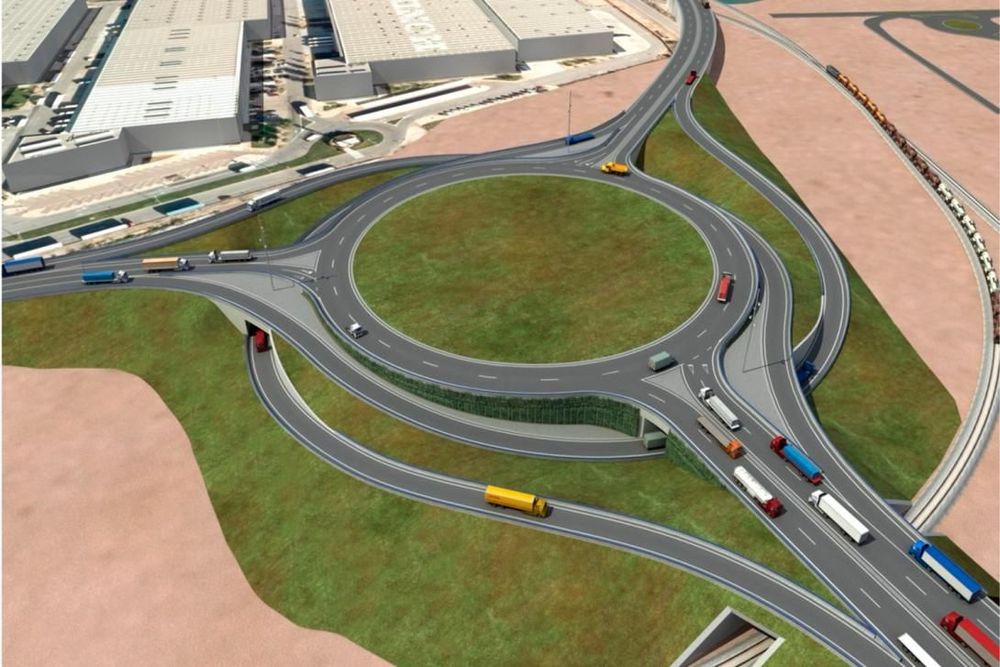
The Port of Barcelona's Board of Directors has initiated the tender process for the major junction that will connect the new accesses with the port's road network. The project consists of constructing a large elevated roundabout over the old mouth of the Llobregat river, in the southern area of the port facilities.
This link will become the most important road infrastructure of the Port of Barcelona, as it will absorb the increase in traffic resulting from the construction of the new road accesses to the Port of Barcelona and the future Catalunya dock, as well as the expansion of facilities at the Prat dock, which will concentrate almost all container movement in the southern part of the port.
The new infrastructure will be compatible with the significant railway complex to be developed in the old bed of the Llobregat river. At the same time, it includes the construction of a large service gallery to allow interconnection below the junction and all railway infrastructure. For this reason, an elevated roundabout with three large entry and exit ramps has been chosen. The first will connect with the future port access highway; the second will connect with the container terminals in the southern zone; and the third, with the terminals north of the old river mouth.
This last ramp will be provisional, as the definitive connection with the northern part of the port, in the form of an elevated viaduct, must be executed once the future pontoon-type berth 35B is built, which conditions the necessary spaces for the development of this section.
Due to the cost of the works, with a budget exceeding 98 million euros and an execution period of three and a half years, the tendering process must be approved by the Council of Ministers.
The Port of Barcelona's Board of Directors has also awarded FCC and COMSA the construction of three new berths for loading and unloading liquid bulk on the east side of the Energía dock. The works will cost 111.5 million euros and have an execution period of 3 years and two months.
The construction of these new berths, similar to the current berth 34B, is part of the plan to increase the capacity for liquid bulk movement at the Energía dock while reorganizing traffic by product type. Thus, these new berths, along with the future pontoon-type 35, will be primarily dedicated to the loading and unloading of sustainable fuels, promoting the decarbonization of transport and logistics and reinforcing the Port of Barcelona's role as an energy hub for Southern Europe and the Mediterranean.
Once operational, together with berth 35, the increased capacity will allow for the remodeling of berths 32 on the west side of the Energía dock and their exclusive use for chemical and agri-food product operations. It will also be possible to create a new berth for car-carriers in the inner basin to respond to the growing import of vehicles.
The construction work will involve reinforcing the current berth 34B with new mooring points and expanding the existing pit on the east side of the Energía dock to ensure the proper connection of the discharge arms that will connect the ships with the different terminals.