

• 10 min de lectura
• 10 min de lectura
Traffic fell through both chokepoints last week, but the underlying signals diverged as Hormuz retained more laden commercial activity despite worsening compliance exposure, while Bab el-Mandeb saw weaker cargo flows and increased dark activity.
Key developments
Traffic overview
Strait of Hormuz
Vessels crossed Strait of Hormuz by risk level as of September 6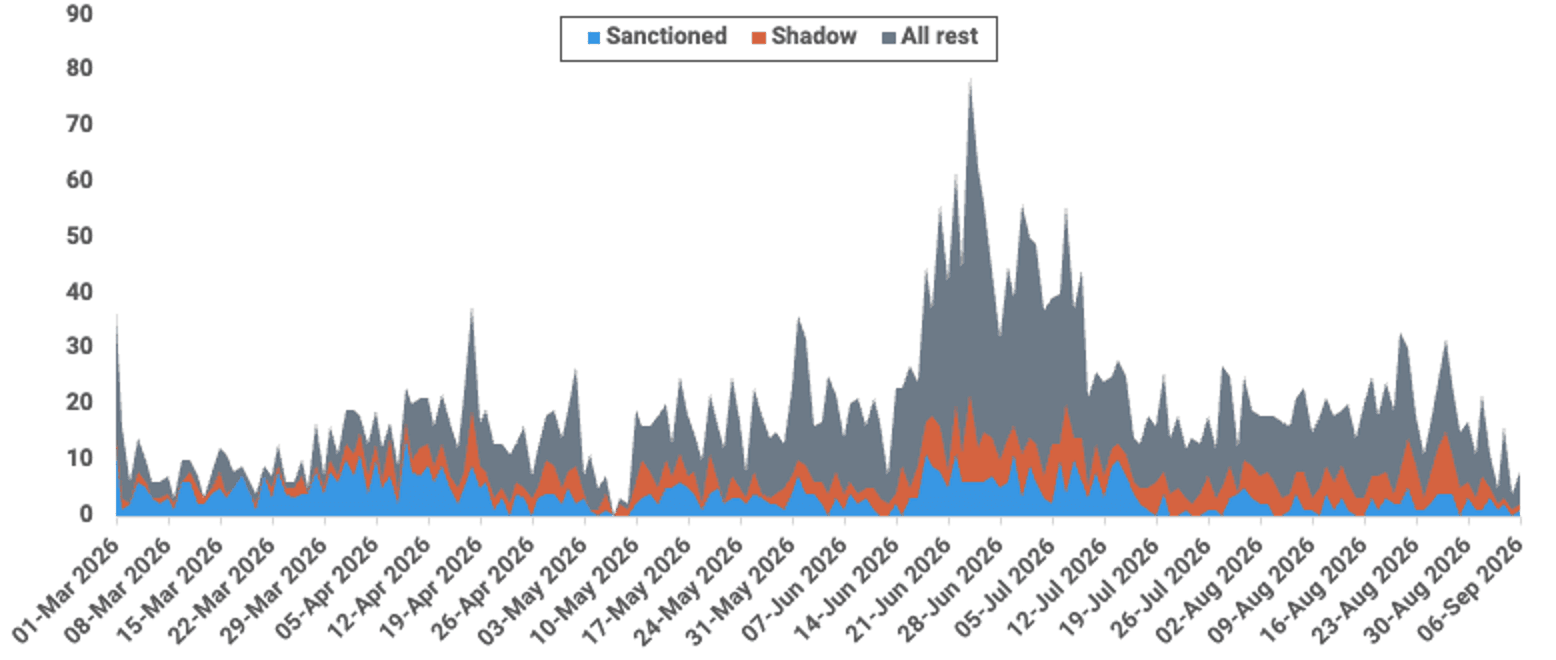 Source: Kpler Risk and Compliance; full traffic data is available including non-commercial vessel tracking from MarineTraffic
Vessels crossed Strait of Hormuz by direction of crossing as of September 6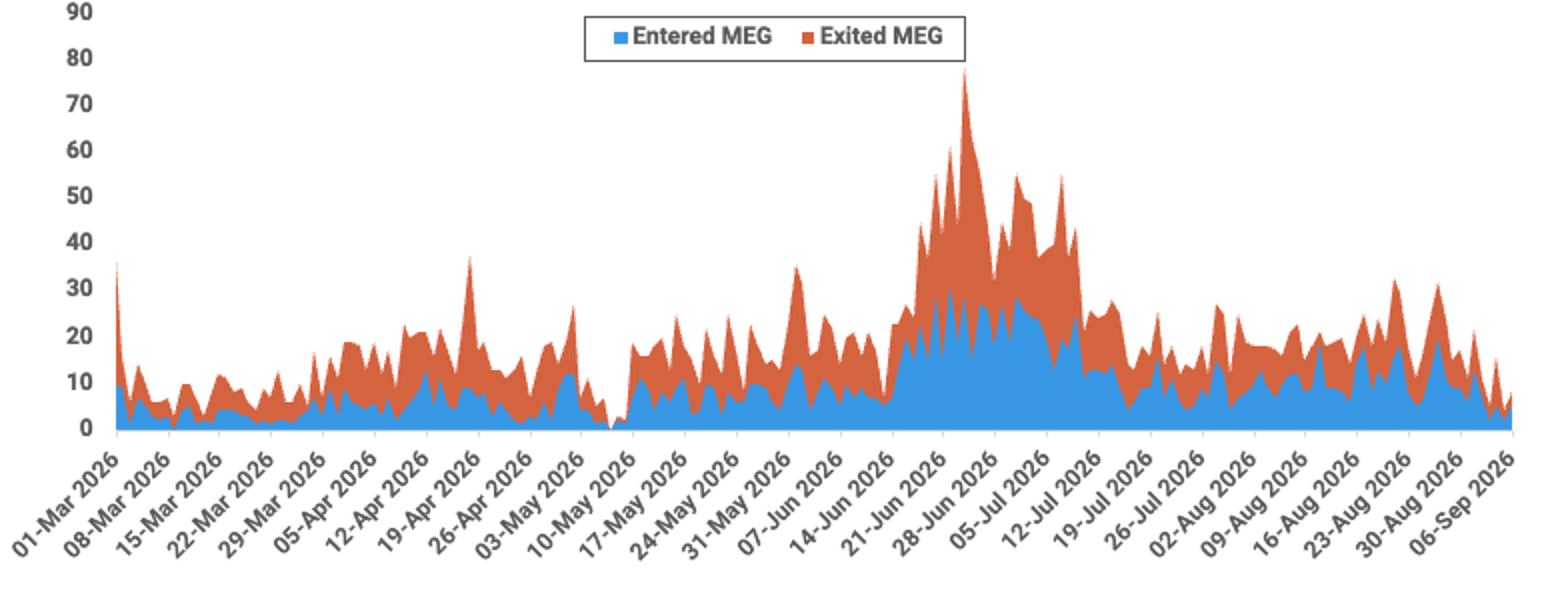 Source: Kpler Risk and Compliance
Vessels crossed Strait of Hormuz by route of crossing as of September 6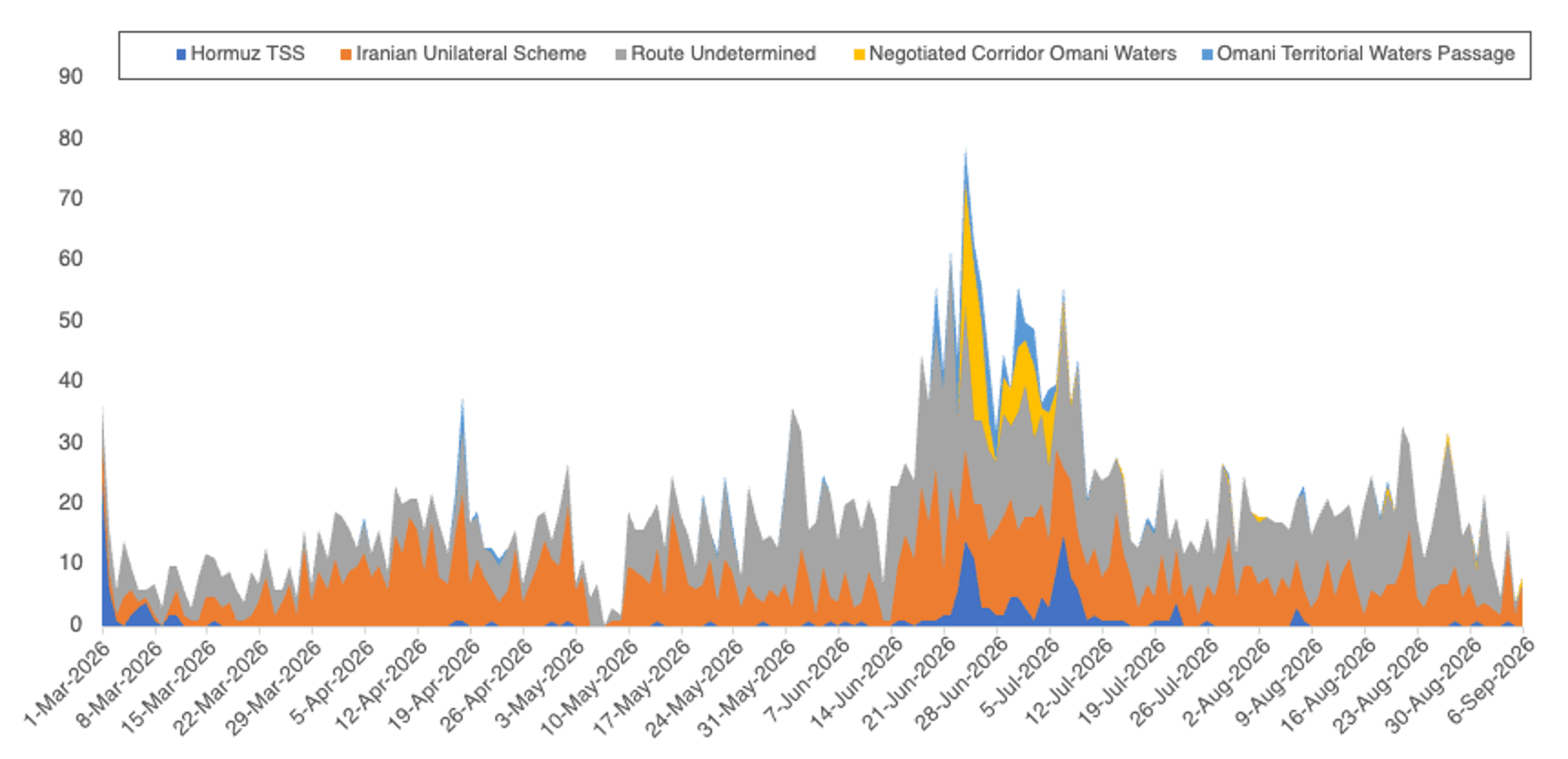 Source: Kpler Risk and Compliance
Strait of Hormuz crossings totaled 77 from 31 August–6 September, down 28.0% from 107 crossings during the previous week. Daily activity was 11 crossings on 31 August, 22 on 1 September, 11 on 2 September, 5 on 3 September, 16 on 4 September, 4 on 5 September and 8 on 6 September. Traffic peaked early in the week at 22 crossings on 1 September before turning volatile, with activity falling to a weekly low of four on 5 September.
The weekly risk profile included 54 All Rest crossings, 14 shadow fleet crossings and 9 sanctioned crossings. Combined sanctioned and shadow fleet traffic fell sharply from 50 to 23 crossings, reducing its share of total traffic from 46.7% to 29.9%. Directionally, flows remained broadly balanced, with 40 Entered MEG movements versus 37 exits, compared with 54 versus 53 the previous week. Laden voyages fell from 45 to 33 and ballast from 44 to 29, leaving laden traffic slightly ahead despite the broader contraction.
On routing, 40 crossings were Route Undetermined and 32 used the Iranian Unilateral Scheme. The Iranian scheme's share was broadly stable at 41.6%, versus 41.1% the previous week, while Route Undetermined fell to 51.9% of traffic. Route diversity improved modestly, with two crossings via the Negotiated Corridor in Omani Waters, one through Omani Territorial Waters Passage and two using the Hormuz TSS. These five crossings involved five vessels and were spread across 31 August, 4 September and 6 September, rather than concentrated on a single day. The increase is notable against recent weeks, but volumes remain too small to indicate a meaningful normalization of alternative routing.
Bab el-Mandeb
Vessels crossed Bab el-Mandeb by risk level as of September 6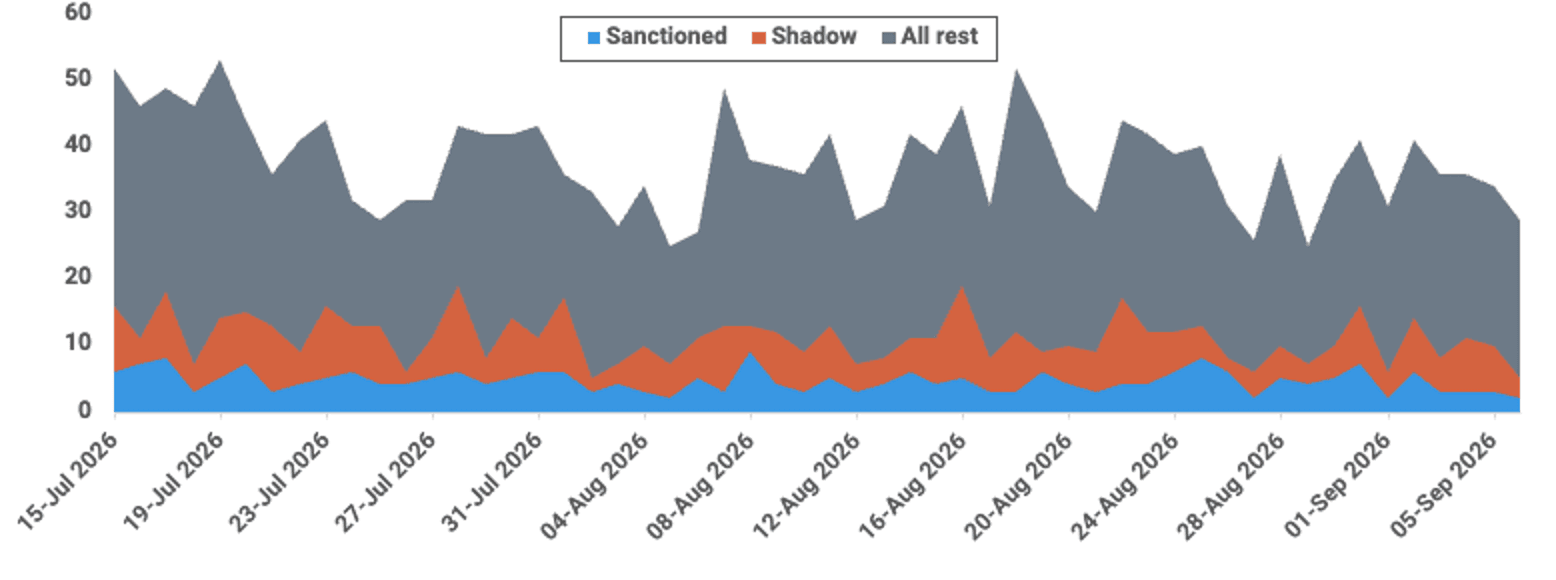 Source: Kpler Risk and Compliance; full traffic data is available including non-commercial vessel tracking from MarineTraffic
Vessels crossed Bab el-Mandeb by direction of crossing as of September 6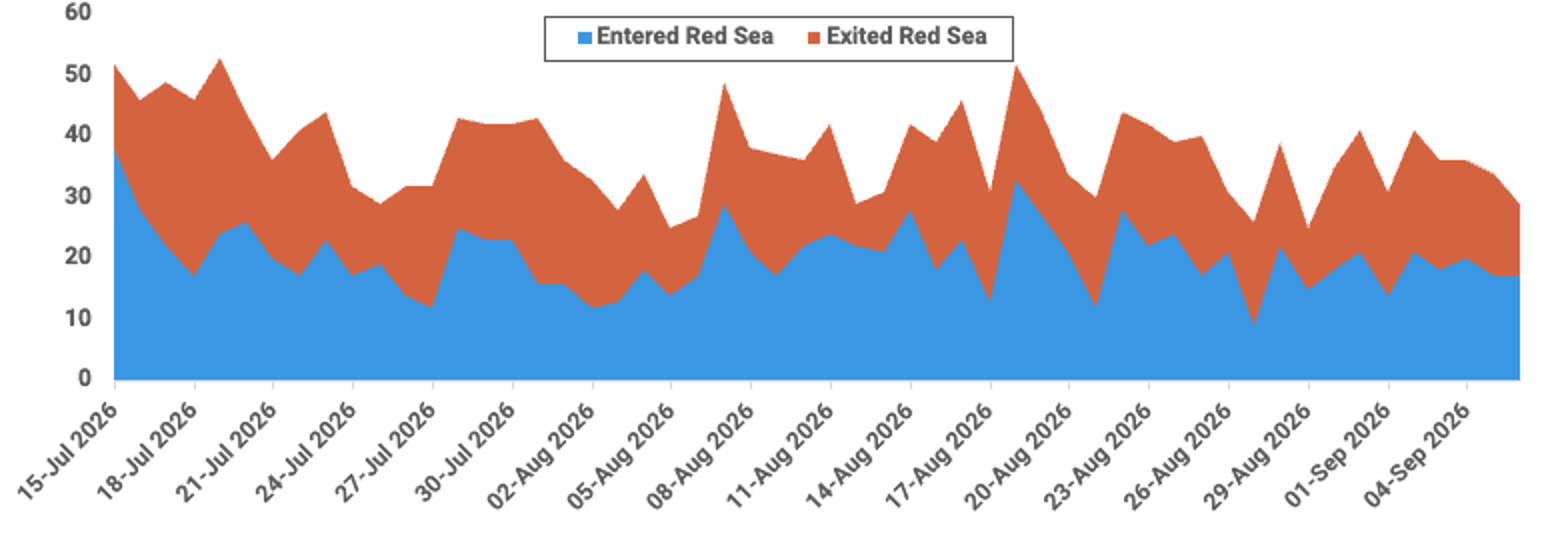 Source: Kpler Risk and Compliance
Bab el-Mandeb crossings totaled 226 from 24–30 August, down 16.0% from 269 crossings during the previous week. Daily activity was 39 crossings on 24 August, 40 on 25 August, 31 on 26 August, 26 on 27 August, 36 on 28 August, 24 on 29 August and 30 on 30 August. Activity peaked early in the week at 40 crossings on 25 August before trending lower, with a partial recovery on 28 August. The corridor remained materially more active than the Strait of Hormuz, running at roughly 2.1 times Hormuz volumes.
The weekly risk profile included 164 All Rest crossings, 26 shadow fleet crossings and 36 sanctioned crossings. Shadow fleet transits fell sharply from 47 to 26, while sanctioned crossings increased from 27 to 36, leaving combined high-risk exposure lower at 62 crossings versus 74 the previous week. Directionally, traffic remained weighted toward vessels entering the Red Sea, with 120 entries versus 106 exits, though the entry–exit gap narrowed further from 31 crossings to 14. Dark transits increased from 15 in the previous week to 22, reversing the recent improvement in visibility, while 204 of the 226 crossings used the Bab el-Mandeb TSS.
Laden transits fell from 131 to 103, led by Crude/Co at 24 cargoes, followed by CPP at 15 and Dry Bulk at 13. The 30 August daily set included 5 sanctioned and 2 shadow fleet crossings, leaving seven high-risk transits on the final day of the week. Overall compliance exposure therefore remained material, despite the sharp week-on-week reduction in shadow fleet activity and lower aggregate traffic.
Regional security and diplomatic context
The two corridors diverged sharply w/w. Hormuz crossings fell 28.0% to 77, while Bab el-Mandeb recovered 9.7% to 248. At Hormuz, sanctioned and shadow fleet crossings fell from 50 to 23 combined, reducing their share of traffic from 46.7% to 29.9%. Iranian Unilateral Scheme use was broadly stable at 41.6%, while five crossings used Omani or Hormuz TSS routes, up from two previously but still too few to signal normalization. At Bab el-Mandeb, high-risk traffic rose from 62 to 70 crossings, dark transits were broadly flat at 23 and TSS adherence held near 91%.
Security conditions at Hormuz deteriorated at the start of the week. IMO confirmed that SIDR (IMO 9854715) and SENEGAL PROSPERITY (IMO 9532757) were damaged on 31 August around 17 nautical miles east of Khasab, Oman, with two seafarers killed aboard SIDR and no pollution reported. The location again weakens the case that routing closer to the Omani side provides a reliably lower-risk alternative, even as limited use of alternative routes continued later in the week.
The incidents coincided with renewed direct US–Iran escalation. Iran struck US bases in Jordan on 31 August in retaliation for the US attack on Larak Island, and CENTCOM launched a further wave of strikes on 1 September against IRGC air-defense, radar, maritime, communications and mine-laying capabilities. CENTCOM said the operation followed recent attempted IRGC attacks against commercial shipping and US personnel. This provides a stronger explanation for the 28% contraction in Hormuz traffic than routing policy alone.
Diplomacy nevertheless continued alongside the escalation. On 6 September, Iran said maps for a new Iran-Oman shipping corridor had been agreed and should be signed shortly, but simultaneously announced plans for a wider restricted maritime zone extending from the US blockade line into the Gulf. Tehran said vessels entering the proposed zone could be sanctioned and again conditioned a full reopening of Hormuz on an end to US attacks and pressure. The emerging framework therefore looks less like normalization than an increasingly formal contest over who controls access to the Strait.
US economic pressure also widened geographically. Treasury sanctioned Türkiye-based Golden Global Bank and two subsidiaries on 4 September under Operation Economic Outcast, accusing them of facilitating IRGC-QF transactions and providing Tehran with international banking access.
At Bab el-Mandeb, no new Houthi merchant-shipping attack dated 31 August–6 September had entered IMO's confirmed Red Sea record by the reporting cut-off. Traffic and laden volumes nevertheless recovered while dark activity remained broadly unchanged, suggesting no immediate operational retreat from the corridor. That should not be read as de-escalation as Somalia officials warned on 6 September of a renewed piracy threat extending into the Gulf of Aden, while IMO had already said six vessels and more than 90 seafarers were being held by pirates or armed robbers.
The regional picture is therefore increasingly asymmetric as Hormuz is moving toward more formalized but contested routing under renewed kinetic pressure, while Bab el-Mandeb is operationally steadier but remains exposed to both Houthi risk and resurgent piracy.
Graph of physical attacks on vessels as of September 7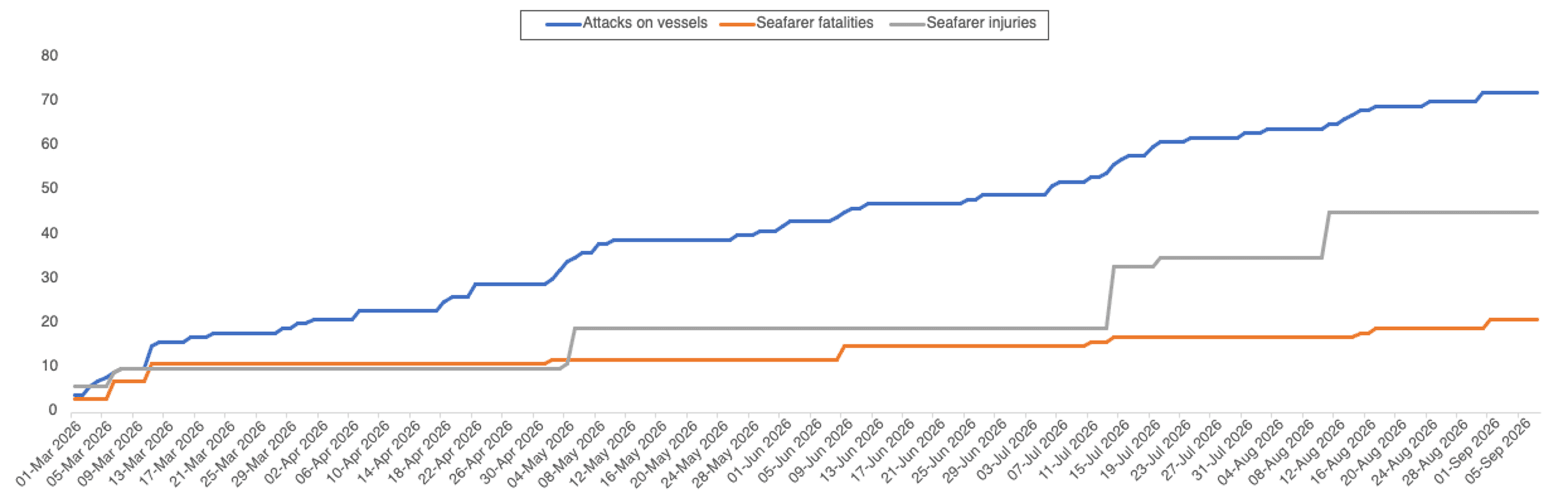 Source: Kpler Risk and Compliance, IMO
Analyst outlook
Over the next 24–72 hours, the dominant Hormuz variable is whether Iran operationalizes its planned restricted zone and new Iran–Oman shipping corridor. Tehran says the zone will extend from the US blockade line into the Gulf, with vessels entering potentially added to an Iranian sanctions list, while maps for the new corridor have been agreed and are expected to be formalized shortly. This creates a more binary operating environment for the market on whether to accept an increasingly Iranian-managed routing framework or remain outside it.
The weekly routing average understates how quickly that shift may already be occurring. Iranian Unilateral Scheme use was broadly flat at 41.6% for the week but accounted for 21 of 28 crossings from 4–6 September, including seven of eight on 6 September. Route Undetermined fell from 57% to 51.9% overall and dropped to zero on the final day. The five Omani or Hormuz TSS crossings therefore overstate route diversification somewhat, three occurred on 31 August, with only two alternative-route transits recorded thereafter. The late-week signal is one of increasing concentration into the Iranian scheme rather than normalization across competing routes.
Commercial substance at Hormuz also weakened. Unlike the previous week, when laden activity held up despite lower headline traffic, the latest contraction is now reaching cargo movements themselves. A further fall in laden crossings next week would be stronger evidence that the security shock is suppressing underlying Gulf trade rather than simply changing vessel behavior.
Treasury's 4 September action against Golden Global Bank and its subsidiaries in Türkiye extends Operation Economic Outcast further into third-country financial infrastructure. If use of the emerging Iranian-managed corridor requires interaction with Iranian counterparties exposed to US restrictions, operators could face a widening tension between physical access and financial compliance. That does not make Iranian-routed voyages automatically sanctionable, but it raises the due-diligence cost of using the route and makes the balance between Iranian Unilateral Scheme and Route Undetermined traffic particularly important.
Bab el-Mandeb presents the opposite near-term signal. Crossings recovered 9.7% to 248 and laden traffic edged up from 103 to 109, while dark transits were broadly unchanged at 23 and TSS adherence held near 91%. The recovery was not driven by crude, which slipped from 24 to 22 laden crossings. Around one-third of all laden crossings, 38 of 109, were sanctioned or shadow fleet vessels, suggesting that risk-tolerant tonnage remains an important part of the corridor's resilience.
No new Houthi merchant-shipping attack during the reporting period had entered IMO's confirmed incident record by the cut-off, so the higher Bab el-Mandeb volumes currently look more like operational resilience than a reaction to reduced attack activity.
The clearest test next week is therefore whether late-week Iranian routing dominance at Hormuz becomes structural and is accompanied by another fall in laden traffic. At Bab el-Mandeb, the key question is whether the traffic recovery can persist without a further rise in shadow fleet or dark activity.