• 5 min de lectura
• 5 min de lectura
The Expedition Cruise Network introduced a new voluntary framework that evaluates expedition cruise operators across six responsible tourism areas, providing travel advisors with clearer guidance and operators with improvement roadmaps.
September 30, 2026
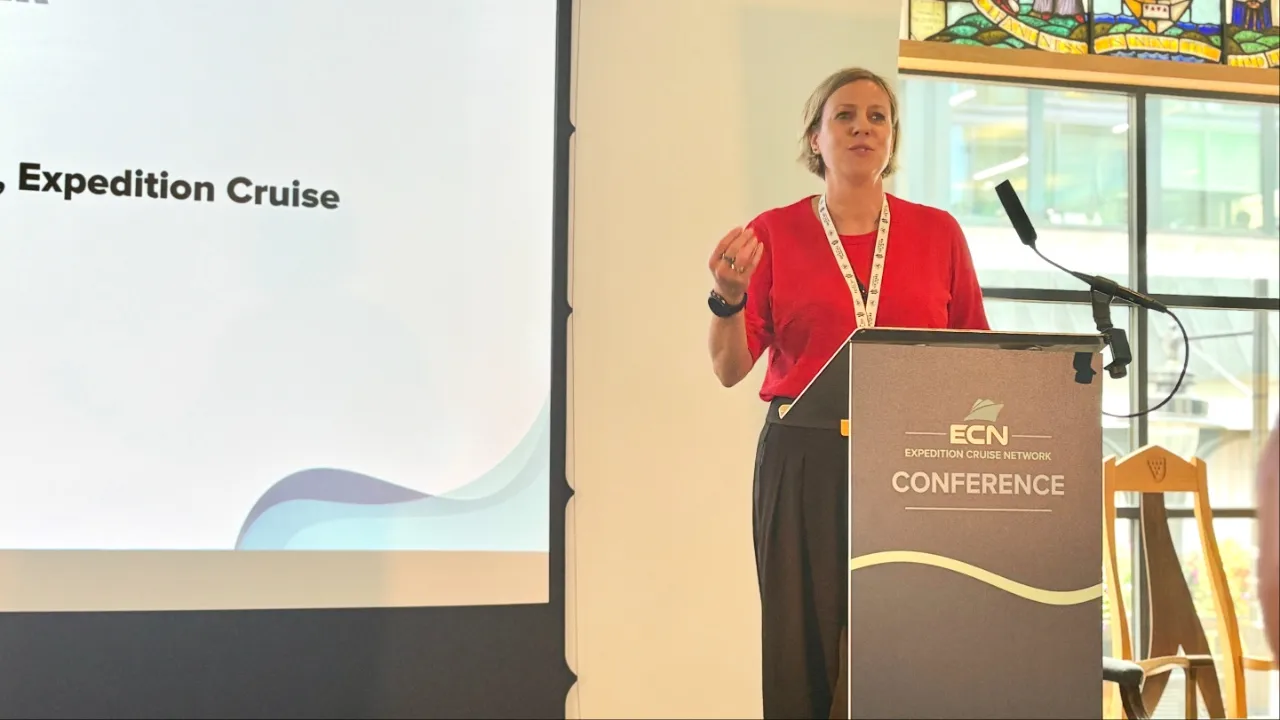
Akvile Marozaite, CEO and co-founder of the ECN at London's Glazier's Hall this morningPHOTO: HOLLY PAYNE
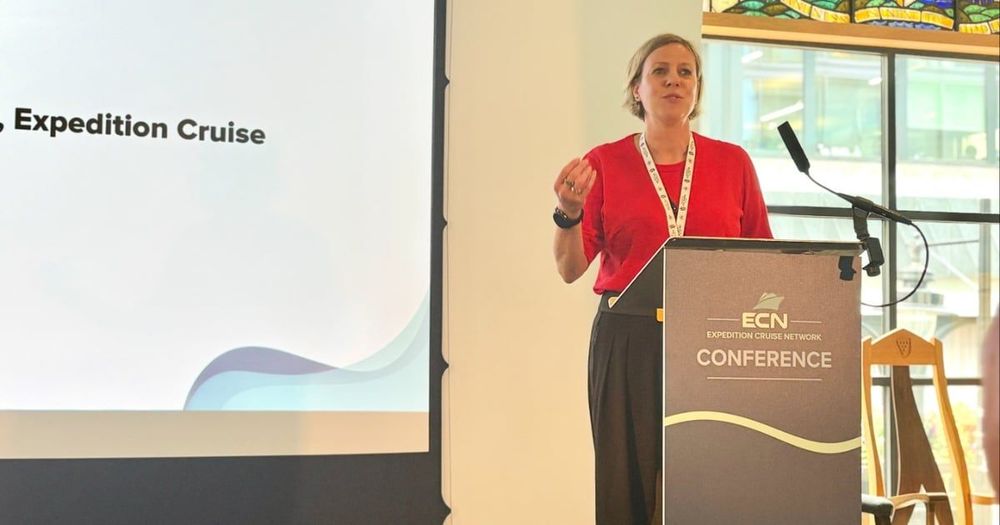
At its third annual conference in London, the Expedition Cruise Network unveiled the ECN Responsible Expedition Framework – a new industry initiative designed to give travel advisors a clearer and more consistent way to understand and communicate the responsible tourism practices of expedition cruise operators.
The voluntary industry communications framework has evaluated participating operators across six areas of responsible expedition cruising and provides each operator with a current stage, an accompanying badge and a detailed report identifying its strengths and opportunities for further improvement.
The framework was created in response to research conducted among ECN travel advisor members, who highlighted the difficulty of interpreting lengthy sustainability and ESG reports, comparing the approach of different cruise operators and then being able to explain responsible tourism practices confidently to clients.
Akvile Marozaite, CEO and co-founder of the Expedition Cruise Network, said: "Expedition cruising takes place in some of the world's most environmentally sensitive destinations and brings travellers into contact with remote communities, wildlife and fragile ecosystems. It is in the interests of our entire sector that these places are visited carefully, respectfully and responsibly."
In her conference remarks, Marozaite emphasised that responsible operations have a bearing on whether operators can continue visiting these destinations: "Continued access to these destinations will increasingly depend on how responsibly we visit them."
"Travel advisors told us that they wanted a clearer way to understand the work expedition cruise operators are undertaking. Sustainability is an extremely complex subject, particularly within expedition cruising, where an operator can simultaneously function as a hotel, transport provider, tour operator and educational platform. This new framework brings these different responsibilities together and gives the sector a common language. It will help travel advisors have more informed conversations with their clients while giving participating operators a practical roadmap for continued improvement," Marozaite added.
Marozaite described the gap the framework is intended to address: "What has been missing is a common and accessible way of looking at that complete picture and communicating it clearly to the travel trade."
She said: "This framework is, to my knowledge, the first of its kind in our sector, and bringing it to life has been one of the most challenging and rewarding projects I have undertaken through ECN. I am immensely proud of what ECN has achieved and grateful to every advisor, operator and independent expert who helped us create it."
Participating expedition cruise operators completed a 35-question self-assessment form examining six key areas: certifications and external validation, sustainable management and governance, environmental stewardship, community, cultural and destination stewardship, guest education and expedition ethos, and positive impact and conservation contribution.
Operators completing the survey provided evidence to support their responses and answers were weighted and submissions evaluated through a review process that included an independent judging panel.
To ensure the framework is robust, it draws on recognised global sustainability principles, including those of the Global Sustainable Tourism Council and the United Nations Sustainable Development Goals, alongside considerations specific to expedition cruising, including biosecurity, wildlife encounters, guest education, citizen science, conservation partnerships and contributions to local communities and destinations.
Marozaite said the framework also asks operators to consider what their visits leave behind: "There is also the question of what remains after the ship has left. Did the visit contribute positively to the destination? Did local people benefit? Did the operator support research or conservation? Did the experience encourage travelers to think differently about the natural world?"
Following the assessment, each participating operator has been placed at one of five stages: Emerging (Building the Foundations of Responsible Expedition Cruising), Developing (Demonstrating Growing Commitment), Integrated (Responsible Practices Across the Business), Embedded (Leading Through Action), and Contributing (Creating Positive Impact Beyond the Voyage).
The five stages show where an operator currently stands and provide a route for continued development. Operators will repeat the assessment annually, allowing them to demonstrate progress over time.
As Marozaite put it: "Responsible operations are a journey, and the framework allows operators to demonstrate progress from time to time."
Each operator will receive a detailed report highlighting areas of strength and opportunities to strengthen policies, measurement, partnerships, guest education and contributions to conservation or research. They will also receive a supporting badge which they can put on their website and use in collateral, helping to articulate their current standing and commitment to the initiative.
Marozaite said the detailed report is confidential and is provided to the operator itself.
11 expedition cruise operators completed the inaugural assessment, becing the first participants in the ECN Responsible Expedition Framework: HX Expeditions, Ponant, Golden Galapagos, Poseidon Expeditions, Australis Cruises, Scenic Eclipse, UnCruise Adventures, 60South, Aranui Cruises, Oceanwide Expeditions and Aqua Expeditions.
Marozaite added: "These operators committed considerable time and resources to completing the inaugural assessment and providing evidence of their work. Their willingness to participate has enabled ECN to establish the framework and take an important first step towards clearer, more informed conversations about responsible expedition cruising. We hope the framework will become a trusted reference point for travel advisors, a valuable improvement tool for operators and a catalyst for further progress across the expedition cruise sector."
Travel advisors will be able to review participating operators and their framework stages through a dedicated section of the ECN website, with further operators expected to participate in future annual assessment cycles.
Marozaite said consumers will also be able to access the framework information through the ECN website.