

• 8 min de lectura
• 8 min de lectura
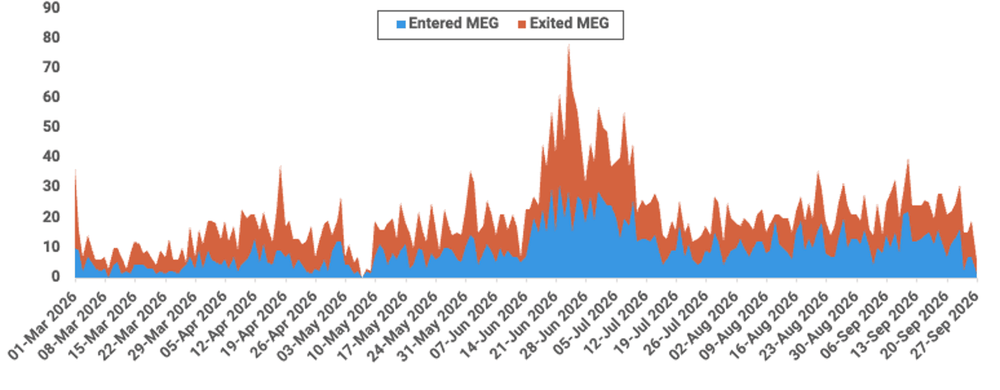
Traffic strengthened across both chokepoints last week, but the improvement in volumes contrasted with a worsening security environment. Hormuz crossings rose to 132 and laden movements recovered sharply, even as three merchant vessels were confirmed attacked during the week. Bab el-Mandeb traffic also rebounded to 271 crossings, with established TSS routing remaining dominant despite continued Houthi pressure around the southern Red Sea.
Vessels crossed Strait of Hormuz by risk level as of September 27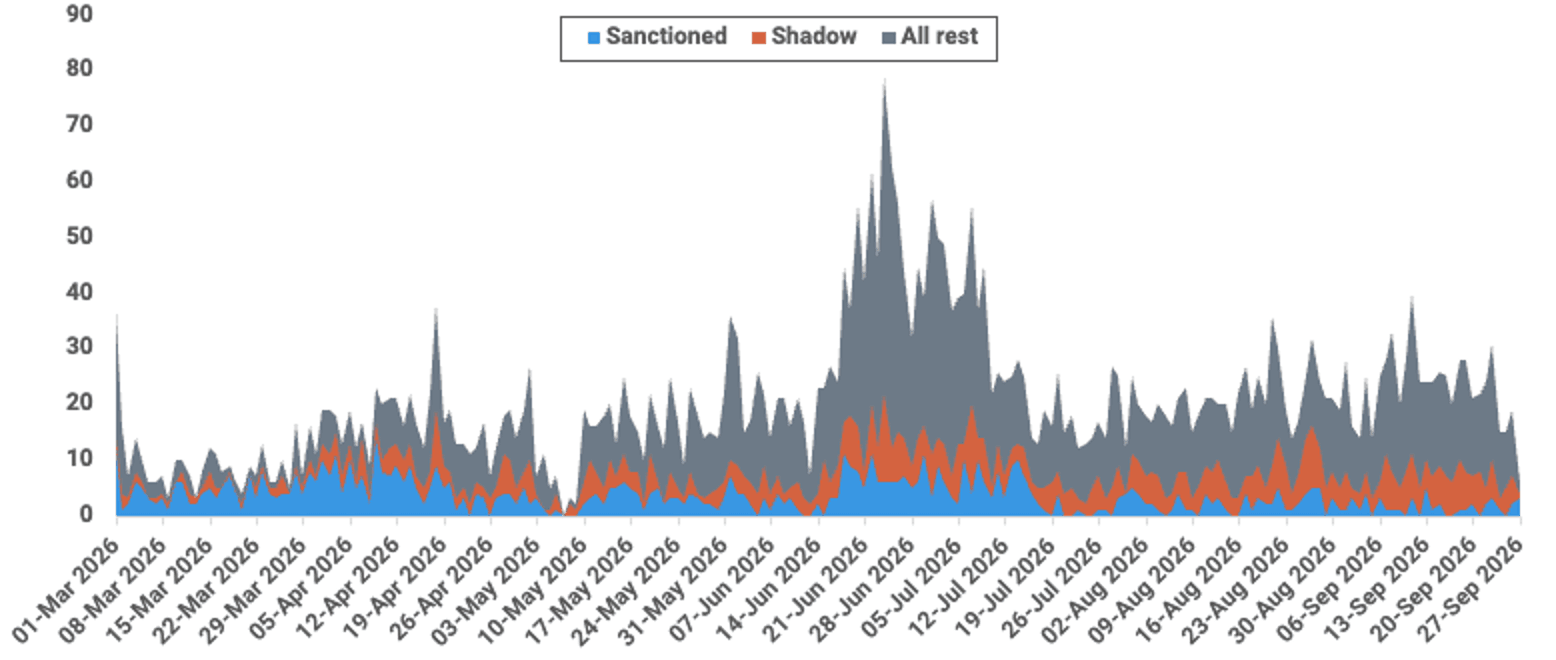
Source: Kpler Risk and Compliance; full traffic data is available including non-commercial vessel tracking from MarineTraffic
Vessels crossed Strait of Hormuz by direction of crossing as of September 27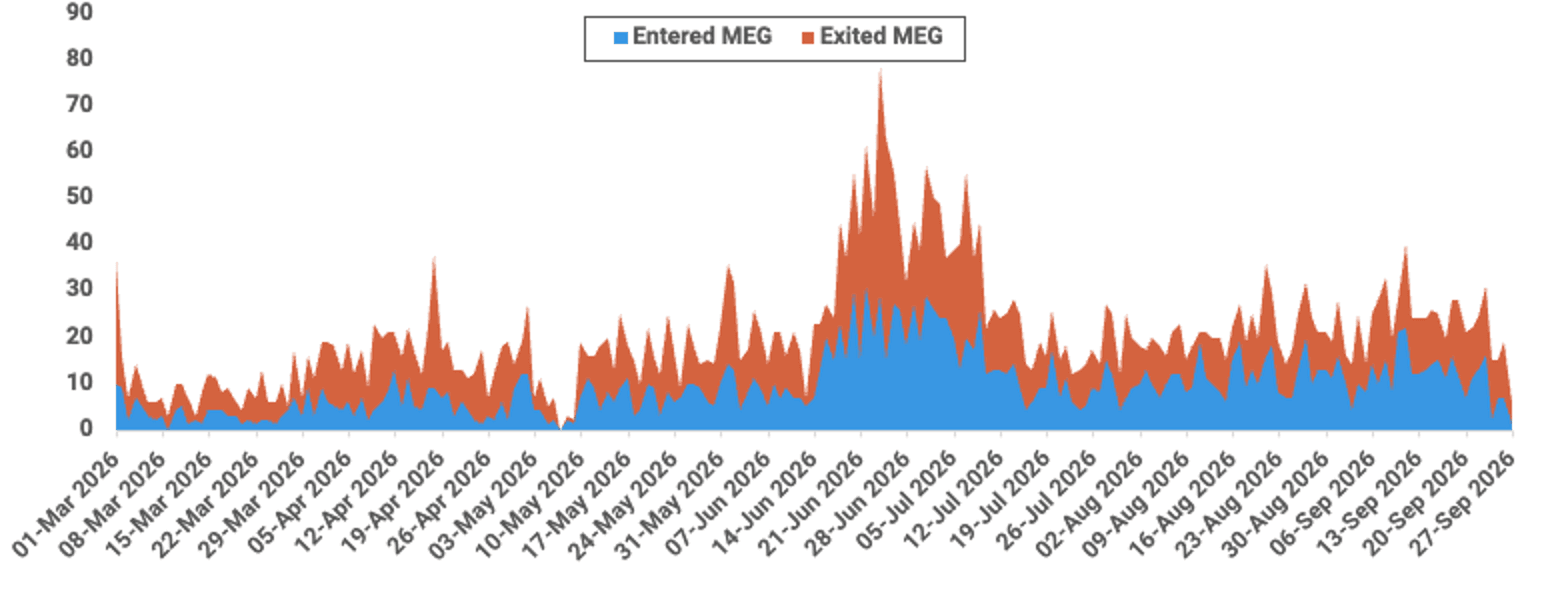
Source: Kpler Risk and Compliance
Vessels crossed Strait of Hormuz by route of crossing as of September 27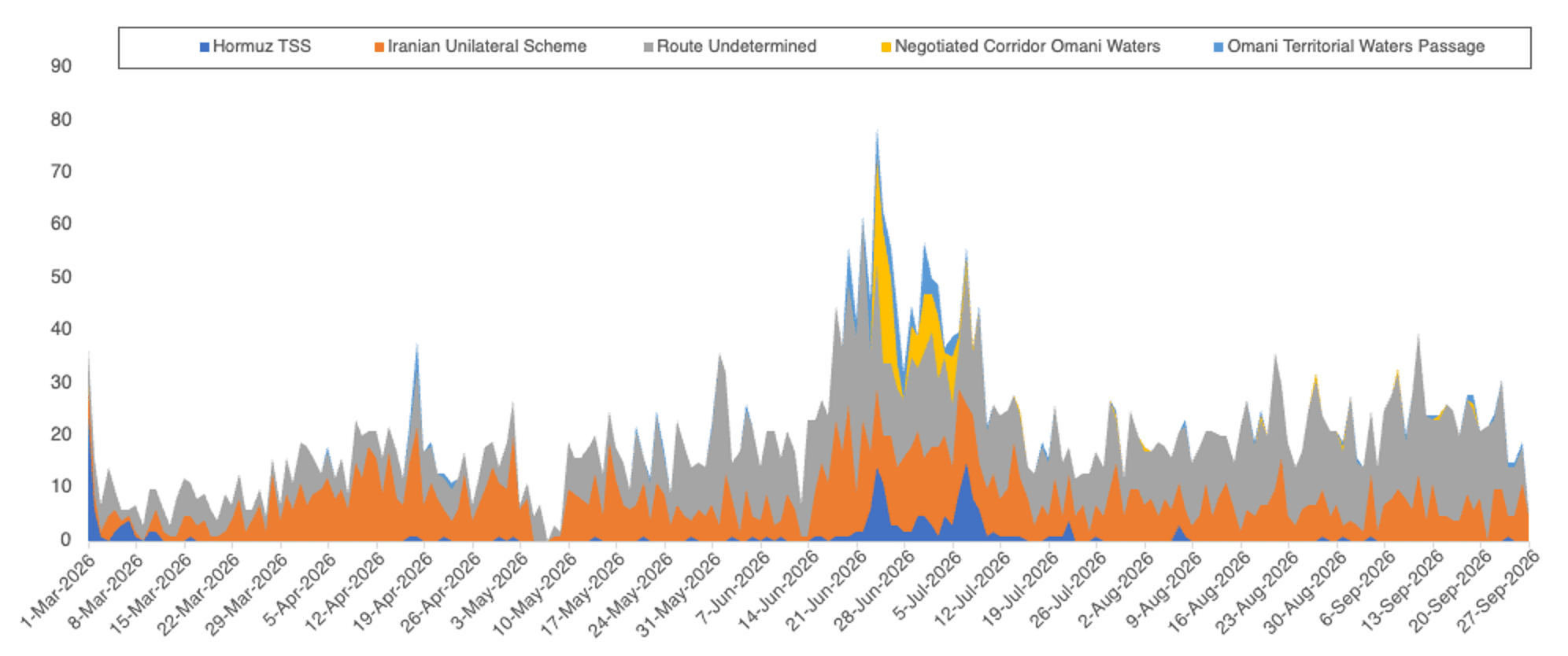
Source: Kpler Risk and Compliance
Strait of Hormuz crossings totaled 132 from 21–27 September, up 13.8% from 116 during the previous week. Daily activity was 22 crossings on 21 September, 24 on 22 September, 31 on 23 September, 15 on both 24 and 25 September, 19 on 26 September and 6 on 27 September.
The weekly risk profile included 90 All Rest crossings, 31 shadow fleet crossings and 11 sanctioned crossings. Combined sanctioned and shadow fleet traffic was unchanged at 42 crossings, although its share of total traffic declined from 36.2% to 31.8% as overall volumes increased. Directionally, outbound traffic strengthened, with 75 vessels exiting the MEG versus 57 entering.
The cargo mix improved more clearly. Laden movements rose from 50 to 65, a 30% increase, while ballast movements fell from 46 to 38. Crude/Co accounted for 31 laden crossings, followed by DPP and CPP at seven each. The shift represents a reversal from the previous week, when lower laden and higher ballast activity had pointed to weakening commercial substance.
Routing, however, remained far from normalized. Route Undetermined increased from 71 to 82 crossings and represented 62.1% of weekly traffic. The Iranian Unilateral Scheme accounted for another 45 crossings, or 34.1%. Four vessels used the Omani Territorial Waters Passage and only one crossing was recorded through the Hormuz TSS.
Vessels crossed Bab el-Mandeb by risk level as of September 27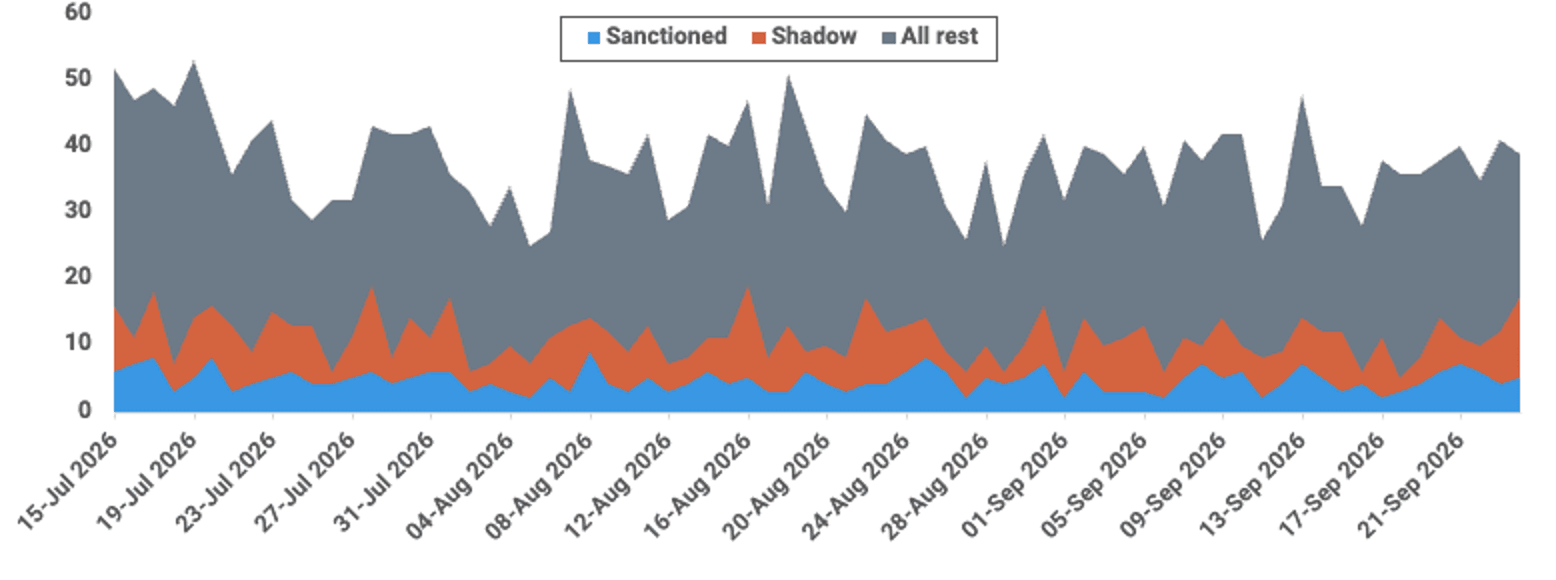
Source: Kpler Risk and Compliance; full traffic data is available including non-commercial vessel tracking from MarineTraffic
Vessels crossed Bab el-Mandeb by direction of crossing as of September 27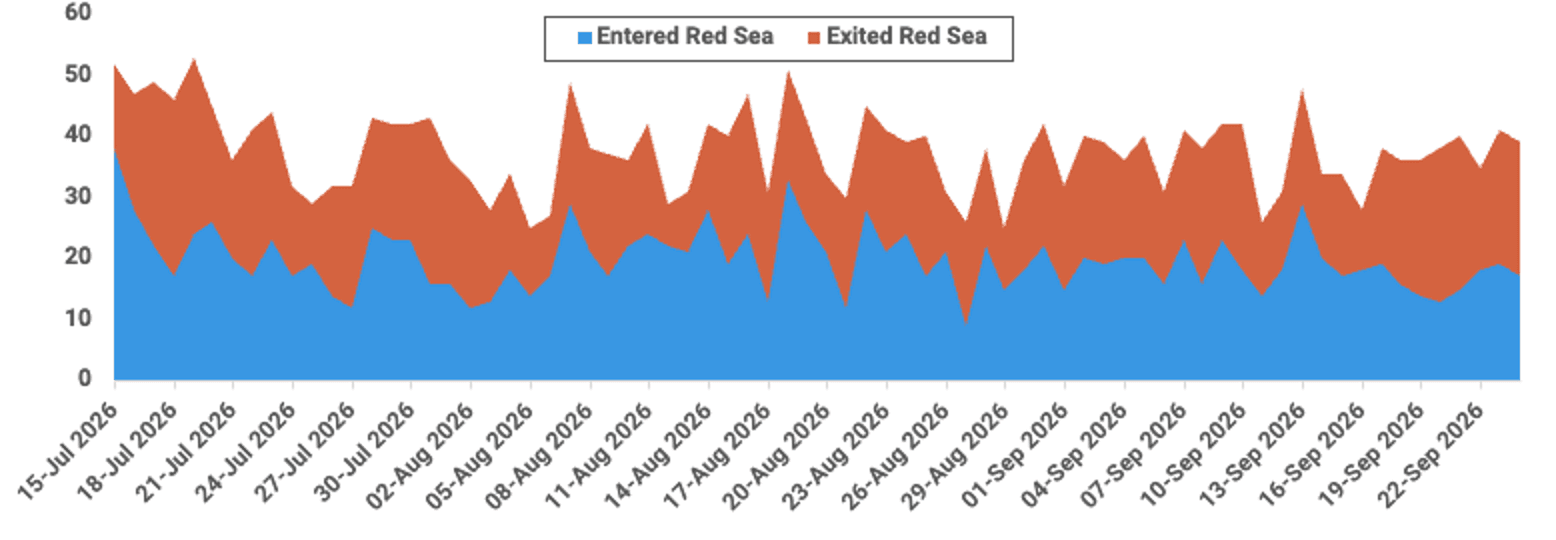
Source: Kpler Risk and Compliance
Bab el-Mandeb crossings totaled 271 from 21–27 September, up 16.8% from 232 during the previous week. Daily activity was relatively consistent at 40 crossings on 21 September, 35 on 22 September, 41 on 23 September, 39 on 24 September, 44 on 25 September and 36 on both 26 and 27 September.
The weekly risk profile included 187 All Rest crossings, 45 shadow fleet crossings and 39 sanctioned crossings. Combined sanctioned and shadow fleet activity increased from 62 to 84 crossings, lifting its share of total traffic from 26.7% to 31.0%.
Flows remained weighted toward vessels exiting the Red Sea, with 146 exits compared with 125 entries. Laden movements increased from 117 to 129, while ballast movements totaled 76. Crude/Co remained the largest identified cargo segment at 30 crossings, followed by CPP at 22, Grains/Oilseeds and Steel at 12 each, and Fertilizer at 11.
Routing remained notably stable despite the regional security deterioration. Of the 271 crossings, 248 used the Bab el-Mandeb TSS, equivalent to 91.5% of total traffic, while dark transits remained unchanged at 23.
The rebound therefore weakens the case that the previous week's fall represented the beginning of a broad operational withdrawal. Traffic has recovered above the previous week's level, laden activity has strengthened and operators continue overwhelmingly to use the established TSS.
The most important change during the week was the renewed physical threat to merchant shipping around Hormuz.
IMO confirmed three incidents during 21–23 September. AL MARYAH and LR STEPHANIE were damaged in the Strait on 21 September, with two crew members injured aboard LR STEPHANIE. CAPE DAO was then damaged 15 nautical miles northeast of Khasab on 23 September, resulting in one seafarer fatality. IMO's confirmed incident total subsequently increased to 85.
UKMTO reporting provides a similar operational picture. Its 21 September warnings recorded one tanker struck by an unknown projectile, injuring two crew, and an outbound LPG tanker hit by debris from unknown projectiles. On 23 September, UKMTO reported a cargo vessel struck by an unknown projectile, leaving the vessel on fire and adrift and requiring the crew to evacuate.
The contrast with traffic is notable. Despite three confirmed attacks during the week, Hormuz crossings increased and laden activity recovered. The immediate response has therefore been continued operational adaptation rather than a broad retreat from the Strait.
At Bab el-Mandeb, the security threat also remained elevated even as traffic recovered. Yemen's internationally recognised government said on 24 September that its forces had repelled a Houthi attempt to take the Hejat al-Abd route linking Taiz and Aden, as the group continued efforts to consolidate territorial gains following its advance toward the Red Sea and Bab el-Mandeb.
The US Maritime Administration also issued a new Red Sea/Bab el-Mandeb advisory effective 23 September, warning that the Houthis had resumed attacks on commercial shipping and that their seizure of additional Red Sea islands and territory adjacent to Bab el-Mandeb had increased their ability to locate and attack passing vessels. The advisory identifies Israeli-, US-, UK- and Saudi-associated vessels among those facing elevated risk.
No equivalent withdrawal is yet visible in the crossing data. Instead, Bab el-Mandeb traffic increased while more than nine in ten crossings continued through the TSS. This suggests that operators are still absorbing the heightened threat primarily through risk-management measures rather than wholesale route avoidance.
Graph of physical attacks on vessels as of September 28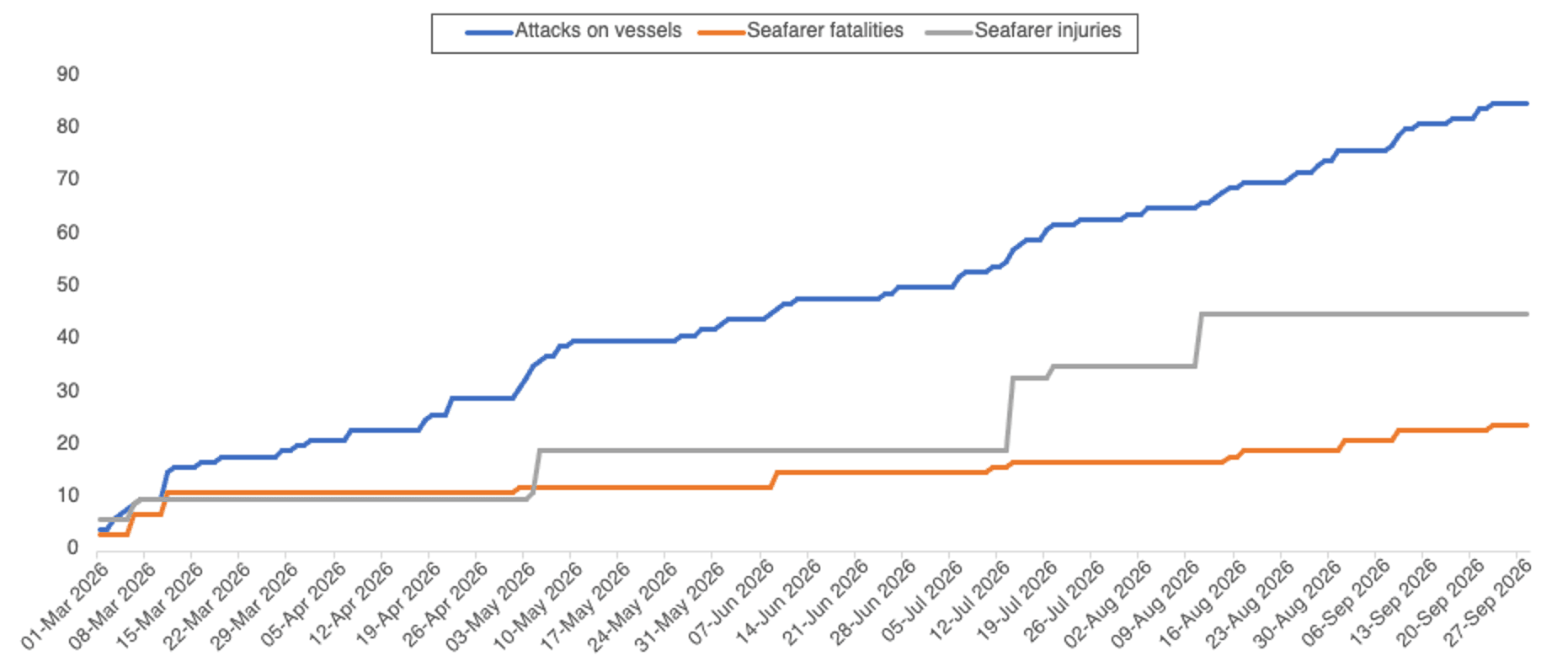
Source: Kpler Risk and Compliance, IMO
Over the next 24–72 hours, the main Hormuz question is whether the recovery in commercial traffic can survive another period of direct attacks.
Crossings increased from 116 to 132 and laden movements from 50 to 65, while ballast traffic fell. Those are materially stronger indicators than the previous week. But 96.2% of crossings were recorded through either Route Undetermined or the Iranian Unilateral Scheme, and three vessels were attacked during the period.
The key stress signal would therefore be a renewed fall in laden crossings following the 21–23 September incidents. If overall traffic remains resilient but ballast rises and laden activity weakens again, that would indicate that the security deterioration is beginning to affect the commercial quality of traffic even before headline crossing numbers decline.
At Bab el-Mandeb, the picture is different. Crossings rebounded from 232 to 271, laden traffic recovered to 129 and TSS adherence rose to 91.5%. For now, the data points to continued use of the corridor despite the Houthi territorial advance and heightened official warnings.
The key test will be whether this resilience persists if the security threat moves closer to commercial traffic. A sustained fall in TSS movements, a material increase in dark transits or a renewed decline in laden crossings would provide a clearer indication that operators are shifting from risk-managed transit toward avoidance.
For now, both chokepoints remain operational and commercial traffic strengthened during the week. The distinction is that traffic resilience should not be read as security normalization: Hormuz recorded a simultaneous recovery in cargo movements and renewed attacks on merchant vessels, while Bab el-Mandeb volumes increased even as official warnings around Houthi capabilities and territorial positioning intensified.