• 3 min de lectura
• 3 min de lectura
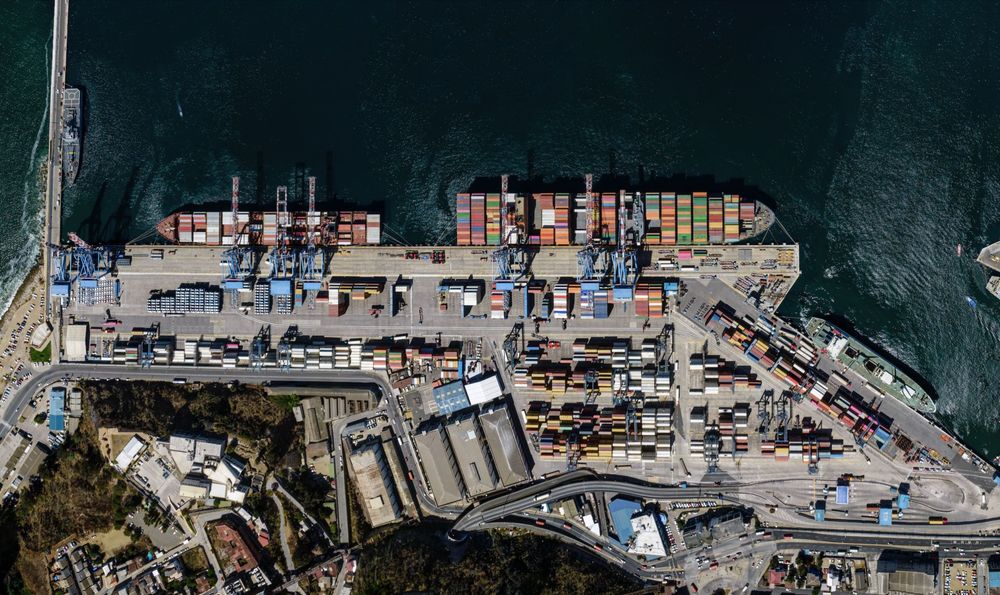
The Chilean Maritime and Port Chamber (Camport) has given its backing to the idea that the future concession of the Port of Valparaíso should proceed without restrictions on vertical integration.
The discussion gained momentum after APM Terminals (APMT), Terminal Investment Limited (TiL), and Hanseatic Global Terminals (HGT) -the port arms of Maersk, Mediterranean Shipping Company (MSC), and Hapag-Lloyd, respectively- requested the Competition Defense Tribunal (TDLC) to eliminate structural restrictions on vertical integration to participate in the tender to operate the port facility.
In this context, Daniel Fernández, president of Camport, explained that "the Chamber has informed the tribunal that we believe there should be no restrictions on vertical integration. Today, in the world of ports, there is integration with railways and shipping companies in almost every country."
"While initially, when the concession tender system began in Chile, ports still had a certain size, and even intra-port competition was sought. Today, the truth is that the scale we have, the number of ports we have, and the freedom of operation make vertical disintegration not a relevant factor," Fernández pointed out.
The head of the organization reinforced that "we believe it is perfectly possible for integrated actors to hold a concession in a port, competing -obviously- with the other, and there, what is important is horizontal integration, so that in an area of influence like Valparaíso – San Antonio, it is not the same concessionaire competing; now, if they are going to compete, if they compete vertically integrated with each other, I don't see what the inconvenience is."
Regarding the proposal expressed by the port terminal operating companies, the Ministry of Transport and Telecommunications (MTT) supported the 60% limit set for vertical integration and emphasized the need to complement it with robust oversight tools that allow for the identification of ultimate beneficiaries.
Regarding this approach, the president of Camport stated that "Chile has a very solid, very effective institutional framework for competition. It has been demonstrated in recent years; it has a very prepared National Economic Prosecutor's Office with good technical and professional resources and strong arguments, and its role is precisely that: to ensure that competition rules are met."
"Furthermore, there are general regulations beyond the port-maritime system on competition, there is the Competition Defense Tribunal, there are the corporate reputation standards of the companies themselves, which are now international, and, of course, if any behavior is detected, one must address that particular situation," he indicated.
"If one operates from the suspicion that it will occur and restricts it ex-ante, I believe a series of possibilities or potentialities are limited, versus a system in which you allow clear regulation, effectively oversee, and punish those who engage in anti-competitive practices," Fernández stated.