• 3 min de lectura
• 3 min de lectura
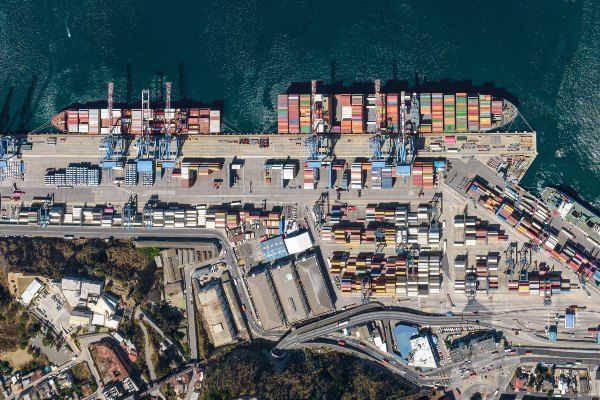
The bill that strengthens port security against actions promoted by organized crime, which is undergoing its first legislative process in the Senate, took a new step and will be referred again to the Water Resources, Fisheries, and Aquaculture Committee.
The progress was achieved after the Chamber unanimously approved the proposal, initiated by a motion from Senator Paulina Núñez and Senators Iván Flores, Carlos Kuschel, Iván Moreira, and Cristián Vial.
The text, which will now receive amendments to improve its articles, strengthens port, customs, and logistics security through proportional obligations for traceability, prevention, coordination, risk management, and criminal liability against the use of the foreign trade chain by organized crime.
The president of the Maritime Interests, Fisheries, and Aquaculture Committee, Senator Carlos Kuschel, reported on the proposal, explaining that "port infrastructure is a strategic area of national security, but it is also a target for criminal organizations, which contaminate cargo and falsify documentation".
During the debate, Senators Iván Moreira, Iván Flores, Paulina Núñez, Claudia Pascual, Gastón Saavedra, Andrés Longton, Karol Cariola, Renzo Trisotti, and Alejandro Kusanovic intervened.
The legislators recalled the agenda against organized crime and terrorism announced this week by the President of Chile, José Antonio Kast, "which is in line with this project. In fact, this motion has been prioritized by the Executive in this context".
In turn, "the need to modernize port security given the the sophistication of criminality, which implies border control, including maritime borders," was addressed.
In that vein, the parliamentarians pointed out that "port services operate autonomously, not coordinated," indicating that "only 3% of the 4 million containers arriving at ports are inspected".
In this context, the largest drug seizure case in history, carried out last June, was recalled. On that occasion, 108 tons of cocaine and ketamine, impregnated in wooden planks from Bolivia, were detected. The investigative work allowed the illicit substances to be detected in the ports of Arica, Valparaíso, and San Antonio.
Furthermore, other initiatives already approved in this area were recalled, such as the strengthening of the Maritime Police; and measures seeking to centralize the efforts of various organizations such as the Navy, Customs, and the Agricultural and Livestock Service (SAG).
In turn, it was raised that several of the changes imply costs, so in the general debate, "port concessionaires should be considered, as they must be aware of the new requirements, since these companies are primarily called upon to make changes".
Among the aspects highlighted in the project were those that strengthen traceability and customs intelligence, recognize ports as areas of special logistical risk, and establish greater criminal reproach when port infrastructure or credentials are used for criminal purposes.