• 2 min de lectura
• 2 min de lectura
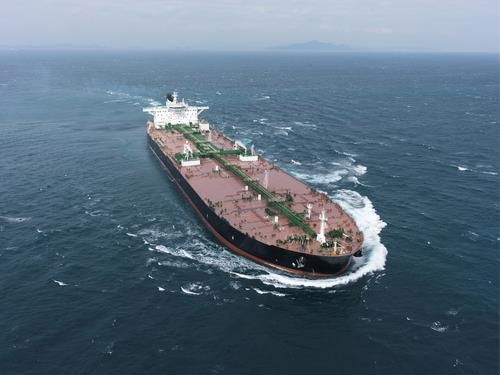
The cost of transporting oil on the largest tankers reached historic highs this week, following the biggest wave of attacks on shipping since the war between the United States and Iran began in late February.
The freight rate for supertankers (VLCCs), which load oil in the Gulf of Oman bound for China, reached around 450 on the Worldscale, equivalent to approximately 11.50 dollars per barrel, according to data from the Baltic Exchange.
This is the highest level since the rate was launched earlier this year, following the start of the war between the United States and Israel with Iran.
The surge in rates shows how the conflict in the Middle East is impacting the broader economy.
If high transport costs persist, they could increase inflationary pressures and further raise costs for businesses and consumers, who are already facing uncertainty caused by the expanding conflict.
Iran declared on Wednesday, September 9, that it had attacked 10 vessels near the Strait of Hormuz, after the US sank five Iranian-linked oil tankers.
Yemen's Houthis, aligned with Iran, reached the strategic Perim Island in the Bab el-Mandeb Strait on Friday, September 11, four Yemeni government sources told Reuters, which could consolidate their control over one of the world's most vital shipping routes.
"New attacks between the US Navy and Iran continue to drive freight rates in the Gulf to new highs," said Ioannis Papadimitriou, an analyst at Vortexa.
"The increased risk of operating in and around the Middle East Gulf is also pushing up freight rates in the Gulf of Oman amid fears of Iranian retaliation, which naturally reduces the availability of tankers in the region," he added.
The recent military escalation in the area is also generating a broader ripple effect, as VLCC rates on the West Africa to Asia route also reached historic highs.