• 5 min de lectura
• 5 min de lectura
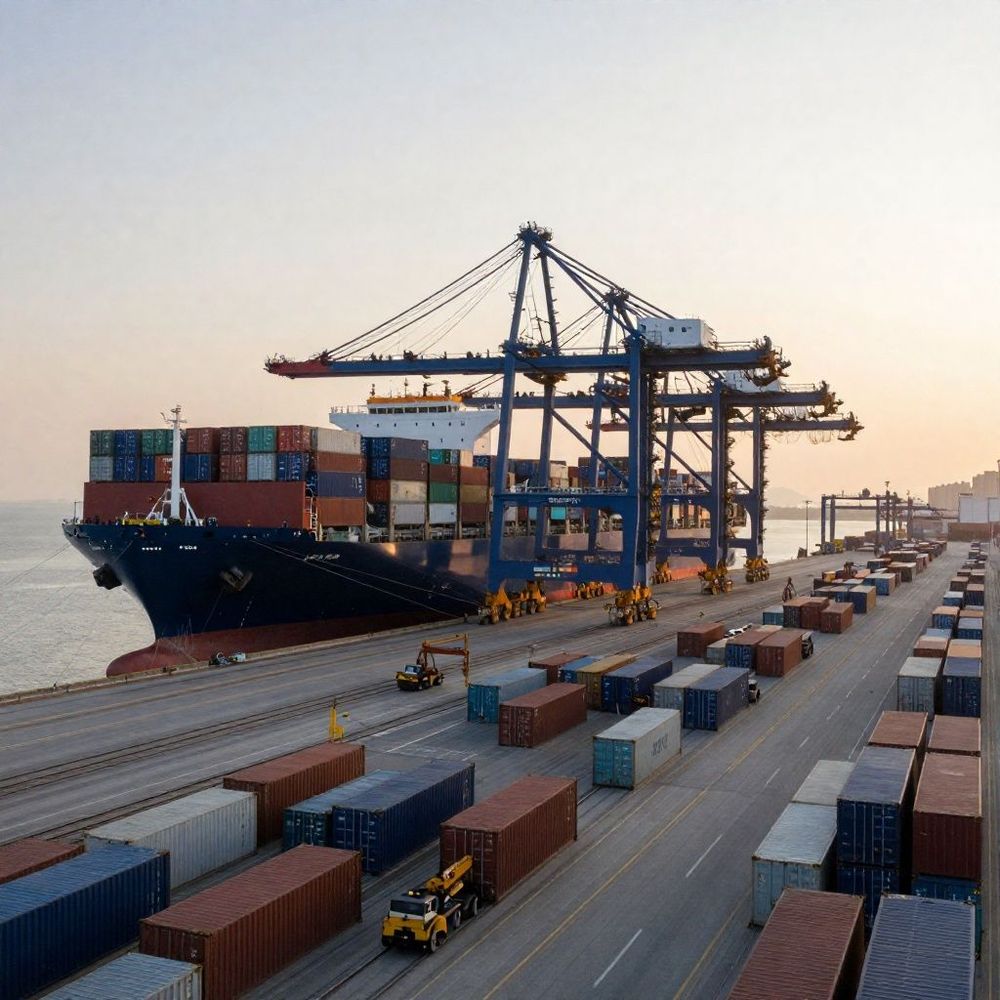
The momentum gained by new vehicle entries through Mexican Pacific ports lost strength in 2026. With higher tariffs for automobiles originating from countries without trade agreements with Mexico and after advance imports by automakers in 2025, this coast received 425,660 units between January and August, a 6.3% decrease compared to the same period last year.
The figures from the Ports and Merchant Marine Unit (UPMM), belonging to the Secretariat of the Navy (Semar), show that the contraction was concentrated in Mazatlán and Lázaro Cárdenas, two entry points for vehicles from Asia. Both ports accumulated a reduction of 30,787 import units, partially offset by an interoceanic transit operation in Salina Cruz.
The change occurs under a new tariff structure. The decree published on December 29, 2025, in the Official Gazette of the Federation (DOF), effective since January 1, 2026, established a 50% tariff on various automobile fractions, including new electric vehicles. The reform included products originating from countries with which Mexico does not have trade agreements, including China.
Its effect must be analyzed by country of manufacture and the applicable treatment for each operation, as the Asian flow also includes vehicles from American, Japanese, and other national manufacturers. Lázaro Cárdenas and Mazatlán are the main entry points for both Chinese brands and units from other manufacturers produced in Asia.
In Mazatlán, imports decreased from 108,500 to 90,251 vehicles, a 16.8% decline, the most pronounced among the main receiving ports on the Pacific. Lázaro Cárdenas, for its part, received 332,409 units, compared to 344,947 the previous year, a reduction of 3.6 percent.
Beyond the price increase associated with the new tariffs, the adjustment is also related to logistical decisions made before their entry into force: automakers advanced imports during 2025 to bring in vehicles under the previous tariff conditions.
Foreign trade data also show a reduction in vehicle purchases from China. Figures from the Secretariat of Economy show that these imports decreased by 31.1% in the first half of 2026, to 158,571 units. Although this record has a different period and coverage than port statistics, it provides additional evidence of the slowdown in this flow.
In the Pacific balance, the combined import and export movement fell 5.4%, from 582,064 to 550,907 vehicles. Entries accounted for 92.1% of this net reduction, while exits decreased by 1.9%, to 125,247 units. The composition of the decline places the main pressure on this coast in the import business.
However, the behavior was not uniform throughout the country. Imports through the Gulf-Caribbean increased by 7.3%, to 199,468 vehicles, driven by Veracruz, where entries rose from 175,255 to 193,636 units, a growth of 10.5 percent.
This advance contributed to Veracruz maintaining national leadership in total vehicle movement, with 513,490 units and an increase of 5.3 percent. Its recovery, however, still left it below the 614,026 vehicles it mobilized in January-August 2023.
In contrast, Altamira registered the largest absolute loss among the country's ports, going from 306,440 to 271,288 vehicles, a contraction of 11.5 percent. In this case, the reduction was concentrated in exports, which decreased from 299,031 to 265,456 units, a behavior that needs to be distinguished from the impact of Mexican tariffs on imports.
The national result combined both pressures. Mexican ports mobilized 1,364,178 vehicles in deep-sea traffic during January-August 2026, 2.8% less than a year earlier. Imports decreased by 2.4%, to 625,128 units, while exports fell by 3.2%, to 739,050.
With this, port movement accumulated two consecutive declines for that period, after reaching 1,517,401 units in 2024, the highest volume in the shared series from 2021 to 2026. Compared to that level, the most recent record was 10.1% lower; exports were 20% below, while imports exceeded it by 5.3 percent.
Within this adjustment, Salina Cruz presented a particular dynamic. Its entries increased from 900 to three thousand vehicles, but they correspond to an operation with a final destination in the United States. T21 documented in mid-July of this year that Hyundai Glovis units —the logistics arm of Hyundai and KIA— arrived from Masan, South Korea, and crossed by rail to Coatzacoalcos to continue to Brunswick and Philadelphia.
The volumes coincide with the three thousand units that the UPMM registers as exports in Coatzacoalcos. This correspondence points to the same flow accounted for in its maritime entry and exit, so the increase reflects logistical activity of the Interoceanic Corridor of the Isthmus of Tehuantepec (CIIT), without implying greater absorption of vehicles by the Mexican market.
The port map thus shows an adjustment with different causes and scopes. Higher tariffs and anticipated imports help explain the moderation in the Pacific, while the growth of Veracruz, the export decline of Altamira, and transit through the CIIT reveal that national evolution also depends on the composition of flows and the routes used.