• 2 min de lectura
• 2 min de lectura
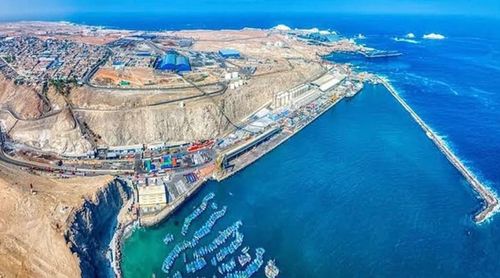
Last week, the Environmental Assessment Commission of the Valparaíso Region unanimously approved the Environmental Impact Study for the San Antonio Outer Port. An enormous project worth USD 4.45 billion; undoubtedly the largest in our country's port history.
The project entered the Environmental Impact Assessment System (Seia), regulated by Law N°19.300 on General Environmental Bases, in May 2020 and was approved in May 2026. Six years. Thousands of observations, two citizen participation processes, and an indigenous consultation.
San Antonio normally operates at 91% of its capacity, but there is something deeper: it is a port without natural shelter, highly exposed to swells. This severely impacts the ability of vessels to call, and consequently, causes delays throughout our country's foreign trade logistics chain, leading to serious economic damage for various actors in the process.
The new four-kilometer breakwater will solve this tremendous problem, providing the protection that has been requested for many years by different stakeholders. Valparaíso has better natural shelter, but it does not come close to the volumes handled by San Antonio, the latter being undoubtedly our most important port.
The case of Tanger Med I
Tanger Med I (Morocco) was announced in 2003, began construction in 2004, and was operational in 2007. Three years of work. Today it is the largest port in Africa and the Mediterranean. Morocco is not a more developed country than Chile, but it seems to have clear priorities and understand how the global economy operates today.
What comes next?
Five international consortia are in the bidding process, with the award expected before the end of this year. If the schedule is met, construction would begin in the first half of 2027 and only be completed in 2036.
I don't want to be pessimistic, undoubtedly the approval is good news, but it's worth asking: How much did the delay cost us? How many container ships couldn't call? How many investments looked to Chancay while we were conducting citizen participation processes?
Let's be honest, it's not enough with grandiloquent phrases from politicians in office about eliminating "permisology," nor to rest on our laurels boasting about our institutions (which seem to be weakening anyway). We must understand that foreign trade is key to escaping underdevelopment and that it operates at a different speed.
Source: portalportuario