• 6 min de lectura
• 6 min de lectura
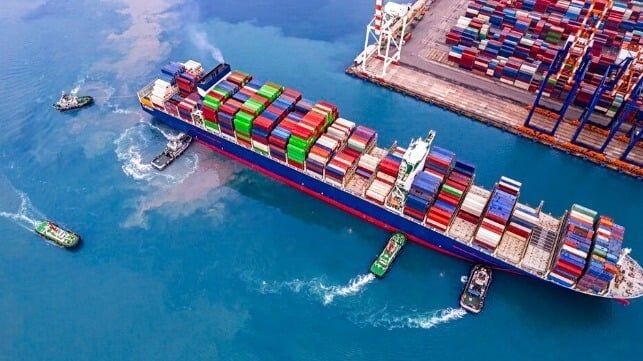
Digital tools are now ubiquitous in logistics, but true end-to-end integration remains elusive. The constraint is not a lack of data or platforms, but how the industry chooses to coordinate and organize itself. After decades of asset- and platform-centric operations, logistics is approaching a turning point: the next phase will hinge on aligning cargo owners' needs with the operational capabilities of a fragmented global logistics ecosystem, not simply building bigger and more performant control towers.
From assets to cargo flows
Assets, platforms, and cargo now define the digitalization of logistics. Historically, logistics optimized ships, trucks, trains, and terminals as the primary units of analysis. The goal has been to move these assets efficiently through ports, roads, and networks. This logic has delivered gains in utilization and productivity. But it is not fully aligned with what logistics is about, moving goods reliably across complex, fragmented, and disrupted multimodal chains. Organizing digitalization around asset fragments misses what matters most to cargo owners: the end-to-end journey of their shipments.
The shift is simple but significant. When coordination shifts from transport assets to cargo flows, and the organizing logic shifts from proprietary platforms to shipper-activated communities, logistics digitalization becomes systemic rather than siloed. This is not simply a technical adjustment; it redefines how the global logistics ecosystem coordinates. Investment in digital tools continues to accelerate. Ports roll out port-call optimization. Shipping lines test Just-in-Time arrivals. Governments and alliances continue to explore green and digital corridor initiatives, though many remain in their early stages. Yet, despite these efforts, integration remains fragmented. The missing piece is not more data; the solution requires a different alignment logic.
Digital coordination that follows the shipment
A genuinely multimodal system assumes the shipment is the natural unit of focus and coordination. Goods may, for example, move from inland transport to terminals, across maritime routes, and into distribution networks. For cargo owners, these are not separate domains but links in a single chain. When each domain improves its own assets, improvements stay local: ports squeeze port calls, carriers squeeze schedules, rail operators squeeze utilization, and trucking companies squeeze vehicle usage. Yet shippers define reliability by the entire chain, not a single segment. What matters is whether cargo arrives in a predictable window, with timely, trustworthy information, and a means to respond to disruptions.
This disconnect points to a clear solution: digital coordination must follow the shipment rather than the asset. Information and decisions must move with the cargo, not remain locked within isolated systems. This creates a new model of visibility and collaboration.
Virtual Watch Towers in practice
An emerging expression of this logic is the Virtual Watch Tower. Rather than centralizing logistics data in a single platform, the VWT enables distributed data sharing for shipments. Cargo owners provide basic shipment information, grant limited mandates where needed, and include data-sharing terms in transport agreements. These steps let carriers, terminal operators, and providers request and exchange operational information as needed. They also keep control over their own data. In this model, the shipment triggers coordination. Visibility comes not from a single control tower, but from cooperation among those moving the same cargo.
Supply chain visibility depends less on centralization and more on trusted, shipment-specific data exchange.
The practical impact of this approach becomes clear in disruption-prone, multimodal environments. Take an industrial manufacturer running just-in-time production with inbound components moving through several ports and carriers. Instead of tracking each ship or terminal in isolation, the manufacturer and its logistics partners connect via a shared VWT-type network. This network combines private operational data with relevant public information. When weather or port congestion threatens multiple inbound shipments, the community around those cargo flows can see, in one place, which containers are at risk. They can also see which alternative routings are viable and how these choices will affect the factory's production plan. Ideally, this occurs within the various towers that serve users connected to the network. Together, the shipper, carriers, terminals, and hinterland operators can assess possible responses, such as prioritizing critical containers, evaluating alternative routings where feasible, or adjusting downstream plans to mitigate operational impacts. These actions protect and maintain production continuity. The actors remain independent, but for those shipments, the chain works as a coordinated system, with decisions organized around cargo rather than individual assets.
This reflects a basic reality of logistics: no single company runs the system. It is a community of actors organized around cargo. Global logistics is not the operation of a single company. It is an ecosystem in which cargo owners, shipping lines, terminal operators, freight forwarders, logistics providers, ports, infrastructure managers, and digital service providers facilitate the movement of goods. The system is decentralized; no single actor can impose system-wide coordination. Port call optimization coordinates actions between ships and ports. Proprietary visibility platforms often remain constrained to carrier-centric views. Digital initiatives in one segment rarely create shared capabilities across the ecosystem.
Shippers as community activators
Community-based approaches flip this perspective. Rather than building isolated digital solutions, they create shared mechanisms that enable ecosystem actors to contribute to and benefit from common capabilities without losing autonomy. Within this ecosystem, transport buyers have a distinctive role. They generate demand, work with multiple carriers and providers, and often oversee multimodal chains beyond any single operator's control. As a result, shippers can express system-level expectations that would otherwise remain fragmented.
When shippers demand supply chain visibility, emissions transparency, or coordinated disruption management, they signal to transport producers that they should agree on common rules and data practices. This does not mean that cargo owners own the system. It means they can foster collaboration within the logistics community by inviting partners into shared data environments and joint initiatives. This is the logic underpinning infrastructures such as VWTnet, VWT's network-based architecture created to support distributed coordination across logistics communities and ecosystems. The network is not a single operator's platform, but a joint infrastructure that gains value as more actors participate.
For such community-based infrastructures to work, participation must go beyond a small group of early adopters. Their value rises as more cargo owners, logistics partners, and ecosystem actors actively engage. Now is the time for shippers and logistics partners to actively participate in the communities that enable shipment-centered coordination. By participating in shipment-centered communities, they are not simply adopting digital tools; they are shaping how global logistics will coordinate and evolve. Acting today means helping define how coordination works across the logistics ecosystem.
Fuente: Maritime Executive