• 5 min de lectura
• 5 min de lectura
While it may not be evident to the hundreds of thousands who cruise New Zealand each season and sail through its stunning harbours and fjords, its cruise industry is in real trouble.
Passenger numbers are down 40 per cent this year with a further drop expected in 2027, after cruise lines including Disney and Virgin Voyages pulled out of the region.
Much of this is down to high port fees, regulatory uncertainty and rising compliance costs which has led to some cruise lines putting New Zealand in the "too hard" basket and focusing their energies on other, less remote, destinations.
The slowdown is already being felt in ports like the Bay of Islands, Tauranga and Akaroa which have all seen far fewer port calls in 2025/26, with longer gaps between visits.
In an attempt to turn things around the New Zealand Cruise Association has just released a strategy document Horizon 2 – a follow up to 2023's Horizon 1 which focused on gaining stakeholder engagement and government support.
That aim has largely been realised with the coalition government well aware the value of the industry to New Zealand's wider tourism sector.
Horizon 2 is more results orientated and sees NZCA concentrating on securing cruise line deployments in the next 3-5 years as well as seeking collaboration and better integration across the entire tourism ecosystem.
"Without decisive action now, we risk structural decline… we must work together and deliver tangible action to ensure a world-class cruise sector that delivers long term economic benefits for tourism and across New Zealand."
If future deployment is not secured it warns the industry will suffer "permanent structural decline" including loss of airline capacity and accommodation investment.
It points out that the key to turning the situation around is securing future deployments. The situation is time critical, as cruise lines book itineraries two to three years in advance. The report points out that the 2028/29 season needs "immediate action".
That means changing industry perceptions. It wants New Zealand to be seen by cruise lines as consistent and "easy to work with", attracting deployment through its improved infrastructure and "operational excellence".
The report pulls no punches and says that New Zealand has taken cruising and its revenue – worth more than $1 billion a year – for granted for too long.
"We've assumed our appeal would guarantee visitation without developing the sophistication of a true cruise destination. A shallow grasp across stakeholders of industry dynamics and the global competitive context has left us exposed.
"While other competitor destinations such as Japan, Singapore, and Korea actively court cruise lines and deliver strong returns, New Zealand's share has slipped in an expanding global market."
Over the last year NZCA has worked with ports, government and regional councils in an effort to demonstrate to cruise lines that it is aware of their concerns and takes them seriously.
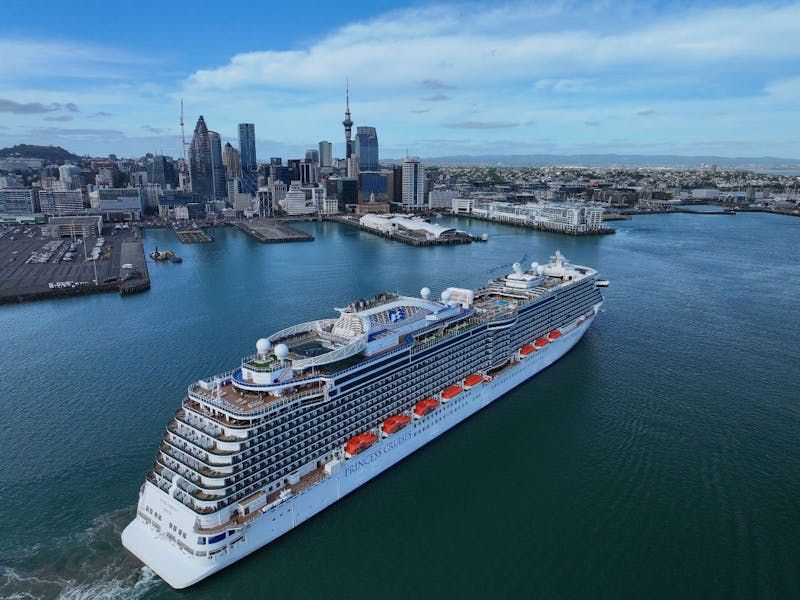
A new $200 million cruise port, Te Waharoa, is under construction in Auckland and will open next year, and many of the concerns around biofouling regulations, which saw some ships turned away in past years, have been overcome.
In April NZCA signed a memorandum of understanding with the Australian Cruise Association - as its industry faces similar challenges, although Australia's larger domestic market and superior infrastructure put it in a stronger position to weather downturns.
"New Zealand and Australia share many of the same opportunities and challenges when it comes to cruise tourism," said NZCA CEO Jacqui Lloyd, noting that the agreement strengthens their ability to work together and present a united regional voice to industry partners.
NZCA also sent a delegation to Seatrade Cruise Global in Miami last April, an industry event where key decisions are often made over future deployments.
Also in attendance was New Zealand tourism minister Louise Upton who commented at the time that she wanted "the cruise industry to know New Zealand is open for business. Cruises bring in $1.23 billion a year to our economy and support almost 9000 jobs. Every cruise passenger to our shores is good for jobs, good for local businesses and good for our economy."
The large delegation and the presence of the minister was clearly designed to project confidence to cruise lines that the government was aware of their concerns.
Back home a recent Cross-Government Cruise Forum organised by Upston at Parliament saw ministers, government agencies and cruise lines collaborate on practical solutions around the challenges facing the industry, with representatives from Tourism New Zealand, Celebrity, Carnival and Royal Caribbean in attendance.
Whether it's enough to pull New Zealand's struggling cruise sector back to pre-Covid numbers remains to be seen but for the first time in years, there's room for optimism.
Fuente: cruise critic